I Will Teach You to Be Rich: Is Ramit Sethi’s Advice Practical?
Understand the book's practical advice and how it applies to everyday finances
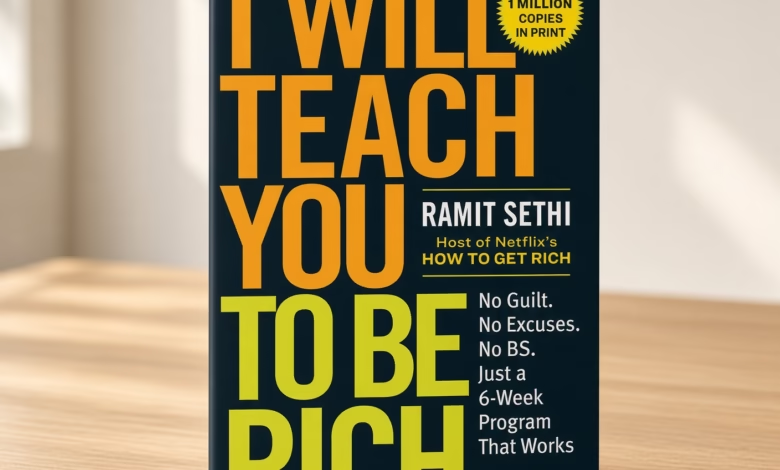
Walking into the personal finance section of any bookstore or browsing financial advice online can feel overwhelming. Most financial gurus rely on guilt, restriction, and complex spreadsheets to get their point across. They tell you to skip your morning latte, cut out every restaurant meal, and live on a shoestring budget for thirty years so you can enjoy your life when you are seventy. Then comes Ramit Sethi, the author of the New York Times bestseller I Will Teach You to Be Rich, who takes the exact opposite approach. Instead of preaching deprivation, he advocates for spending extravagantly on the things you love while cutting costs mercilessly on the things you do not.
But does this philosophy actually work in the real world? For the average person dealing with rising living costs, student loans, and stagnant wages, is Ramit Sethi’s advice genuinely practical, or is it just clever marketing designed for high-income tech workers? To answer this question honestly, we need to break down his core system, examine how it holds up under modern economic pressures, and look at both its biggest strengths and its blind spots.
What Is the Core Philosophy Behind Ramit Sethi’s Rich Life?

At the heart of I Will Teach You to Be Rich is a concept Sethi calls living your “Rich Life.” Unlike traditional financial advisors who define wealth strictly by a number in a bank account, Sethi argues that a Rich Life is deeply personal and centered around intentionality. For one person, a Rich Life might mean traveling first class twice a year. For another, it could mean buying organic groceries without checking the price tags, hiring a house cleaner to free up weekend time, or donating generously to local charities.
To make this possible without going broke, Sethi introduces the concept of “Money Dials.” A Money Dial is simply the category of spending that brings you the most joy and fulfillment. Instead of trying to cut back equally across every single expense—which almost always leads to budget fatigue and eventual failure—he recommends turning your favorite Money Dial all the way up while turning the dials you care least about all the way down.
The practicality of this mindset shift cannot be overstated. Traditional budgeting operates very much like a crash diet: it relies on daily willpower. Research in behavioral psychology consistently shows that willpower is a finite resource. When you force yourself to say “no” to every small pleasure every day, you eventually burn out and binge-spend. By giving yourself explicit permission to spend guilt-free on your top priorities, you remove the emotional friction that causes most people to abandon their financial plans.
How Does the Conscious Spending Plan Replace Traditional Budgeting?
One of the most practical tools in the book is the Conscious Spending Plan, which serves as Sethi’s alternative to a traditional line-by-line budget. Most people hate budgeting because it is backward-looking; it tracks where your money already went, often leaving you feeling ashamed about overspending on takeout or impulse buys. The Conscious Spending Plan, by contrast, is forward-looking. It tells your money where to go the moment your paycheck hits your bank account.
Rather than tracking forty different spending categories, Sethi divides your take-home (after-tax) pay into just four major buckets:
- Fixed Costs (50% to 60% of take-home pay): This covers your non-negotiable monthly expenses, including rent or mortgage payments, utilities, groceries, minimum debt payments, transportation, and insurance.
- Investments (10% of take-home pay): This money goes directly into long-term wealth-building accounts, such as a 401(k) or a Roth IRA. Sethi views this as a minimum baseline and encourages increasing it over time.
- Savings Goals (5% to 10% of take-home pay): This bucket is reserved for short- to medium-term goals, such as an emergency fund, a down payment on a house, a wedding, or a major vacation.
- Guilt-Free Spending (20% to 35% of take-home pay): Whatever is left after your fixed costs, investments, and savings are taken care of belongs entirely to you. You can spend this money on dining out, concert tickets, clothes, or hobbies without tracking a single receipt.
From a practical standpoint, this four-bucket framework is remarkably easy for beginners to implement. You do not need to download complex budgeting software or spend Sunday nights categorizing receipts. As long as your investments and savings are funded first, you are completely free to enjoy the remainder without second-guessing yourself.
The 6-Week Action Program: Step-by-Step Financial Automation
A major reason many personal finance books fail their readers is that they provide plenty of theory without offering an actionable roadmap. Sethi solves this by structuring I Will Teach You to Be Rich as a six-week program, with each week dedicated to completing specific, manageable tasks.
| Program Week | Primary Focus Area | Key Actionable Steps |
|---|---|---|
| Week 1 | Optimize Credit Cards | Check credit score, negotiate lower APRs, waive annual fees, and set up automatic full-balance payments. |
| Week 2 | Beat the Banks | Open high-yield checking and savings accounts with zero monthly maintenance fees or minimum balance traps. |
| Week 3 | Get Ready to Invest | Open a 401(k) to capture employer matching and set up a Roth IRA for tax-free retirement growth. |
| Week 4 | Conscious Spending | Calculate your four spending buckets and identify your primary “Money Dials” for guilt-free enjoyment. |
| Week 5 | Save While Sleeping | Link all accounts together and set up automated transfers triggered by your monthly payday. |
| Week 6 | The Myth of Financial Expertise | Select simple, low-cost target-date funds or index funds instead of trying to pick individual stocks. |
The crown jewel of this six-week system is Week 5: automation. Sethi emphasizes that human beings are terrible at consistently making good financial decisions month after month. We get busy, we forget due dates, or we talk ourselves out of transferring money into savings because an unexpected expense pops up.
By setting up an automated money flow, your paycheck is routed automatically on the same days each month. For example, if you get paid on the 1st of the month, your system automatically sends money to your 401(k) before you even see it. On the 5th, automatic transfers move funds from your checking account into your Roth IRA and your high-yield savings account. On the 7th, your credit card and utility bills are paid automatically in full. By the 10th of the month, every single financial responsibility has been handled without you lifting a finger. This is arguably the most practical advice in the entire book because it removes human error from the equation.
Big Wins vs. $3 Questions: Where Should You Focus Your Energy?

Another cornerstone of Sethi’s methodology is distinguishing between “$3 questions” and “Big Wins.” In personal finance media, an enormous amount of ink is spilled debating $3 questions: Should you buy generic cereal? Should you make coffee at home? Should you unplug your toaster when you aren’t using it? Sethi argues that obsessing over these tiny expenses gives people the illusion of progress while yielding virtually zero meaningful financial impact.
Instead, he urges readers to focus on five to ten Big Wins—one-time decisions or negotiations that save or earn you thousands of dollars over time:
- Negotiating your salary: A single five-minute conversation during a job offer that nets you an extra $5,000 a year will compound into tens of thousands of dollars over your career, dwarfing a lifetime of skipped coffees.
- Eliminating hidden investment fees: Choosing an index fund with a 0.04% expense ratio instead of an actively managed mutual fund charging 1.0% can save you over $100,000 in retirement fees alone.
- Mastering your credit score: Building an excellent credit score qualifies you for the lowest interest rates on mortgages and auto loans, saving you tens of thousands of dollars in interest payments.
- Keeping housing and transportation reasonable: Avoiding the trap of buying too much house or financing an expensive new car keeps your fixed costs below the 60% threshold, freeing up massive cash flow.
- Automating your savings rate: Increasing your investment contribution by just 1% every year creates massive long-term wealth on autopilot.
This focus on Big Wins makes the book extraordinarily practical for busy people. You do not need to become a coupon-clipping expert to build wealth; you just need to get the major financial levers right and let time do the heavy lifting.
Why Ramit Sethi’s Investment Strategy Is Ideal for Beginners
When it comes to investing, the financial industry thrives on complexity. Wall Street wants everyday investors to believe that picking winning stocks, timing the market, and reading complex charts are necessary to build wealth. Sethi completely dismantles this myth in the final chapters of his book, advocating for passive, long-term investing.
His advice boils down to a few straightforward rules:
- Always capture your employer’s 401(k) match first: If your company matches 100% of your contributions up to 4% of your salary, failing to contribute at least 4% is literally turning down free money.
- Pay off high-interest debt: Before investing beyond the employer match, aggressively eliminate credit card debt, which often carries interest rates exceeding 20%.
- Max out a Roth IRA: Because Roth IRAs are funded with after-tax dollars, all of your investment growth and future withdrawals in retirement are completely tax-free.
- Invest in Target-Date Funds or low-cost Index Funds: Rather than trying to pick individual stocks like Apple or Tesla, buy the entire market through broad index funds (like an S&P 500 index fund) or choose a Target-Date Fund that automatically adjusts its risk level as you get closer to retirement.
For a layperson who feels intimidated by the stock market, this approach is both empowering and scientifically sound. Decades of financial data prove that low-cost, diversified index funds consistently outperform the vast majority of professional Wall Street fund managers over ten- to twenty-year periods. Sethi gives beginners the confidence to start investing immediately without needing a degree in finance.
Where Ramit Sethi’s Advice Falls Short: Practical Limitations to Consider
While I Will Teach You to Be Rich offers an outstanding blueprint for financial management, it is not without its flaws. To evaluate whether the advice is truly practical for everyone, we have to examine the scenarios where Sethi’s system runs into real-world friction.
1. The High Cost of Living Squeeze
Sethi’s Conscious Spending Plan recommends keeping fixed costs between 50% and 60% of your net income. While that is a great target in theory, it can be extremely difficult to achieve for people living in high-cost-of-living cities or those earning entry-level wages. When rent, basic groceries, healthcare, and childcare already consume 75% to 80% of a household’s paycheck, there simply isn’t 20% to 35% left over for “guilt-free spending.” In these situations, telling someone to focus on Big Wins rather than cutting daily expenses isn’t always immediately helpful when cash flow is tight right now.
2. Heavy Reliance on Credit Cards
Sethi is a strong proponent of using credit cards for daily purchases to build credit, earn travel rewards, and take advantage of consumer protections—provided you pay the balance off in full every single month. While this works wonderfully for disciplined spenders, it can be dangerous advice for people who struggle with compulsive spending or are recovering from severe debt. Studies consistently show that people spend more when swiping a card than when paying with cash or a debit card. For those with a history of credit card trouble, strictly avoiding credit cards is often safer than trying to optimize rewards points.
3. Irregular and Freelance Income Challenges
The automated money flow system works seamlessly when you receive a predictable, salaried paycheck on the 1st and 15th of every month. However, for gig workers, freelancers, commission-based salespeople, and small business owners whose income fluctuates wildly from month to month, rigid automation can actually trigger overdraft fees. People with variable income have to modify Sethi’s system by routing all income into a central holding account first and paying themselves a consistent “base salary” before automating transfers.
4. Less Emphasis on Aggressive Debt Payoff
Compared to other popular financial authors who treat all debt like an emergency, Sethi takes a more relaxed view toward low-interest debt such as student loans or mortgages. He argues that if your student loan interest rate is 4% and the stock market averages 8% to 10% over time, you are mathematically better off investing your extra money rather than rushing to pay off the loan. While the math is completely accurate, this overlooks the psychological relief and reduced financial risk that comes with being completely debt-free, especially during economic downturns or job losses.
Ramit Sethi vs. Traditional Financial Gurus: How Does He Compare?
To truly understand the practical value of Sethi’s advice, it helps to see how he stacks up against traditional personal finance methodologies—most notably the strict, debt-averse approach championed by figures like Dave Ramsey.
| Financial Category | Ramit Sethi’s Approach | Traditional Frugality Approach |
|---|---|---|
| Core Philosophy | Spend extravagantly on what you love; cut costs mercilessly on what you don’t. | Live below your means across the board; sacrifice lifestyle now for future security. |
| Budgeting Method | Forward-looking Conscious Spending Plan (4 broad buckets). | Zero-based monthly budget tracking every dollar and category. |
| Credit Cards | Encouraged for rewards, credit building, and protections (must pay in full). | Strictly discouraged; cut up all cards and rely solely on cash or debit. |
| Debt Payoff vs. Investing | Pay off high-interest debt, then invest while paying minimums on low-interest debt. | Pause all investing until every non-mortgage debt is completely eliminated. |
| Best Suited For | Steady earners who hate micromanaging budgets and want balanced lifestyle enjoyment. | Individuals overwhelmed by high consumer debt who need strict guardrails and structure. |
Neither approach is universally superior; rather, they solve different problems. If you are drowning in $50,000 of high-interest credit card debt and struggle with impulse control, a strict, zero-based budget and a temporary ban on credit cards will likely save you faster than Sethi’s system. However, once your financial foundation is stable, extreme frugality becomes exhausting and unsustainable. That is precisely where Sethi’s system shines—it is a lifelong operating system designed for sustainable wealth building without misery.
Practical Tips to Implement Ramit Sethi’s System Today
You do not need to overhaul your entire financial life overnight to benefit from the lessons in I Will Teach You to Be Rich. If you want to test how practical this system is for your own situation, start with these five high-impact steps this week:
- Audit your bank and investment fees: Log into your checking, savings, and retirement accounts. If you are paying monthly maintenance fees on a bank account or expense ratios higher than 0.20% on your index funds, switch to a no-fee online high-yield savings account and low-cost index funds.
- Calculate your current fixed costs percentage: Add up your essential monthly bills and divide that number by your monthly after-tax income. If it is over 60%, brainstorm one or two Big Wins—like shopping around for cheaper car insurance, negotiating your internet bill, or considering a roommate—to bring that percentage down.
- Identify your top Money Dial: Ask yourself what category of spending genuinely makes you happier—whether it is fitness, travel, books, or dining with friends. Give yourself a specific monthly allowance for that category so you can enjoy it with zero guilt.
- Set up one automated transfer: Even if you can only afford $25 or $50 a paycheck right now, set up an automatic transfer from your checking account to a high-yield savings account or Roth IRA for the day after you get paid. Building the habit matters more than the starting dollar amount.
- Use Sethi’s negotiation scripts: Call your credit card company or cell phone provider and politely ask for a lower rate or a waived fee, mentioning your loyalty as a customer. Even a 50% success rate puts instant cash back into your pocket.
Should You Follow Ramit Sethi’s Financial Advice?

So, is Ramit Sethi’s advice in I Will Teach You to Be Rich practical? For the vast majority of everyday earners, the answer is a resounding yes. By stripping away financial jargon, ditching tedious line-by-line budgets, and relying on behavioral automation, Sethi created a system that works with human nature rather than fighting against it.
While readers with very low incomes, severe debt addictions, or unpredictable freelance earnings will need to tweak some of his baseline percentages, the underlying principles remain universally valuable. Focusing on major financial wins, investing consistently in low-cost index funds, automating your cash flow, and consciously spending money on the things that truly enrich your life is not just practical advice—it is one of the healthiest, most sustainable ways to manage money over a lifetime.