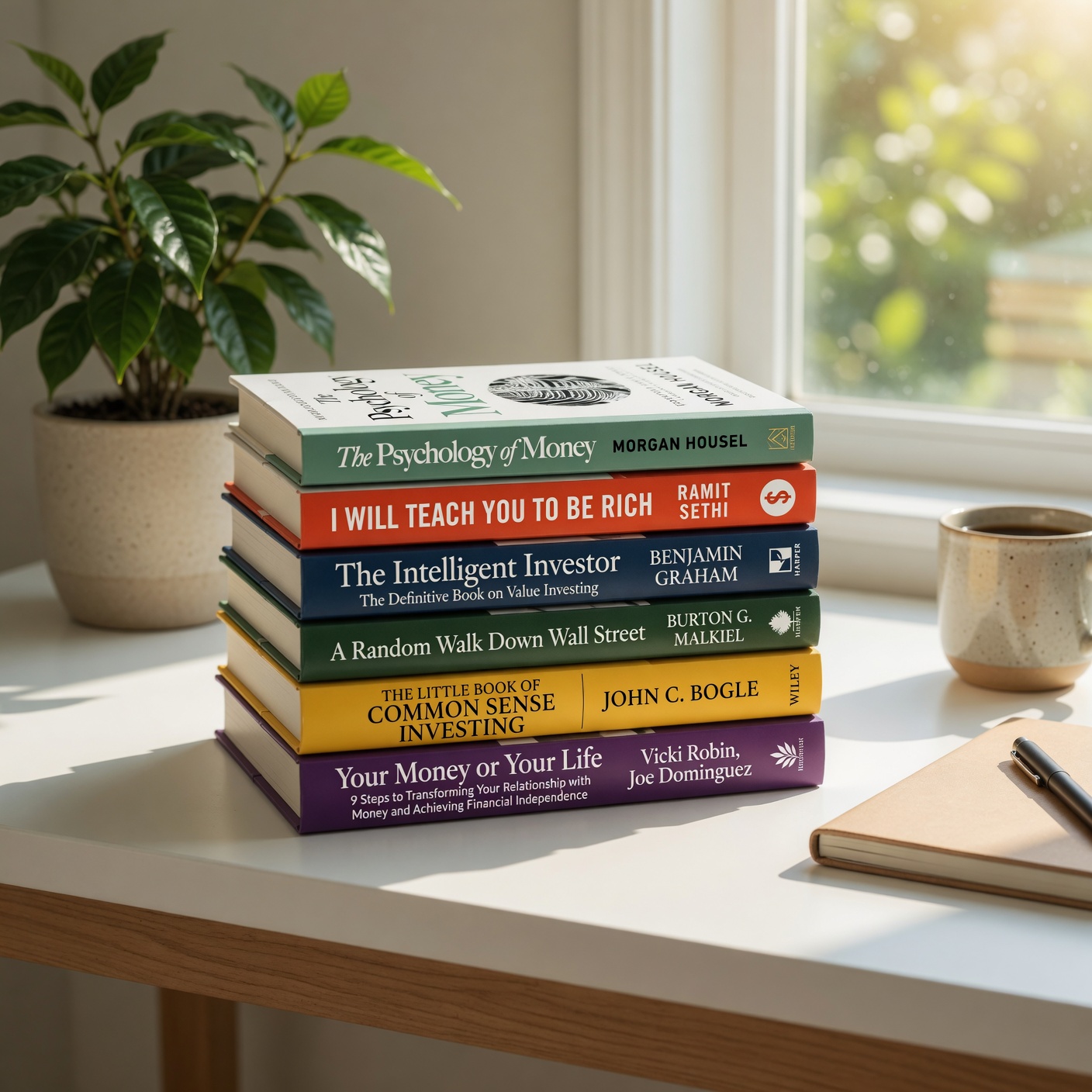
Best Books to Learn How to Manage Money
Discover books that teach practical strategies for budgeting, saving, and investing

Learning how to handle your paycheck, pay off debt, and build long-term wealth can feel overwhelming—especially when most financial advice sounds like it was written for Wall Street bankers rather than everyday people. Fortunately, you do not need a finance degree or a massive salary to take control of your bank account. Reading the right personal finance books can completely transform the way you think about earning, saving, spending, and investing.
Whether you are living paycheck to paycheck, trying to pay off student loans, or looking for simple ways to grow your savings, the books in this guide break down complex money concepts into plain, everyday English. Below, we have curated the best books to learn how to manage money, organized by your specific financial goals so you can pick the exact roadmap you need right now.
Quick Comparison: Top Money Management Books at a Glance
Before diving into the detailed reviews, use this quick reference table to compare the top personal finance books based on their core focus, ideal reader, and main takeaway.
| Book Title | Author | Best For | Primary Focus |
|---|---|---|---|
| The Psychology of Money | Morgan Housel | Complete beginners & mindset shifts | Behavior, habits, and emotional control |
| I Will Teach You to Be Rich | Ramit Sethi | Young adults & busy professionals | Automation, guilt-free spending, and banking |
| The Total Money Makeover | Dave Ramsey | People struggling with high-interest debt | Step-by-step debt elimination (Debt Snowball) |
| The Simple Path to Wealth | JL Collins | First-time investors | Low-cost index funds and financial independence |
| Your Money or Your Life | Vicki Robin & Joe Dominguez | Mindful spenders & career changers | Aligning spending with personal values and time |
| Broke Millennial | Erin Lowry | 20-somethings & financial newcomers | Budgeting basics, credit scores, and student loans |
| The Millionaire Next Door | Thomas J. Stanley & William D. Danko | Savers & frugal wealth builders | Real-world habits of self-made millionaires |
| The One-Page Financial Plan | Carl Richards | Overwhelmed planners | Goal setting and simplifying financial decisions |
| Rich Dad Poor Dad | Robert T. Kiyosaki | Aspiring entrepreneurs & big-picture thinkers | Understanding assets vs. liabilities |
| The Little Book of Common Sense Investing | John C. Bogle | Long-term retirement savers | Passive investing and avoiding high fund fees |
Why Reading Personal Finance Books Still Beats Social Media Advice
In an era filled with 30-second financial videos and viral investment tips, picking up a full-length book might seem old-fashioned. However, short-form online advice often focuses on hype, quick fixes, or risky trends rather than sustainable financial stability. A well-researched personal finance book gives you a complete, structured system that has been tested across different economic cycles.
When you read a dedicated book on money management, you gain context. Instead of just being told to “open a high-yield savings account” or “buy index funds,” you learn why those steps work, how much risk is involved, and how to avoid the emotional traps that cause most people to lose money. More importantly, books allow you to learn at your own pace without feeling pressured to buy a course or follow a flashy trend.
Best Books for Mastering Your Money Mindset and Habits
Managing money is rarely a math problem; it is almost always a behavior problem. Most people already know they should spend less than they earn, yet sticking to that rule is difficult. These foundational books help you understand why you make certain financial choices and how to build healthier habits.
1. The Psychology of Money by Morgan Housel
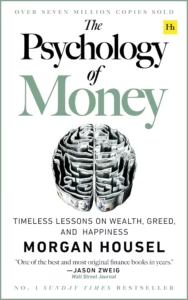
If you only read one book on this list, make it The Psychology of Money. Morgan Housel explains that doing well with money has very little to do with how smart you are and everything to do with how you behave. Through 19 short, engaging stories, Housel illustrates how greed, fear, ego, and personal upbringing quietly shape our financial decisions.
- Why it is great for beginners: There are no confusing spreadsheets, complex formulas, or Wall Street jargon. Every chapter feels like a conversation with a wise friend.
- Key lesson: Wealth is what you don’t see. Driving an expensive luxury car only proves that someone spent a lot of money—not that they actually have money left in the bank.
- Actionable takeaway: Focus on building a margin of safety in your budget and give your investments enough time to benefit from compound interest.
2. Your Money or Your Life by Vicki Robin and Joe Dominguez
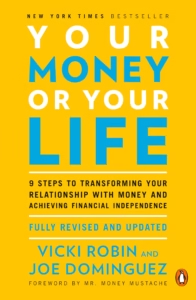
Originally published decades ago and thoroughly updated for modern readers, Your Money or Your Life asks a powerful question: how many hours of your life are you trading for the things you buy? The authors introduce the concept of calculating your “real hourly wage” after factoring in commuting costs, work clothes, and job-related stress.
- Why it is great for beginners: It shifts budgeting away from deprivation and turns it into an exercise in self-discovery.
- Key lesson: Every dollar you spend represents a piece of your finite life energy. Once you view purchases through that lens, impulse buying loses its appeal.
- Actionable takeaway: Track every single cent coming into and going out of your life for one month, then evaluate whether each expense brought you genuine fulfillment.
3. The Millionaire Next Door by Thomas J. Stanley and William D. Danko
Based on decades of research into America’s genuinely wealthy households, The Millionaire Next Door shatters the Hollywood myth of what rich people look like. The authors discovered that most self-made millionaires do not live in flashy mansions or wear designer brands. Instead, they live in modest neighborhoods, drive reliable used cars, and aggressively save a large portion of their income.
- Why it is great for beginners: It proves that building wealth is achievable on an ordinary income if you avoid lifestyle inflation.
- Key lesson: High income does not automatically equal high net worth. People who earn $250,000 a year and spend $245,000 are actually poorer than people who earn $65,000 and save $15,000.
- Actionable takeaway: Prioritize accumulating financial assets over displaying outward status symbols.
Best Step-by-Step Books for Budgeting, Saving, and Getting Out of Debt
Once your mindset is in the right place, you need practical tools to organize your bank accounts, eliminate credit card balances, and create a spending plan that actually sticks. These books offer clear, step-by-step instructions for day-to-day money management.
4. I Will Teach You to Be Rich by Ramit Sethi
Despite its bold title, I Will Teach You to Be Rich is not a get-rich-quick scheme. Ramit Sethi lays out a practical, six-week program designed to help you automate your finances so your bills, savings, and investments run on autopilot. Sethi introduces the “Conscious Spending Plan,” which encourages you to cut ruthlessly on things you don’t care about so you can spend extravagantly—and guilt-free—on the things you truly love.
- Why it is great for beginners: It includes word-for-word scripts you can use when calling banks, credit card companies, or utility providers to waive late fees and lower your interest rates.
- Key lesson: You do not need to track every $4 coffee if you automate your savings and investments first.
- Actionable takeaway: Set up automatic transfers on payday so your money moves directly from your checking account into high-yield savings and retirement accounts before you have a chance to spend it.
5. The Total Money Makeover by Dave Ramsey
If you are drowning in credit card bills, auto loans, or personal debt, The Total Money Makeover provides a strict, no-nonsense blueprint to dig yourself out. Dave Ramsey’s famous “Seven Baby Steps” start with saving a $1,000 starter emergency fund and then attacking debt using the “Debt Snowball” method—paying off your smallest balance first to build psychological momentum, regardless of interest rates.
- Why it is great for beginners: The rules are black-and-white, removing confusion and decision fatigue for people who feel overwhelmed by debt.
- Key lesson: Personal finance is 80% behavior and only 20% head knowledge. Small, quick wins keep you motivated to finish a multi-year debt payoff journey.
- Actionable takeaway: List all your non-mortgage debts from smallest to largest, pay minimum payments on everything except the smallest balance, and throw every extra dollar at that smallest debt until it is gone.
6. Broke Millennial: Stop Scraping By and Get Your Financial Life Together by Erin Lowry
Written in a relatable, conversational tone, Broke Millennial tackles the exact money hurdles that young adults and financial beginners face today. Erin Lowry covers everything from how to split dinner bills with friends without awkwardness to understanding credit scores, negotiating starting salaries, and handling student loans.
- Why it is great for beginners: It never talks down to the reader and explains basic banking terms that schools rarely teach.
- Key lesson: Ignorance is expensive. Understanding how credit utilization and compound interest work in your 20s can save you tens of thousands of dollars over your lifetime.
- Actionable takeaway: Check your credit report for errors, keep your credit card utilization below 30%, and pick a budgeting method (like the 50/30/20 rule or cash envelopes) that fits your personality.
7. The One-Page Financial Plan by Carl Richards

Many beginners quit budgeting because they think a financial plan requires a 50-page binder filled with projections and charts. Certified financial planner Carl Richards strips away the clutter by helping you summarize your entire financial strategy onto a single sheet of paper.
- Why it is great for beginners: It focuses on clarity and adaptability rather than rigid perfection.
- Key lesson: Your financial plan will change as your life changes—and that is completely normal. The goal is to make the best decision possible with the information you have today.
- Actionable takeaway: Write down your top three financial values at the top of a blank page, followed by three simple actions you will take this year to support those values.
Best Beginner Books for Investing and Long-Term Wealth Building
Saving money in a traditional bank account is safe, but inflation slowly erodes its purchasing power over time. To truly build wealth and prepare for retirement, you have to learn how to invest. Fortunately, safe and effective investing is much simpler than financial television makes it look. These books explain how to grow your money without gambling on individual stocks.
8. The Simple Path to Wealth by JL Collins
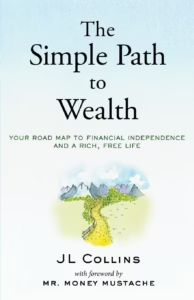
Originally written as a series of letters to his daughter, The Simple Path to Wealth is widely considered the gold standard for beginner investors. JL Collins demystifies the stock market, explaining why trying to pick winning stocks or time market crashes almost always fails. Instead, he outlines a straightforward strategy built around spending less than you earn, avoiding debt, and investing consistently in broad, low-cost index funds.
- Why it is great for beginners: Collins uses humor, clear analogies, and zero intimidating terminology to explain how the stock market actually creates wealth over decades.
- Key lesson: Market crashes are normal and temporary. Staying invested during downturns is the secret to capturing long-term market gains.
- Actionable takeaway: Open a tax-advantaged retirement account (such as a 401(k) or Roth IRA) and invest regularly in a total stock market index fund with ultra-low fees.
9. The Little Book of Common Sense Investing by John C. Bogle
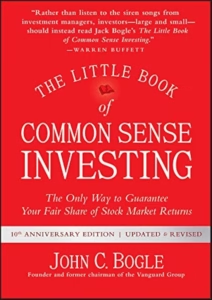
Written by the founder of Vanguard and the creator of the first index fund, The Little Book of Common Sense Investing proves mathematically why low-cost passive investing beats high-fee Wall Street fund managers over time. John Bogle demonstrates how seemingly small management fees—such as 1% or 2% per year—can quietly eat away nearly half of your retirement nest egg over several decades.
- Why it is great for beginners: It gives you the confidence to ignore noisy financial headlines and stick to a proven, low-maintenance strategy.
- Key lesson: Instead of looking for the needle in the haystack, just buy the whole haystack.
- Actionable takeaway: Always check the “expense ratio” before buying any mutual fund or ETF, aiming for funds that charge less than 0.10% annually.
10. Rich Dad Poor Dad by Robert T. Kiyosaki
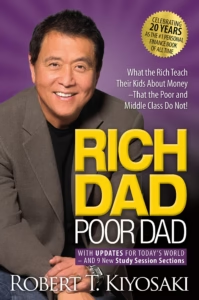
One of the best-selling personal finance books of all time, Rich Dad Poor Dad uses contrasting stories from the author’s childhood to teach the fundamental difference between working for money and having money work for you. While some of its specific tax and real estate examples are broad, its core lesson on financial literacy remains a wake-up call for beginners.
- Why it is great for beginners: Its storytelling format makes abstract accounting concepts easy to visualize.
- Key lesson: Understand the difference between an asset (something that puts money in your pocket, like dividend stocks, rental properties, or a profitable business) and a liability (something that takes money out of your pocket, like car loans or unused subscriptions).
- Actionable takeaway: Review your monthly expenses and ask yourself whether your paycheck is going toward income-producing assets or depreciating liabilities.
How to Choose the Right Money Management Book for Your Situation
With so many great options available, picking your first book depends on your most urgent financial pain point. Trying to read an advanced investing book while struggling with overdue credit card bills will only cause frustration. Use this simple guide to match your current stage with the right starting point:
- If you feel anxious or guilty whenever you look at your bank account: Start with The Psychology of Money or Your Money or Your Life. Both will help you heal your emotional relationship with money before you touch a spreadsheet.
- If you have credit card debt or live paycheck to paycheck: Pick up The Total Money Makeover for a strict debt-elimination plan, or Broke Millennial if you want flexible budgeting methods tailored to younger earners.
- If you earn a decent income but don’t know where your money goes: Read I Will Teach You to Be Rich to set up an automated banking system that saves and invests for you without daily willpower.
- If you are debt-free with savings sitting in a low-interest checking account: Grab The Simple Path to Wealth to learn how to put that idle cash to work safely in the stock market.
Practical Tips to Apply What You Read (Without Getting Overwhelmed)
Reading personal finance books is inspiring, but knowledge alone will not change your net worth unless you put it into practice. Many beginners fall into the trap of reading five books in a row without ever opening a savings account or adjusting their budget. Follow these practical habits to turn pages into real financial progress:
- Implement one change per chapter: Keep a notebook or notes app open while reading. Whenever an author suggests a concrete action—like checking your credit score, canceling an unused subscription, or increasing your 401(k) contribution by 1%—pause and do it immediately before moving to the next chapter.
- Avoid perfectionism: You do not need the “optimal” credit card or the absolute highest-yielding savings account on day one. Opening a good account today beats spending six months researching the “best” account while earning 0.01% interest.
- Use your local library: Practicing good money management starts with how you acquire these books. Most public libraries offer free physical copies, e-books, and audiobooks through apps like Libby or Hoopla, allowing you to learn without spending a dime.
- Schedule a monthly “money date”: Set aside 30 minutes on the first Sunday of every month to review your bank statements, check your progress toward your savings goals, and celebrate small wins.
Frequently Asked Questions About Learning Money Management

What is the single best book for someone who knows nothing about money?
The Psychology of Money by Morgan Housel and I Will Teach You to Be Rich by Ramit Sethi are widely considered the best starting points for absolute beginners. Housel teaches you how to think about money without stress, while Sethi gives you a step-by-step checklist to organize your bank accounts and start saving automatically.
Are older personal finance books still relevant today?
Yes, as long as you focus on principles rather than specific interest rates or tax laws. While banking apps and investment platforms have evolved, human behavior, compound interest, living below your means, and avoiding high-interest debt remain timeless rules of wealth building.
Should I read budgeting books or investing books first?
Always master budgeting, emergency savings, and debt management before diving into investing. Investing works best when you can leave your money untouched for at least five to ten years. Having a solid cash emergency fund ensures you will never be forced to sell your investments at a loss during an unexpected car repair or medical bill.
How many personal finance books do I need to read to get good with money?
You only need two or three solid books—one on mindset and budgeting, and one on basic index fund investing—to learn 95% of what it takes to build lifelong financial security. Once you understand the fundamentals, consistency and patience matter far more than reading dozens of advanced finance books.