What Financial Documents Should You Keep in a Safe Place?
Discover which important documents you should protect against loss, damage, or theft

Imagine waking up in the middle of the night to the sound of a smoke alarm, or returning home from a weekend trip to find that a burst pipe has flooded your home office. In those chaotic first moments, your safety and the safety of your loved ones come first. Once the dust settles, however, a second crisis often begins: proving who you are, what you own, and how you will pay for the recovery.
Without access to your most critical paperwork, filing an insurance claim, accessing frozen bank accounts, or proving ownership of your home can turn into a bureaucratic nightmare that drags on for months. On the flip side, holding onto every single utility bill and ATM receipt from the last decade creates unnecessary clutter and exposes you to identity theft if your trash isn’t properly shredded.
Knowing exactly what financial documents you should keep in a safe place—and understanding the best ways to store them—is one of the foundational pillars of personal financial security. Whether you are organizing your household records for the first time, preparing for emergency readiness, or streamlining your estate plan, this comprehensive guide walks you through every essential document, how long to keep it, where to store it, and how to build a modern, disaster-proof filing system.
Why Securing Your Financial Documents Is Critical for Financial Security
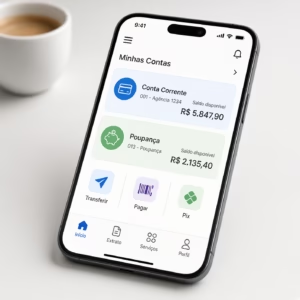
Many people assume that because we live in an increasingly digital world, physical paperwork no longer matters. While online banking and cloud portals have certainly made day-to-day money management easier, relying solely on digital access can leave massive blind spots in your financial armor.
First, digital systems can fail or lock you out. If a natural disaster knocks out power and internet access for days, or if a cyberattack compromises your email account, you may lose immediate access to online portals. Having physical originals or offline backups ensures you can prove your identity and access funds when networks are down.
Second, certain institutions legally require wet-ink originals. Courts, probate judges, title companies, and government agencies frequently reject photocopies or digital scans when settling an estate, transferring property deeds, or issuing replacement identification. If the original document is destroyed in a fire or lost during a move, replacing it can cost hundreds of dollars in legal fees and months of waiting.
Third, organized records protect your loved ones during an emergency. If you are hospitalized, incapacitated, or pass away unexpectedly, your spouse, adult children, or executor will need to step in immediately to pay bills, manage investments, and handle medical decisions. A well-organized, secure repository prevents your family from scrambling through drawers and guessing passwords during an already stressful time.
Essential Financial and Legal Documents to Keep Forever
Some records form the permanent foundation of your financial and legal identity. These are the documents you should never throw away, regardless of how old they are or how tidy you want your filing cabinet to be.
1. Personal Identification and Vital Records
Before you can access a bank account, claim a pension, or collect life insurance proceeds, you must be able to prove your identity and your relationship to your family members. Keep original, certified copies of the following:
- Birth certificates for yourself, your spouse, and all dependent children.
- Social Security cards (note: never carry your Social Security card in your daily wallet; keep it locked away at home).
- Passports and passport cards, including expired passports if they contain active visas or proof of citizenship history.
- Marriage certificates, divorce decrees, and legal name-change orders, which are frequently required to update account titles, claim spousal Social Security benefits, or settle insurance policies.
- Adoption papers and custody agreements.
- Military discharge papers (DD Form 214), which are essential for accessing veterans’ healthcare, burial benefits, and VA home loans.
- Death certificates of deceased spouses or family members whose estates you administered or from whom you inherited assets.
2. Estate Planning and End-of-Life Directives
Estate planning documents are useless if nobody can find them when they are needed. Keep the signed, notarized, and witnessed originals of:
- Last Will and Testament: Clearly outlines how your assets should be distributed and who will serve as guardian for minor children.
- Revocable or Irrevocable Living Trust documents: Includes the trust agreement, schedules of trust assets, and any amendments.
- Durable Financial Power of Attorney (POA): Authorizes a trusted agent to manage your bank accounts, pay bills, and handle real estate transactions if you become incapacitated.
- Healthcare Power of Attorney (Healthcare Proxy) and Living Will (Advance Directive): Specifies your medical wishes and names the person authorized to make medical decisions on your behalf.
- Letter of Instruction: While not a legally binding document, this plain-English letter tells your family where your assets are located, who your financial advisor and attorney are, and what your funeral wishes entail.
3. Property Deeds, Titles, and Real Estate Records
Real estate is often a household’s largest asset, and proving ownership requires airtight documentation. Store the following permanently (or for as long as you own the property, plus several years after selling for tax purposes):
- Original property deeds showing your legal ownership of your primary residence, vacation home, or investment land.
- Mortgage satisfaction letters (lien releases) proving you have paid off a home loan in full.
- Title insurance policies that protect you against past ownership disputes or hidden liens.
- Property surveys and boundary maps.
- Vehicle titles (pink slips) for cars, motorcycles, boats, and RVs that you own outright (if you have an active auto loan, the lender usually holds the title until payoff).
4. Retirement, Pension, and Investment Records
Even though brokerages send electronic statements, keeping baseline documentation of your long-term wealth prevents costly errors down the road:
- Defined-benefit pension plan documents and benefit accrual statements from current and former employers.
- IRA contribution records (specifically IRS Form 8606) tracking non-deductible contributions so you are not taxed twice when you withdraw funds in retirement.
- Stock certificates and savings bonds if you still hold physical paper certificates.
- Beneficiary designation confirmations for your 401(k), IRA, Roth IRA, and Health Savings Account (HSA). Remember that beneficiary designations override what is written in your will, so keeping proof of your current elections is vital.
5. Insurance Policies
Insurance policies protect your net worth against catastrophic losses, yet many people cannot locate their policy numbers when disaster strikes. Keep active copies of:
- Life insurance policies (both term and permanent/whole life), along with current beneficiary confirmations.
- Homeowners or renters insurance policies, including declarations pages showing coverage limits and endorsements.
- Auto, umbrella liability, and flood/earthquake policies.
- Long-term care insurance and private disability insurance policies.
Tax, Banking, and Debt Records: What to Keep and for How Long
Not every financial document needs to be kept forever. Financial planners and the Internal Revenue Service (IRS) recommend a tiered retention schedule based on audit windows, warranty periods, and loan lifecycles.
| Document Category | Recommended Retention Period | Key Items Included | Why It Matters |
|---|---|---|---|
| Tax Returns & Supporting Docs | 7 Years (minimum 3 years) | Federal/state returns (Form 1040), W-2s, 1099s, charitable receipts, business expense logs | The IRS generally has 3 years to audit, up to 6 years for substantial underreporting, and 7 years for bad debt deductions. |
| Home Improvement Receipts | Until 7 Years After Selling Home | Contractor invoices, permits, receipts for additions, roof replacements, kitchen remodels | Increases your home’s “cost basis,” reducing the capital gains taxes you owe when you eventually sell the property. |
| Investment Purchase Confirmations | Until 7 Years After Selling Asset | Trade confirmations showing purchase date and price (cost basis) of stocks, mutual funds, crypto | Proves your capital gain or loss to the IRS when you sell the investment. |
| Loan & Credit Payoff Statements | Forever (or at least 7 years) | Final payoff letters for mortgages, student loans, auto loans, and settled debts | Protects you if a zombie debt collector or clerical error falsely claims you still owe money years later. |
| Bank & Credit Card Statements | 1 Year (unless tax-related) | Monthly checking, savings, and credit card summaries | Allows you to spot unauthorized charges, verify recurring subscriptions, and reconcile annual budgets. |
| Pay Stubs | 1 Year (until W-2 arrives) | Biweekly or monthly paycheck stubs | Used to verify that your year-end W-2 accurately reflects your gross pay, tax withholdings, and 401(k) contributions. |
| Utility & Routine Bills | 1 to 3 Months (shred after payment clears) | Electric, water, internet, and cell phone bills | Keep longer only if you claim a home-office tax deduction or need proof of residency. |
Where Is the Safest Place to Store Financial Documents?
Knowing what financial documents you should keep in a safe place is only half the battle; choosing the right physical and digital storage environment is equally critical. No single storage method is 100% immune to every threat, which is why security experts recommend a layered “three-tier” approach.
Tier 1: A Fireproof and Waterproof Home Safe
For documents you may need on short notice—such as passports, Social Security cards, medical directives, insurance declaration pages, and emergency cash—a high-quality home safe is ideal.
- Look for UL ratings: Choose a safe rated by Underwriters Laboratories (UL) to withstand temperatures up to 1,700°F for at least 1 to 2 hours (such as UL Class 350). Paper begins to char at around 450°F, so a standard metal lockbox will not protect documents in a house fire.
- Verify waterproof protection: Firefighting efforts involve thousands of gallons of water, and flooding is the most common natural disaster in the United States. Look for an ETL-verified waterproof rating confirming the safe can remain submerged in water for at least 24 to 72 hours without leaking.
- Anchor it properly: A small portable fire chest is easy for a burglar to carry out of your house. Bolt your safe to a concrete floor or structural wall stud in a discreet location, such as a basement closet rather than the master bedroom (the first place thieves search).
Tier 2: A Bank Safe Deposit Box
A safe deposit box inside a federally insured bank vault offers unmatched protection against home burglaries, tornadoes, and house fires. It is an excellent location for high-value collectibles, original property deeds, stock certificates, and certified copies of birth and marriage certificates.
However, do not put everything in a safe deposit box. Banks are closed on nights, weekends, and holidays. More importantly, if you are the sole renter of the box and you pass away or become incapacitated, the bank will legally seal the box until a court appoints an executor—a process that can take weeks. For this reason, never store your original Last Will and Testament, Healthcare Power of Attorney, or cemetery plot deeds inside a safe deposit box unless your spouse or executor is a co-owner of the box with unrestricted legal access.
Tier 3: Encrypted Cloud Storage and Offline Digital Backups
Creating high-resolution digital scans of every single document in your safe provides an indispensable safety net. If your home is destroyed in a wildfire or hurricane, having immediate access to digital copies of your driver’s license, insurance policies, and bank account numbers allows you to start filing claims from a hotel room within hours.
- Use zero-knowledge encryption: Avoid storing sensitive tax returns or Social Security numbers in unencrypted folders. Use reputable cloud providers with strong two-factor authentication (2FA) and end-to-end encryption, or encrypt your PDF files with a strong password before uploading.
- Maintain an offline copy: Save a mirrored, password-protected backup onto an encrypted USB flash drive or external hard drive stored inside your fireproof safe (ensure the safe is rated for digital media, as USB drives melt at much lower temperatures than paper).
How to Organize Your Financial Documents Step by Step

If your paperwork is currently scattered across shoeboxes, kitchen drawers, and email attachments, tackling it all at once can feel overwhelming. Use this simple five-step workflow over a single weekend to create a system you can actually maintain:
- Gather everything into one place: Collect every loose envelope, folder, and binder from around your home and place them on a large dining table.
- Sort into four action piles: Divide the stack into (A) Keep Forever, (B) Keep Temporarily (1–7 Years), (C) Action Required (bills to pay or forms to sign), and (D) Shred Immediately.
- Invest in a cross-cut or micro-cut shredder: Never toss old bank statements, pre-approved credit card offers, or expired medical bills into regular recycling bins. Criminals routinely sift through trash for account numbers and addresses. Shred anything containing personal identifying information.
- Create labeled, color-coded folders: Group your retained documents logically—for example, Vital Records, Estate & Legal, Taxes, Real Estate & Auto, Insurance, and Investments. Place a master inventory sheet at the front of your binder or safe listing every account number, institution phone number, and where the original document is stored.
- Schedule an annual “Financial Paperwork Audit”: Set a recurring calendar reminder every January or April (right after filing your taxes) to purge outdated receipts, add new tax returns, and review your insurance coverage and beneficiary designations.
Common Mistakes That Put Your Financial Records at Risk
Even diligent savers make subtle errors when managing their paperwork. Watch out for these frequent pitfalls:
- Keeping your only copy in one location: If your original will is with your estate attorney, keep a clearly marked copy in your home safe noting the attorney’s name, firm, and address.
- Forgetting to share access with a trusted person: A fireproof safe with a forgotten combination is just a heavy metal box. Make sure your spouse, adult child, or estate executor knows where your safe is located and has a secure way to access the key, combination, or digital password manager in an emergency.
- Ignoring moisture buildup inside airtight safes: Because waterproof safes have tight rubber seals, humidity can get trapped inside, leading to mold and mildew on paper records. Toss a small rechargeable silica gel desiccant canister inside your safe and open the door for 20 minutes once every couple of months to air it out.
- Carrying sensitive cards in your wallet: Leave your Social Security card, spare house keys, and passwords at home. Your daily wallet should only contain your driver’s license, one or two payment cards, and your health insurance card.
Protecting Your Peace of Mind Starts Today
Taking control of your financial paperwork is not about becoming a minimalist perfectionist—it is about ensuring that an unexpected emergency never turns into a permanent financial setback. By separating the vital records you must keep forever from the temporary receipts you can safely shred, storing originals in a fireproof and waterproof safe, and backing everything up digitally, you build a resilient safety net around your money, your identity, and your family’s future. Set aside an hour this week to gather your most important documents, secure them properly, and enjoy the lasting peace of mind that comes with true financial preparedness.