Books
Who Is Morgan Housel? Exploring His Journey, Core Philosophy, and Bestselling Books
Descubra quem é Morgan Housel, suas principais ideias e as obras que marcaram sua carreira

When examining the landscape of modern financial literature and behavioral economics, few names resonate as deeply or universally as Morgan Housel. Long before he became a publishing phenomenon, Housel spent years observing the eccentricities of Wall Street, the emotional volatility of individual investors, and the recurring patterns of human greed and fear. Rather than treating finance as a rigid branch of mathematics filled with complex equations and intricate forecasting models, he redefined it as something much more fundamental: a study of human behavior.
Understanding who Morgan Housel is requires looking beyond simple biography. It demands an exploration of how a former columnist transformed complex economic ideas into relatable, narrative-driven wisdom that has captured the attention of millions worldwide. This comprehensive guide explores his professional trajectory, his core financial philosophies, his most influential books, and the lasting impact he continues to make on modern personal finance.
Early Life and the Foundation of a Financial Writer

Before achieving global recognition as a bestselling author and partner at Collaborative Fund, Morgan Housel’s path was shaped by diverse experiences and a natural curiosity about how the world works. Growing up, he developed an early appreciation for observation and storytelling. His formal education laid the groundwork for analytical thinking, but his true education came from observing real-world economic events up close.
Early in his career, Housel worked as a financial columnist for prominent publications including The Motley Fool and The Wall Street Journal. Writing daily commentary during major economic shifts—such as the roaring tech bubble of the late 1990s and the devastating financial crisis of 2008—provided him with a front-row seat to human irrationality. He noticed a glaring disconnect: financial education largely focused on spreadsheets, formulas, and asset allocation, yet people consistently made poor financial decisions driven entirely by ego, panic, social pressure, and optimism bias.
This realization shaped his unique voice. Instead of offering rigid portfolio advice or stock-picking tips, Housel began writing essays that explored the intersection of psychology, history, and wealth. His distinct style—characterized by short, punchy stories, historical anecdotes, and a complete absence of financial jargon—gradually built him a loyal following of readers who valued clarity over complexity.
The Core Philosophy: Why Behavior Trumps Math in Personal Finance
To truly grasp Morgan Housel’s impact, one must understand his central thesis: doing well with money has a little to do with how smart you are and a lot to do with how you behave.
Traditional financial theory often relies on the assumption of the “rational actor”—the idea that human beings always act logically to maximize their financial well-being. Housel dismantled this notion through his essays and books, arguing instead that people are emotional creatures whose views on money are shaped by when and where they were born, their unique family backgrounds, and their personal values.
Several foundational principles anchor his philosophy:
-
The Difference Between Being Rich and Being Wealthy: Being rich is about current income, often visible through luxury cars, designer clothes, and large homes. Wealth, on the other hand, is what you do not see. It is unspent income, hidden assets, and the financial freedom to buy time and optionality. True wealth provides independence, which Housel identifies as the highest dividend money can pay.
-
The Power of Compounding and Patience: Most people underestimate the power of compounding because its results are not linear. Housel frequently points out that Berkshire Hathaway’s legendary success is not merely due to Warren Buffett being a brilliant investor—though he is—but rather because he has been doing it consistently for three-quarters of a century. Time in the market matters far more than timing the market.
-
Room for Error and Margin of Safety: Because the future is inherently unpredictable, the most important part of any financial plan is factoring in things not going according to plan. Housel advocates for saving like a pessimist and investing like an optimist, maintaining enough cash cushion to survive unexpected downturns without being forced to sell assets at the worst possible time.
-
Defining Success on Your Own Terms: A recurring theme in his writing is the danger of the moving goalpost. When people tie their self-worth to keeping up with neighbors or societal expectations, the finish line keeps moving further away, rendering true satisfaction permanently out of reach.
The Psychology of Money: Timeless Lessons on Wealth, Greed, and Happiness
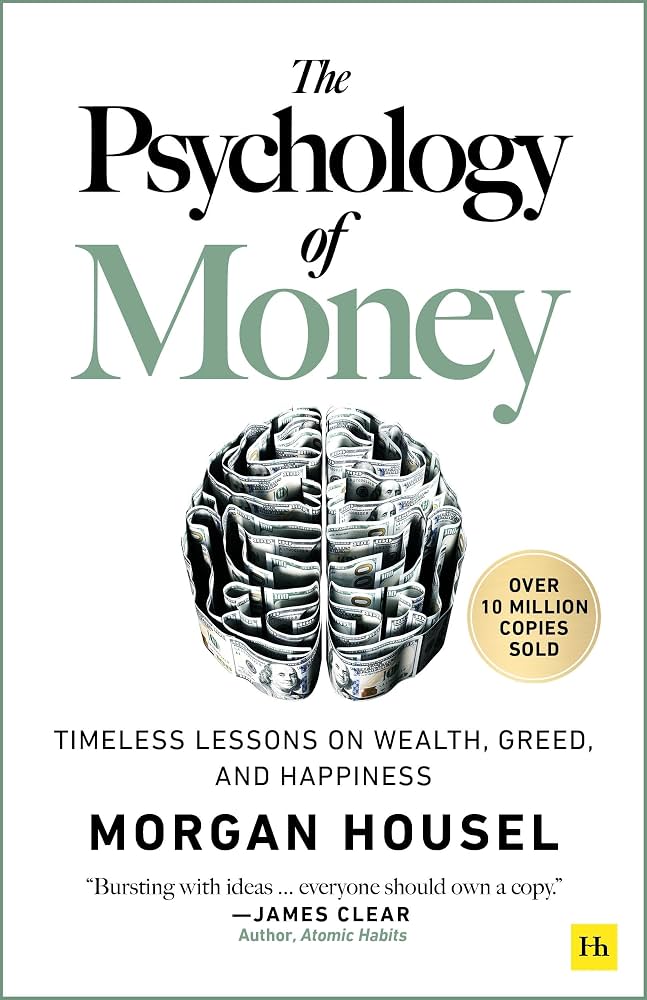
Published in 2020, The Psychology of Money became an instant global bestseller, selling millions of copies and translating into dozens of languages. The book’s massive success lies in its structure: rather than a dense textbook, it is a collection of 20 short, engaging chapters, each driven by a compelling story that illustrates a vital behavioral truth.
The book explores how our individual experiences with money dictate our risk tolerance and financial worldview. For instance, someone who grew up during the Great Depression will view the stock market through an entirely different lens than someone who came of age during the roaring bull market of the 2010s. Neither is objectively “right,” but their behavior is heavily influenced by their formative years.
Another pivotal concept highlighted in the book is the concept of “tails, you win.” In investing, a small number of events account for the majority of long-term returns. Recognizing that it is normal for many investments or business ventures to fail—and that surviving long enough to catch a few outlier successes is the true secret to longevity—changes how people view failure and risk.
The Psychology of Money shifted the cultural conversation around personal finance. It reassured everyday savers that they did not need a degree in finance or a background on Wall Street to build a secure future; they simply needed self-awareness, humility, and emotional resilience.
Same as Ever: A Guide to What Never Changes
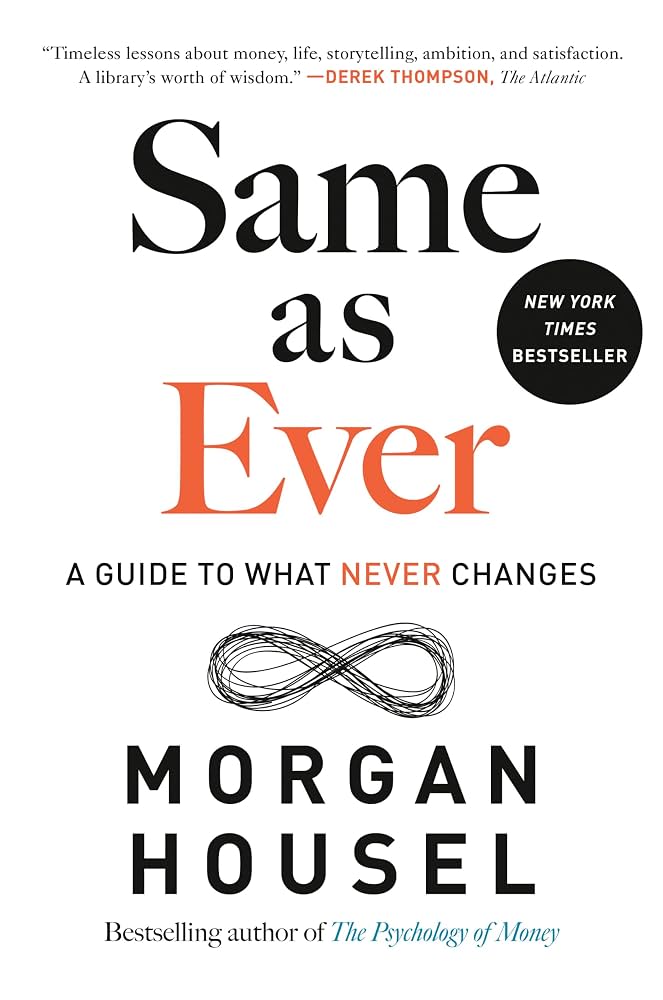
Following the triumph of his debut book, Housel released Same as Ever: A Guide to What Never Changes. While his first book focused specifically on how we interact with wealth, this subsequent work expanded his behavioral lens to cover risk, opportunity, human nature, and navigating an uncertain world.
The core premise of Same as Ever is elegantly simple: people are obsessed with predicting what the world will look like tomorrow, but the most important insights come from studying what never changes. Economies evolve, technologies advance, and political landscapes shift, but human emotions—greed, fear, optimism, pessimism, envy, and tribalism—remain completely constant across generations.
Through historical vignettes ranging from ancient Rome to twentieth-century industrial titans, Housel illustrates how modern crises mirror historical ones because human behavior does not upgrade just because smartphones and computers do. The book teaches readers to stop wasting energy trying to forecast unpredictable macroeconomic events and instead build resilience by understanding the unchanging constants of human psychology. It serves as a masterclass in perspective, urging individuals to look past short-term noise and focus on enduring truths.
The Art of Spending Money: Simple Choices for a Richer Life
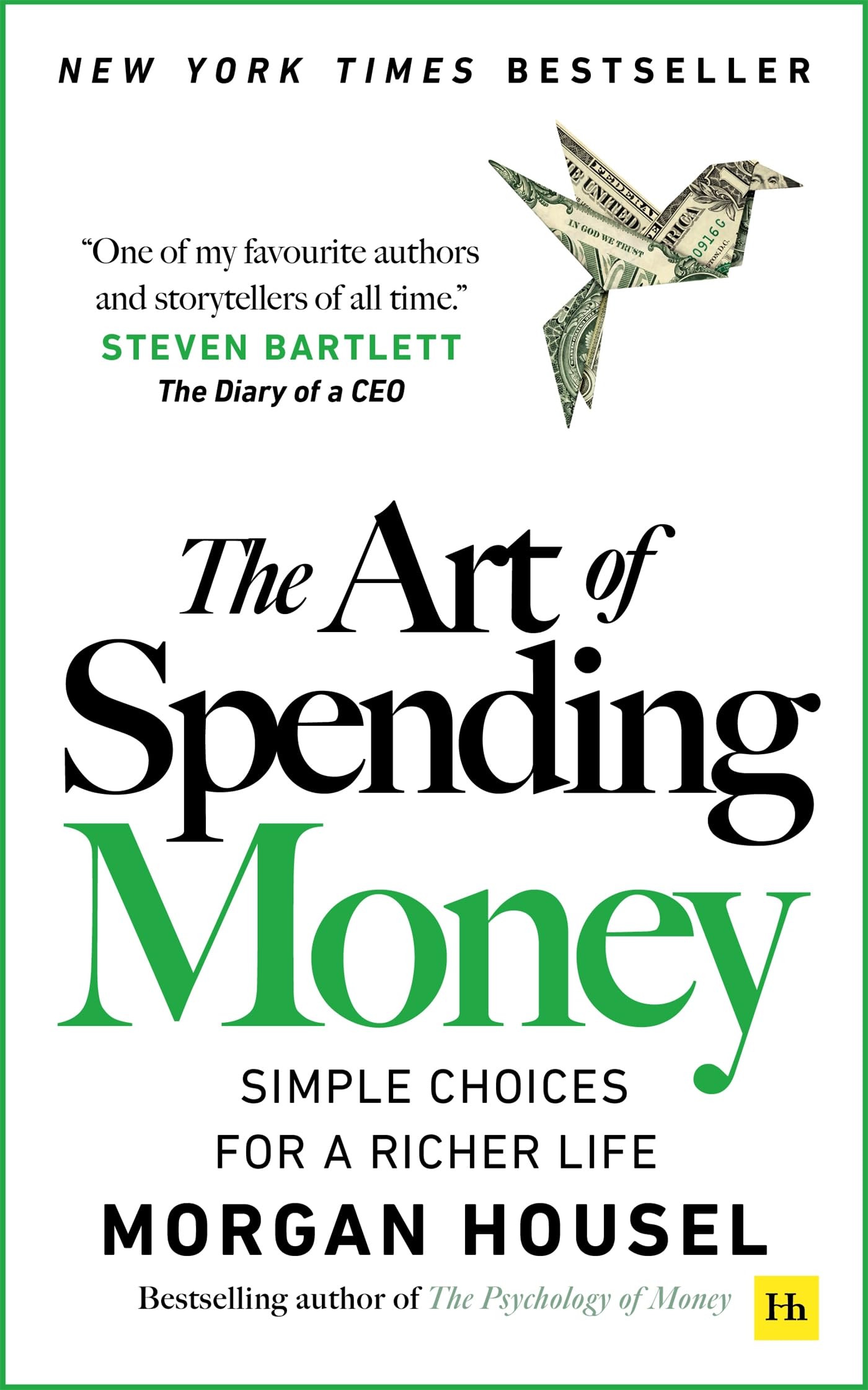
Continuing his exploration of how humans interact with economic resources, Morgan Housel expanded his literary footprint with The Art of Spending Money. While the financial world spends an immense amount of time teaching people how to accumulate capital, very little guidance exists on how to deploy it effectively to maximize genuine life satisfaction.
In this work, Housel tackles the complex emotional hurdles associated with letting go of money. Many people who successfully build wealth struggle immensely when it comes time to actually spend it on experiences, comfort, or generosity, often trapped by a scarcity mindset they developed during their accumulation years.
The book addresses the subtle art of aligning capital with personal values. It challenges readers to examine whether their purchases bring authentic joy or are merely driven by external validation. By treating spending as a skill that requires as much mindfulness as saving, Housel offers practical insights on how to enjoy the fruits of one’s labor without falling into lifestyle inflation or mindless consumerism.
Recognition, Awards, and Industry Influence
Morgan Housel’s unique ability to blend rigorous research with accessible narrative prose has earned him widespread critical acclaim within both financial and journalistic circles.
He is a two-time winner of the prestigious Best in Business Award from the Society of American Business Editors and Writers, a recipient of the New York Times Sidney Award, and has twice been named a finalist for the Gerald Loeb Award for Distinguished Business and Financial Journalism—the highest honor in business journalism. Furthermore, MarketWatch recognized him as one of the 50 most influential people in global markets.
Beyond his writing, Housel serves as a partner at Collaborative Fund, an investment firm focused on backing entrepreneurs who push the world forward, and sits on the board of directors at Markel. His essays are widely read by institutional investors, venture capitalists, educators, and everyday individuals seeking a grounded approach to navigating an increasingly complex financial landscape.
Key Lessons We Can Learn From Morgan Housel’s Journey
Morgan Housel’s trajectory from financial columnist to a globally celebrated author offers valuable lessons that extend far beyond personal finance. His career demonstrates the power of clear communication, intellectual curiosity, and authenticity.
-
Simplicity Wins Over Complexity: In fields like finance, there is a common temptation to use complicated terminology to sound authoritative. Housel proves that the most profound truths are often the simplest ones, communicated through clear stories rather than dense data.
-
Empathy is Essential for Understanding Systems: Markets are not abstract machines; they are large collections of individual human beings. Understanding economics requires understanding psychology, history, and empathy for why people make the choices they do.
-
Long-Term Thinking Requires Emotional Discipline: Whether writing books, building a career, or managing a portfolio, significant achievements require enduring short-term volatility without losing sight of long-term objectives.
The Enduring Legacy of Morgan Housel
Morgan Housel has fundamentally changed how generations view wealth, risk, and human behavior. By shifting the focus away from complex spreadsheets and directing it toward self-awareness and patience, he has demystified finance for millions of readers.
His books—ranging from the behavioral foundations of The Psychology of Money to the timeless wisdom of Same as Ever and the thoughtful insights of The Art of Spending Money—stand as modern classics. For anyone looking to navigate not only their financial investments but their broader approach to life with greater clarity, calm, and perspective, Morgan Housel’s body of work remains an essential roadmap.