What Investment Book Should I Read First?
Discover the most recommended books for building a solid foundation in the world of investments

This comprehensive guide cuts through the noise. We explore the absolute best book to read first, followed by a curated, chronological reading path that takes you from a complete financial beginner to a confident, strategic long-term investor.
Why Your First Investment Book Matters More Than You Think
Before diving into specific titles, it is crucial to understand the psychology of investing. The biggest barrier to building wealth is not a lack of complex mathematical skills or insider market knowledge. Behavioral discipline, emotional control, and mindset dictate financial success far more than stock-picking prowess.
Your first investment book should not teach you how to read complex corporate balance sheets or trade high-risk options. Instead, it must accomplish three vital missions:
- Demystify Money: Shift your perspective from working for money to having your money work for you.
- Build Healthy Habits: Teach foundational budgeting, debt management, and emergency savings principles.
- Simplify the Market: Prove that consistent, boring, long-term investing outperforms trying to time the market every single time.
If your first book successfully establishes these pillars, you will approach the stock market with confidence, patience, and realistic expectations.
The Ultimate Answer: The Best First Investment Book
If you can only read one book to launch your financial education, the unanimous choice among financial advisors, educators, and successful investors is “The Intelligent Investor” by Benjamin Graham—with a major caveat.
While Graham’s masterpiece is widely considered the holy grail of value investing, reading it as your absolute first book can be like trying to read Shakespeare before learning the alphabet. It is dense, academic, and written in 1949.
Therefore, the modern consensus for an absolute beginner points to a more accessible, transformative starting point: “The Psychology of Money” by Morgan Housel, paired with “The Little Book of Common Sense Investing” by John C. Bogle.
Let us break down why starting with human behavior and index fund investing creates the ultimate launchpad.
Part 1: Mastering the Mindset — “The Psychology of Money”
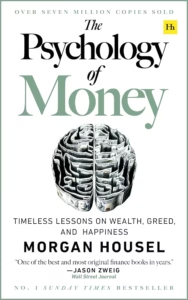
Before you buy a single share of stock or open a brokerage account, you need to examine your relationship with money. Morgan Housel’s modern classic approaches wealth not as a hard science like physics, but as a soft skill where how you behave is more important than what you know.
Key Takeaways for Beginners
- Doing Well vs. Getting Wealthy: Getting money requires taking risks, being optimistic, and putting yourself out there. Keeping money requires humility, paranoia, and acknowledging that a lot of what you made was luck.
- Compounding Magic: Housel illustrates how the secret to wealth is time. Warren Buffett’s immense fortune is not just a result of being a great investor, but because he has been investing consistently since he was a child.
- Freedom as the Ultimate Dividend: The highest form of wealth is the ability to wake up every morning and say, “I can do whatever I want today.” Money gives you control over your time.
Reading this book first prevents you from making emotional mistakes later, such as panicking during a market crash or chasing speculative trends because of FOMO (Fear Of Missing Out).
Part 2: Understanding the Mechanics — “The Psychology of Saving and Earning”
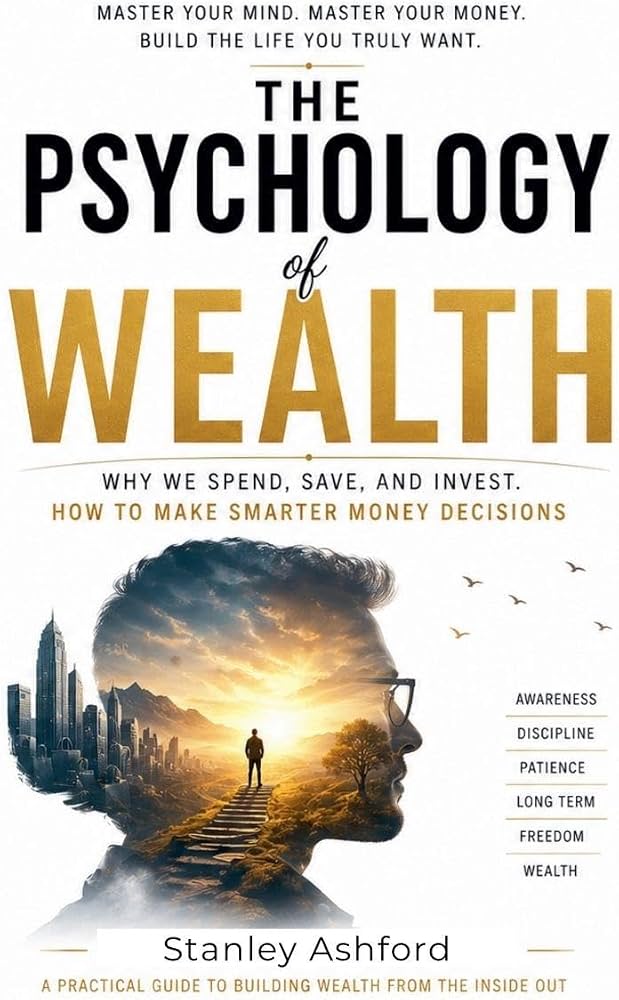
Once your mindset is calibrated, you must establish the financial mechanics that allow investing to happen in the first place. You cannot invest money you do not have. This phase bridges the gap between daily earnings and long-term capital allocation.
The Foundation of Financial Health
To build a sustainable investing routine, your financial house needs a solid roof and foundation:
- Eliminating High-Interest Debt: Paying off credit cards and personal loans with double-digit interest rates yields a guaranteed return that risk-free market investments cannot beat.
- Building an Emergency Fund: Three to six months of living expenses kept in a high-yield savings account protects you from liquidating your investments during an unexpected job loss or medical emergency.
- Automating Your Finances: The easiest way to save and invest consistently is to remove human willpower from the equation. Set up automatic transfers on payday straight into your investment accounts.
Part 3: The Engine of Wealth — “The Little Book of Common Sense Investing”
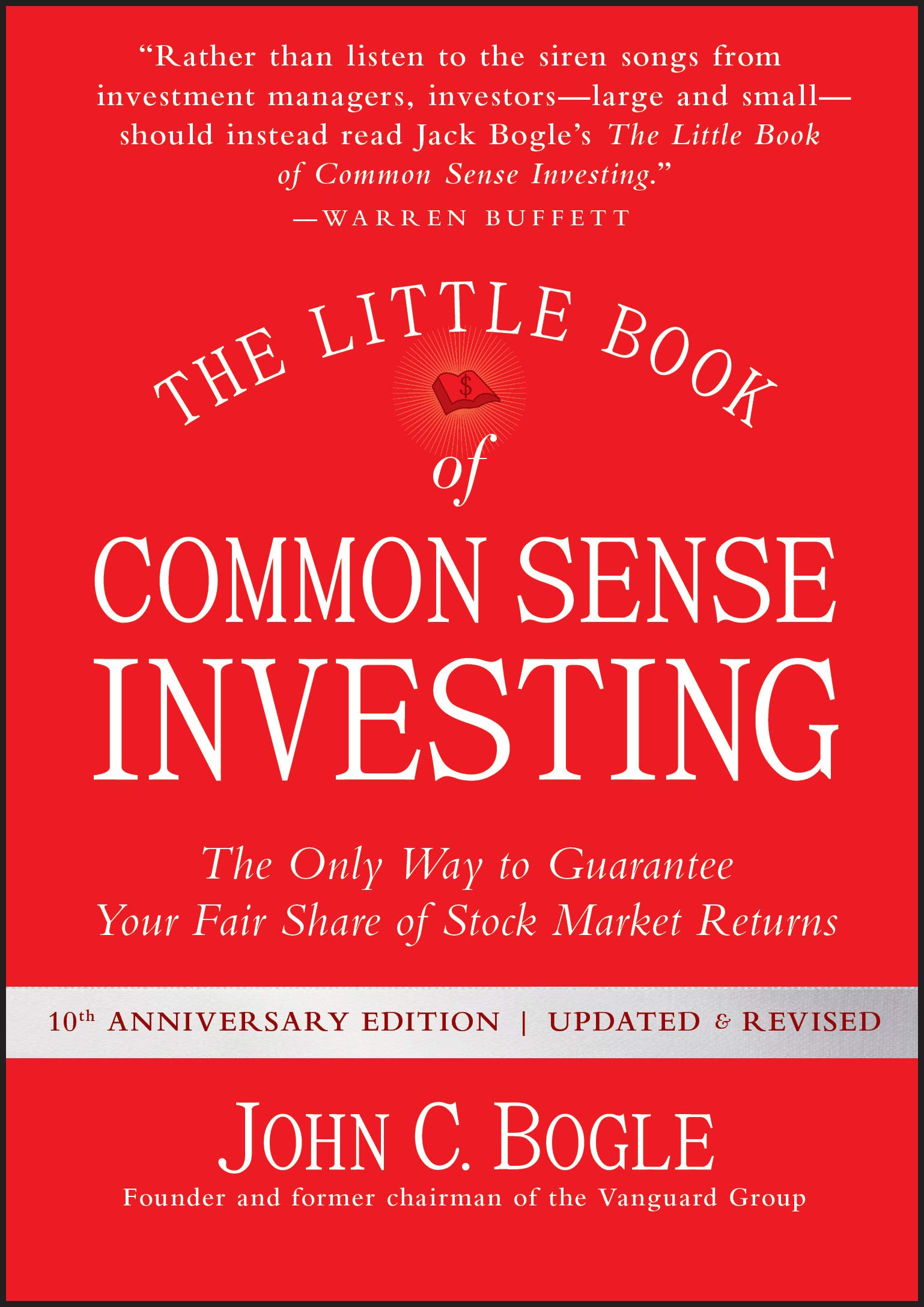
After mastering your mindset and establishing your financial foundation, you are ready to learn how the stock market actually works. John C. Bogle, the founder of The Vanguard Group and the pioneer of index fund investing, wrote the definitive guide to passive wealth creation.
Why Index Funds Win
Most individual investors and professional fund managers try to beat the market by picking winning stocks. Statistically, the vast majority of them fail over a ten-to-twenty-year horizon once fees, taxes, and human error are factored in.
- Broad Market Diversification: Instead of looking for a needle in a haystack, Bogle teaches you to buy the entire haystack. By purchasing an index fund that tracks the S&P 500, you instantly own small pieces of the five hundred largest companies in the United States.
- Minimizing Fees: Wall Street loves high fees. Mutual funds, active managers, and financial advisors often siphon away a percentage of your portfolio every year. Bogle demonstrated how low-cost index funds protect your returns from the silent killer of compounding: high expense ratios.
- The Power of Simplicity: You do not need to spend hours every day staring at stock tickers, reading quarterly earnings reports, or watching financial news channels. Investing can—and should—be boring.
The Complete Reading Roadmap: From Beginner to Advanced
To help you map out your personal finance library over the coming months, follow this chronological reading roadmap designed to expand your financial acumen step-by-step.
Level 1: Mindset and Behavior
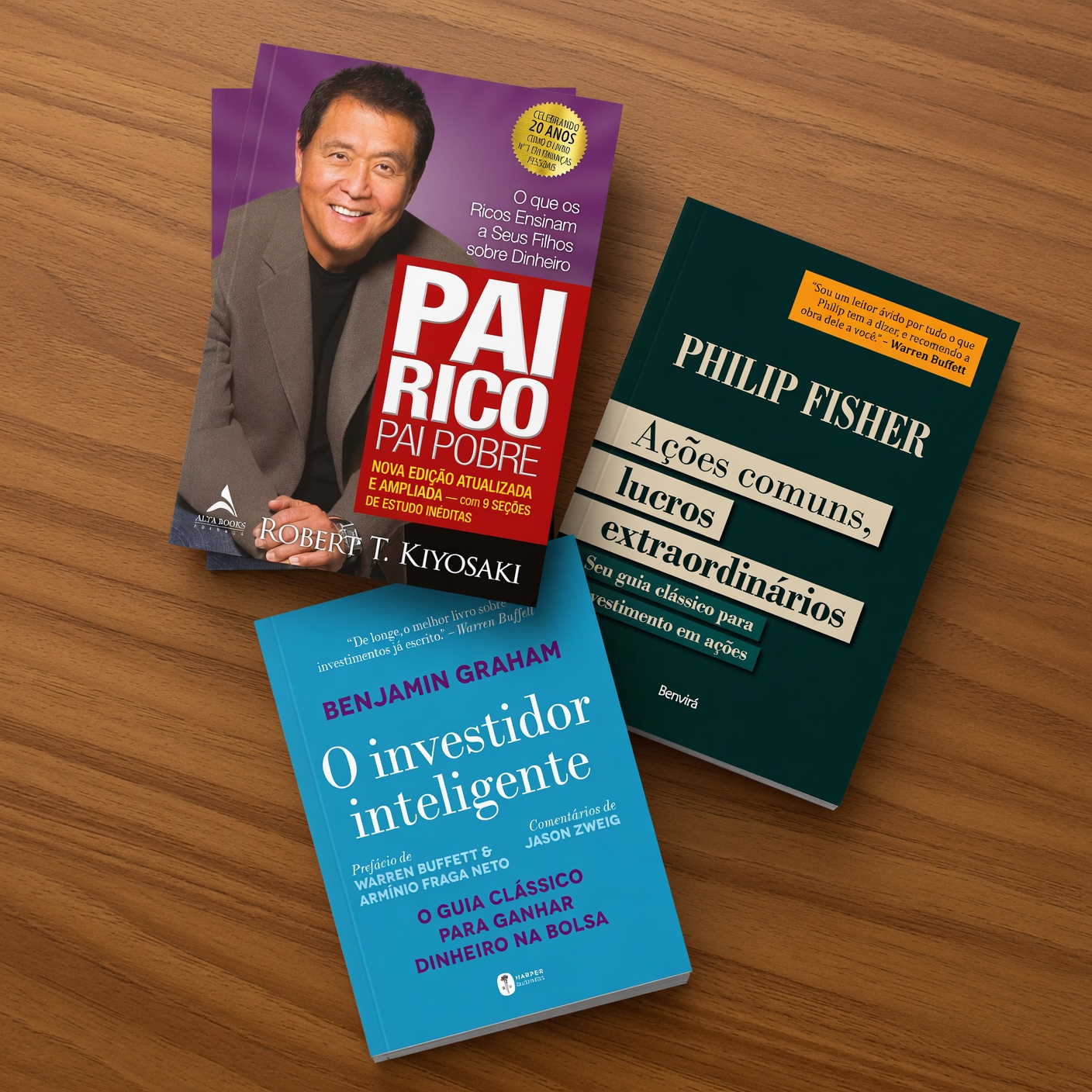
- “Rich Dad Poor Dad” by Robert Kiyosaki: Teaches the difference between assets and liabilities and challenges traditional middle-class thinking regarding employment and income.
- “I Will Teach You To Be Rich” by Ramit Sethi: A practical, step-by-step 6-week program for young adults focusing on automation, optimizing credit cards, and guilt-free spending.
Level 2: Core Investing Mechanics
- “The Simple Path to Wealth” by JL Collins: Originally written as a series of letters to his daughter, this book breaks down index fund investing with unmatched clarity, humor, and wisdom.
- “The Millionaire Next Door” by Thomas J. Stanley and William D. Danko: Reveals the surprising reality that most millionaires do not live flashy, ostentatious lives; instead, they practice extreme frugality and disciplined saving.
Level 3: Advanced Strategies and Value Investing
- “The Intelligent Investor” by Benjamin Graham: Once you grasp the basics of the market, Graham teaches deep value investing principles, margin of safety, and how to analyze market fluctuations rationally.
- “Common Stocks and Uncommon Profits” by Philip Fisher: Explores qualitative business analysis, focusing on how to find exceptional companies with long-term growth potential.
- “Fooled by Randomness” by Nassim Nicholas Taleb: Explores the role of luck in markets and life, helping you recognize the dangers of mistaking skill for fortune.
Common Mistakes Beginners Make When Reading Investment Books
Reading about finance is an incredible habit, but falling into common reading traps can derail your progress. Keep these pitfalls in mind as you build your library:
- Analysis Paralysis: Reading book after book without taking any action is a sophisticated form of procrastination. After you read your first two books, open a brokerage account and make your first index fund purchase—even if it is only fifty dollars.
- Chasing the Latest Fad: Be wary of books promising overnight riches, cryptocurrency loopholes, or secret real estate hacks with zero money down. Timeless financial principles have remained consistent for decades; flashy get-rich-quick schemes come and go.
- Ignoring Personal Circumstances: Every financial book is written from a specific perspective. Always filter advice through your own risk tolerance, income level, timeline, and life goals.
How to Apply What You Read: Turning Knowledge Into Action
Reading without implementation yields zero results. To ensure your financial reading transforms your actual bank account, follow this simple action framework:
- Take Marginal Notes: As you read, highlight concepts that challenge your worldview or spark new ideas. Keep a dedicated notebook for financial strategies.
- Discuss with Peers: Talk about what you are learning with a trusted partner, family member, or friend. Teaching a concept is the fastest way to master it.
- Execute One Step Per Book: Do not wait until you finish an entire reading list to take action. If chapter three teaches you how to open an automated retirement account, pause your reading and open that account today.
Taking Your First Step Today
The journey of a thousand miles begins with a single step, and the journey to financial independence begins with turning the first page of the right book.
Do not wait for the “perfect” moment, a higher salary, or a booming market to begin your education. Grab a copy of “The Psychology of Money” or “The Little Book of Common Sense Investing,” find a comfortable chair, and dedicate just twenty minutes a day to reading.
Your future self will thank you for the financial literacy habits you build today.