7 Books That Can Help You Develop Better Financial Discipline
Discover 7 books that can help you build healthier money habits, control spending, and make more consistent financial decisions

Managing personal finances rarely comes down to complex mathematical formulas or secret stock-picking strategies. For most people, building wealth and maintaining stability hinges on daily habits, emotional control, and consistent decision-making. Even individuals who earn a substantial income can find themselves living paycheck to paycheck if they lack the behavioral framework required to delay gratification and stick to a long-term plan.
Developing financial discipline is much like building physical endurance: it requires the right knowledge, structured routines, and mental resilience to avoid impulsive choices when temptation strikes. Reading well-researched personal finance books provides a proven shortcut, allowing you to learn from decades of behavioral research, economic history, and real-world money management experiences.
Below is a comprehensive breakdown of seven transformative books designed to help you master your money mindset, eliminate wasteful spending, automate good habits, and build lasting financial discipline—even if you consider yourself a complete beginner.
Why Financial Discipline Matters More Than High Income
Before diving into the reading list, it helps to understand why discipline sits at the core of every successful financial journey. According to data frequently highlighted by the Consumer Financial Protection Bureau (CFPB) and the Federal Reserve, household financial stress is rarely solved by a single raise or windfall. Without clear spending boundaries and automated savings systems, expenses naturally expand to match or exceed any increase in earnings—a phenomenon known as lifestyle inflation.
Financial discipline is not about extreme deprivation or living miserably on bare essentials. Instead, it is the ability to align your daily spending with your long-term priorities. When you have strong financial discipline, you decide where your money goes before the month begins, rather than wondering where it went after the bills arrive. The seven books below tackle this challenge from distinct angles: psychology, daily systems, minimalism, debt elimination, and wealth preservation.
1. The Psychology of Money by Morgan Housel
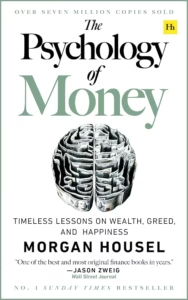
Many traditional finance books treat money strictly as a spreadsheet problem, assuming humans always act rationally. Morgan Housel flips that premise on its head in The Psychology of Money, demonstrating that financial success has far less to do with how smart you are and far more to do with how you behave.
Through nineteen short, engaging stories, Housel explores how personal history, ego, pride, marketing, and peer pressure distort our financial choices. He explains why two people with identical incomes can end up in completely different financial positions simply because of their patience and emotional self-control.
Key Financial Discipline Lessons
- The Power of “Enough”: One of the biggest threats to financial discipline is constantly moving the goalpost. Housel illustrates why knowing when you have enough prevents you from taking reckless risks or overspending to impress strangers.
- Room for Error: True discipline means building a margin of safety into your budget and investments so that unexpected emergencies—like a sudden medical bill or job transition—do not force you into high-interest debt.
- Compounding Requires Time and Patience: Whether you are saving $200 a month or investing for retirement, interrupting the compounding process through panic or impulse resets your progress.
Who Should Read It: Anyone who struggles with emotional spending, compares their lifestyle to others on social media, or feels intimidated by technical financial jargon.
2. Atomic Habits by James Clear
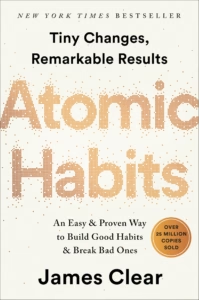
Although Atomic Habits is not exclusively a personal finance book, it is arguably one of the most practical guides ever written for building financial discipline. James Clear breaks down the science of human behavior, showing how tiny, 1% daily improvements compound into remarkable results over time—and how bad habits silently sabotage our goals.
Most people fail to stick to a budget because they rely purely on willpower, which is a finite resource that runs out after a long day at work. Clear teaches you how to redesign your environment and automate good choices so that disciplined behavior becomes effortless.
Key Financial Discipline Lessons
- Identity-Based Habits: Instead of saying “I am trying to save money,” shift your mindset to “I am the type of person who lives below my means and prioritizes financial security.” Every small purchase either reinforces or weakens that identity.
- Make Bad Habits Invisible and Difficult: Unsubscribing from retail promotional emails, removing saved credit card numbers from online shopping accounts, and deleting food delivery apps add friction to impulse purchases.
- Make Good Habits Obvious and Automatic: Setting up automatic transfers on payday ensures that money moves into your high-yield savings or retirement account before you ever see it in your checking balance.
Who Should Read It: Beginners who repeatedly create budgets or savings plans, stick to them for two weeks, and then fall back into old spending routines.
3. Your Money or Your Life by Vicki Robin and Joe Dominguez
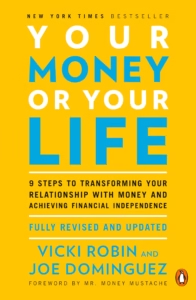
First published in 1992 and updated for modern readers, Your Money or Your Life fundamentally changes how you view the price tag on every item you buy. The authors introduce a simple yet profound concept: money is something you trade your life energy for.
When you calculate your true hourly wage—after subtracting commuting costs, work attire, taxes, and unpaid overtime—you realize how many hours of your actual life a new gadget, restaurant meal, or car payment costs. This awareness naturally curbs mindless consumption without feeling like a punishment.
Key Financial Discipline Lessons
- Tracking Every Dollar Without Shame: The book walks readers through a nine-step program starting with tracking every cent entering and leaving their accounts. Observing your habits objectively removes guilt and reveals hidden spending leaks.
- The Fulfillment Curve: Robin and Dominguez illustrate how spending increases happiness up to the point where basic needs and modest comforts are met, after which additional spending yields diminishing returns and creates clutter and stress.
- Crossing the Crossover Point: By consistently saving the gap between your income and your conscious expenses, your passive investment income eventually surpasses your monthly living expenses.
Who Should Read It: Readers who feel trapped in a cycle of working harder just to pay for things they barely use or enjoy.
4. The Total Money Makeover by Dave Ramsey
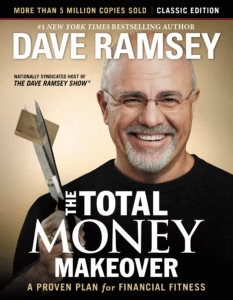
If your lack of financial discipline has resulted in mounting credit card balances, auto loans, or personal debt, The Total Money Makeover offers a straightforward, no-nonsense blueprint for regaining control. Dave Ramsey focuses heavily on behavioral momentum rather than complex interest-rate math.
While financial advisors often debate mathematical optimization versus behavioral psychology, Ramsey argues that personal finance is 80% behavior and only 20% head knowledge. His structured “Baby Steps” framework removes decision fatigue by giving you one clear financial priority at a time.
Key Financial Discipline Lessons
- The Debt Snowball Method: Instead of tackling debts by the highest interest rate first, you list debts from smallest balance to largest, pay minimums on everything else, and throw every extra dollar at the smallest balance. Quickly eliminating one account builds the psychological confidence needed to stay disciplined.
- Written Zero-Based Budgeting: Every single dollar of monthly income is assigned a specific job—housing, groceries, debt payoff, savings—before the month begins, leaving zero unaccounted funds.
- Starter Emergency Fund First: Setting aside an immediate $1,000 starter buffer prevents minor car repairs or household issues from derailing your debt payoff momentum.
Who Should Read It: Anyone overwhelmed by multiple monthly debt payments who needs a strict, step-by-step action plan to break free from living paycheck to paycheck.
5. I Will Teach You to Be Rich by Ramit Sethi
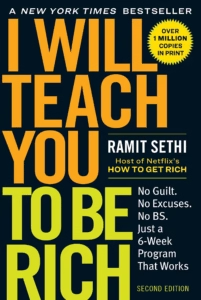
Many people avoid learning about money because they assume financial discipline means giving up lattes, never eating out, and clipping coupons forever. Ramit Sethi takes a refreshing, modern approach in I Will Teach You to Be Rich, focusing on “conscious spending” rather than relentless deprivation.
Sethi encourages readers to cut costs mercilessly on the things they do not care about so they can spend extravagantly—and guilt-free—on the things they genuinely love. His six-week program guides beginners step by step through setting up bank accounts, negotiating lower fees, automating bills, and investing in low-cost index funds.
Key Financial Discipline Lessons
- The Conscious Spending Plan: Instead of tracking every penny backward, Sethi divides take-home pay into four clear buckets: fixed costs (50% to 60%), investments (10%), savings goals (5% to 10%), and guilt-free spending money (20% to 35%).
- Automating Your Money Flow: By linking checking, savings, and brokerage accounts to execute automatic transfers on specific days of the month, discipline happens in the background while you focus on your career and life.
- Focusing on Big Wins: Negotiating your salary, lowering high APRs on credit cards, and choosing low-fee investment funds produce vastly greater financial impact than agonizing over a $4 coffee.
Who Should Read It: Young professionals and beginners who want a practical, automated money system that still leaves room for travel, hobbies, and dining out.
6. The Automatic Millionaire by David Bach

David Bach built an entire financial philosophy around one simple truth: if your savings plan relies on willpower at the end of the month, it will almost certainly fail. In The Automatic Millionaire, he demonstrates how ordinary people earning average salaries have accumulated substantial net worths simply by paying themselves first automatically.
Through the story of an everyday middle-class couple who owned two debt-free homes and retired comfortably without ever earning six-figure salaries, Bach shows that consistency beats brilliance every single time.
Key Financial Discipline Lessons
- Pay Yourself First—Automatically: Before paying rent, utilities, taxes, or credit card bills, automatically route a fixed percentage of your gross income (Bach recommends starting with at least 10% to 15%) directly into retirement and emergency accounts.
- Identifying Your “Latte Factor”: Small, habitual daily expenses—such as daily takeout lunches, unused streaming subscriptions, or convenience store snacks—often total $10 to $15 a day. Redirecting even $10 a day ($300 per month) into a diversified investment account earning an average 8% annual return grows to over $440,000 over 30 years.
- Biweekly Mortgage and Debt Payments: Splitting monthly loan payments into biweekly half-payments results in one full extra payment per year, shaving years off loan terms without noticeably impacting your weekly cash flow.
Who Should Read It: Busy individuals who struggle to manually transfer money into savings each month and want a “set it and forget it” approach to wealth building.
7. The Millionaire Next Door by Thomas J. Stanley and William D. Danko
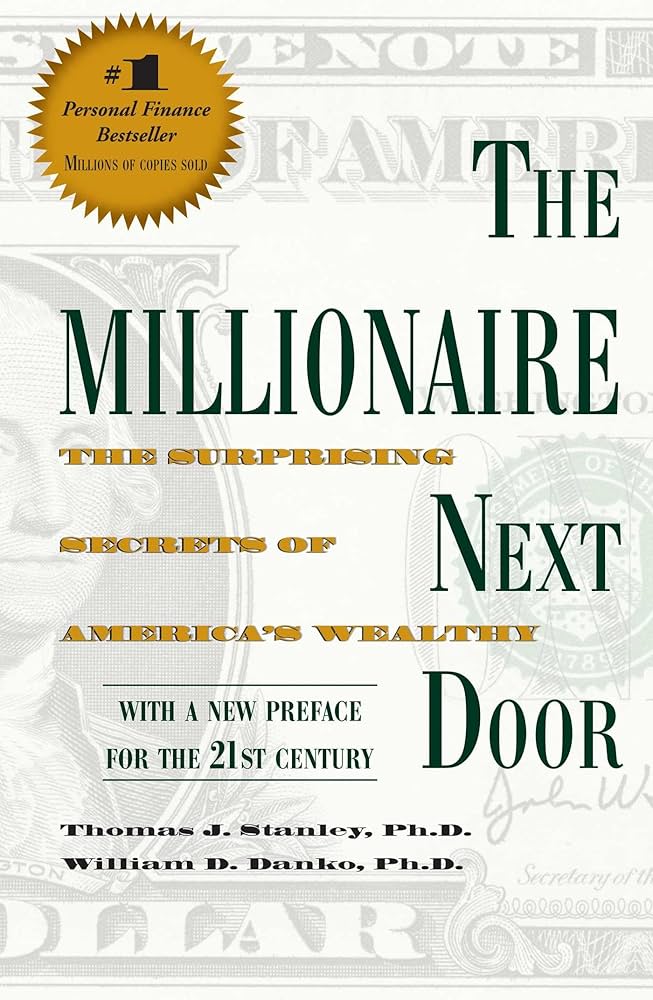
Drawing on decades of academic research and interviews with thousands of high-net-worth individuals across the United States, The Millionaire Next Door reveals what true financial discipline looks like in real life—and it rarely resembles what is portrayed on television.
Stanley and Danko discovered that the majority of self-made millionaires do not drive luxury sports cars, wear designer watches, or live in sprawling mansions. Instead, they live well below their means, drive reliable used vehicles, budget carefully, and prioritize financial independence over social status.
Key Financial Discipline Lessons
- Under Accumulators of Wealth (UAWs) vs. Prodigious Accumulators of Wealth (PAWs): High income alone does not equal wealth. Doctors, attorneys, and executives who spend every dollar they earn to maintain an upscale image often have surprisingly low net worths compared to frugal small-business owners or teachers who invest consistently.
- Offense and Defense in Personal Finance: Earning a good income is playing offense, while controlling lifestyle overhead and living modestly is playing defense. Without strong defense, even massive earnings vanish quickly.
- Time and Energy Allocation: Financially disciplined individuals spend roughly twice as many hours per month planning their investments and reviewing budgets as high-income spenders do.
Who Should Read It: Anyone tempted to equate expensive possessions with real wealth, or readers seeking motivation to embrace a modest, financially resilient lifestyle.
Comparison of the Best Books for Financial Discipline
Each book on this list addresses a specific hurdle in money management. Use the overview below to choose the best starting point based on your current financial priorities:
| Book Title | Author | Primary Focus | Best For |
|---|---|---|---|
| The Psychology of Money | Morgan Housel | Behavioral finance and emotional control | Overcoming impulse spending and comparison |
| Atomic Habits | James Clear | Habit formation and environment design | Making daily budgeting and saving effortless |
| Your Money or Your Life | Vicki Robin | Conscious consumption and life energy | Stopping mindless shopping and clutter |
| The Total Money Makeover | Dave Ramsey | Step-by-step debt elimination | Getting out of credit card and loan debt fast |
| I Will Teach You to Be Rich | Ramit Sethi | Automated systems and guilt-free spending | Beginners setting up accounts and investing |
| The Automatic Millionaire | David Bach | Paying yourself first via automation | People who struggle with manual saving |
| The Millionaire Next Door | Thomas J. Stanley | Frugality, net worth, and stealth wealth | Resisting lifestyle inflation and status symbols |
How to Turn Financial Reading into Real-World Action
Reading personal finance books provides clarity, but knowledge alone will not improve your bank balance unless you translate ideas into consistent action. Many enthusiastic readers finish three or four finance books in a row without changing a single banking habit—a trap known as passive learning.
To get measurable results from any book you pick up, follow these practical steps:
- Read One Book at a Time with a Notebook: Instead of rushing through chapters, pause whenever an idea resonates and write down one specific action you can take within 24 hours.
- Implement Before Moving On: If you read about automating transfers in The Automatic Millionaire, log into your bank portal and schedule a recurring $50 weekly transfer before starting your next book.
- Apply the 72-Hour Purchase Rule: Whenever you feel the urge to buy a non-essential item over $50, write it down and wait 72 hours. In most cases, the emotional impulse fades, saving you hundreds of dollars every month.
- Conduct a Monthly 20-Minute Money Check-In: Review your bank and credit card statements once a month without judgment. Spot recurring subscriptions you no longer use, verify that your automated savings transfers went through, and adjust next month’s spending targets.
Building financial discipline is a gradual process, not an overnight transformation. By picking even one book from this list and applying its core principles consistently over the next 90 days, you can replace financial anxiety with clarity, structure, and steady progress toward your long-term goals.