What Rockefeller Can Teach You About Wealth and Business?
Discover what Rockefeller's career teaches about wealth, entrepreneurship, and long-term success
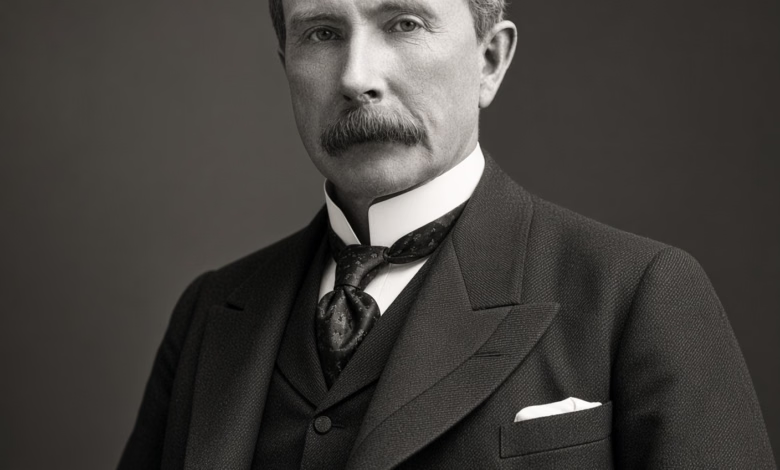
When people think about the absolute pinnacle of wealth and industrial might in modern history, one name invariably rises above the rest: John D. Rockefeller. Born into modest means in 1839, Rockefeller built Standard Oil into a colossal monopoly, ultimately becoming America’s first billionaire and, by many economic calculations, the richest self-made individual in modern history.
Yet, the true value of Rockefeller’s legacy does not lie merely in the staggering fortune he amassed. Instead, it rests in the operational philosophies, psychological disciplines, and timeless business principles he practiced every single day. Long before modern venture capital, agile startups, or digital personal finance applications existed, Rockefeller engineered a blueprint for sustainable success that remains remarkably applicable today.
Whether you are managing personal finances, scaling an enterprise, or seeking long-term financial independence, examining Rockefeller’s playbook offers profound lessons. Here is an in-depth breakdown of what John D. Rockefeller can teach you about wealth, business mastery, and enduring legacy.
The Power of Absolute Financial Awareness: Tracking Every Single Dollar

One of the most foundational habits that propelled Rockefeller from a young bookkeeper to an industrial titan began with a simple, inexpensive red-covered notebook. Known famously as “Ledger A,” Rockefeller purchased this ledger as a teenager and meticulously recorded every single penny he earned and spent.
For Rockefeller, financial awareness was not an afterthought; it was the bedrock of discipline. Even as his wealth expanded into millions and later billions of dollars, he maintained a rigorous understanding of cash flow, operational expenses, and capital allocation.
Why Financial Tracking Matters Today
In the modern digital economy, it is easier than ever to lose track of capital. Subscription creep, micro-transactions, and automated billing can quietly drain resources without conscious consent. Rockefeller’s ledger philosophy teaches us a vital modern lesson: you cannot optimize what you do not measure.
- Gain Complete Clarity: Maintaining a detailed ledger or utilizing modern tracking systems removes financial anxiety and replaces it with empirical reality.
- Identify Invisible Leaks: Just as Rockefeller scrutinized every fraction of a cent in oil refining costs, auditing your personal or business expenses reveals hidden inefficiencies.
- Make Informed Decisions: When you know exactly where your money goes, capital allocation shifts from emotional guesswork to strategic investment.
Shift From Short-Term Hustle to Long-Term Compounding Systems
Modern entrepreneurial culture often glorifies frantic hustle, overnight scaling, and immediate monetization. Rockefeller operated under a completely different paradigm. He viewed business not as a series of isolated transactions, but as a decades-long game of structural positioning and compounding returns.
When oil price crashes and market panics wiped out competitors who chased short-term spikes, Rockefeller’s enterprises weathered the storms effortlessly. Why? Because he relentlessly reinvested earnings back into the foundation of his business, prioritizing long-term efficiency over immediate gratification.
Building Resilient Business Models
To implement Rockefeller’s long-term perspective in your own business or career, consider these core shifts:
- Prioritize Moats Over Margins: Instead of racing to maximize short-term profit margins at the expense of quality or customer trust, build structural advantages (moats) that protect your market share over decades.
- Reinvest in Infrastructure: Allocate a significant portion of early returns back into research, development, and operational capacity rather than extracting capital prematurely.
- Embrace Relentless Patience: Sustainable wealth is rarely loud or fast. True compounding requires trusting a proven system and allowing time to multiply your efforts.
Relentless Elimination of Waste: Operational Efficiency at Scale
Rockefeller fought waste with what historians often describe as religious fervor. In the early days of oil refining, many operators discarded or ignored the byproduct known as gasoline because kerosene was the primary fuel source. Rockefeller, however, found ways to utilize or monetize every single derivative of petroleum.
He analyzed his supply chain down to the fractions of a cent, famously questioning why a certain factory used forty drops of solder to seal an oil barrel instead of thirty-nine. At scale, saving a single drop of solder translated into millions of dollars in net profit.
Translating Efficiency to Modern Enterprise
In any business or personal project, waste is the silent killer of profitability. Operational efficiency is not about cutting corners; it is about maximizing the value generated from every unit of resource consumed.
- Audit Your Processes: Look closely at your daily workflows, supply chains, or project timelines. Where are time, energy, and capital being leaked on repetitive or unproductive tasks?
- Eliminate Before Optimizing: Do not try to become more efficient at tasks that shouldn’t be done in the first place. Cut the non-essential entirely before streamlining what remains.
- Systematize Solutions: When you solve a problem, build a standard operating procedure or automated system so that the inefficiency never returns.
Time as the Ultimate Non-Renewable Currency
One of the most striking paradoxes of Rockefeller’s psychology was his dual obsession: he meticulously accounted for every penny while simultaneously valuing his time far above money. He recognized a fundamental truth that many modern professionals forget: money lost can be re-earned through labor or investment, but time spent is gone forever.
Rockefeller treated his schedule with immense reverence, cultivating a disciplined daily routine that protected his cognitive energy. He understood that fatigue leads to poor judgment, and poor judgment destroys capital.
Guarding Your Most Valuable Asset
If you want to scale your business or personal wealth, you must manage your hours with the same rigor you apply to your bank account:
- Calculate Your Time Value: Determine what your productive time is worth. If you spend hours on low-leverage tasks that could be outsourced or automated cheaply, you are effectively paying a heavy tax on your own potential.
- Protect Focus Blocks: Guard your peak cognitive hours from trivial distractions, meetings, and digital noise.
- Prioritize Rest and Longevity: Rockefeller lived to the age of 98, maintaining a balanced routine that included regular sleep, outdoor walks, and leisure. Burnout is an inefficient business strategy.
The Art of Delegation and Building Trusted Ecosystems
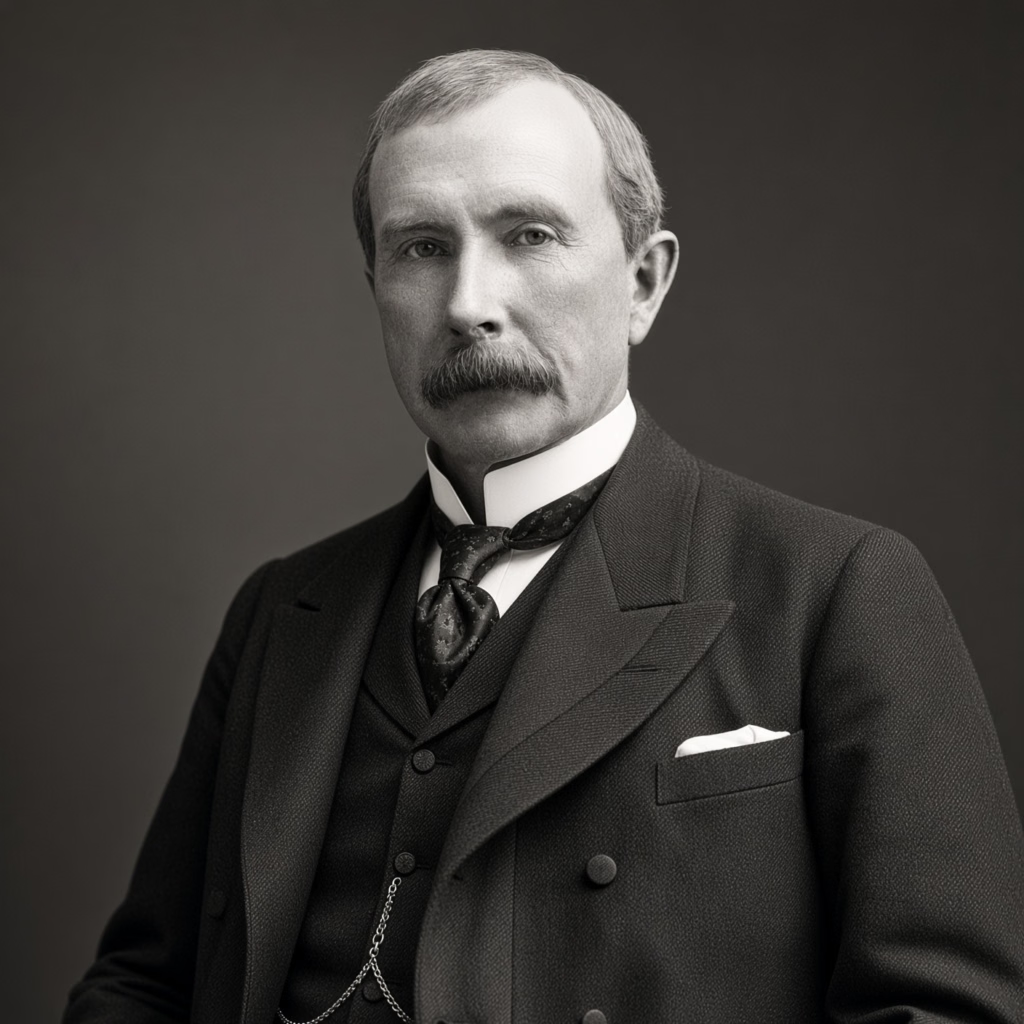
No individual can scale a global enterprise entirely alone. While Rockefeller possessed an exceptional grasp of detail, his ultimate success relied on his ability to identify talent, delegate authority, and build robust corporate systems.
He surrounded himself with brilliant partners, chemists, legal minds, and logistics experts—such as Henry Flagler—and empowered them to manage specialized operations. He understood that micromanagement caps growth, whereas effective delegation unlocks infinite leverage.
Scaling Through Teams
Whether you are managing a small digital portfolio, an e-commerce brand, or a growing corporate team, delegation is the gateway to expansion:
- Hire for Complementary Strengths: Do not surround yourself with people who think exactly like you. Find capable partners who excel where you are weak.
- Establish Clear Frameworks: Delegation fails when expectations are ambiguous. Provide your team with clear objectives, performance metrics, and autonomous freedom within those boundaries.
- Trust the System: True leadership means building an organization that can function smoothly even in your absence.
Philanthropy and Purpose: The Ultimate Expression of Wealth
A comprehensive look at John D. Rockefeller would be incomplete without examining his approach to philanthropy. In the later decades of his life, Rockefeller transitioned from aggressive wealth accumulation to strategic wealth distribution.
He established the Rockefeller Foundation, funded the creation of the University of Chicago, and poured hundreds of millions of dollars into medical research, public health initiatives, and education. His philanthropic philosophy was not rooted in casual charity, but in rigorous, outcome-driven investment aimed at solving root causes of human suffering.
Aligning Wealth with Meaning
Rockefeller viewed wealth as a stewardship responsibility rather than a mere tool for personal luxury. This philosophy teaches modern earners and entrepreneurs a profound lesson about fulfillment:
- Define Purpose Beyond Accumulation: Financial independence is ultimately a means to an end—providing security, freedom, and the capacity to create positive impact.
- Approach Giving Strategically: Just as you analyze business investments, thoughtful philanthropy or community contribution yields profound returns in personal alignment and societal progress.
Timeless Principles for a Modern Era

John D. Rockefeller’s enduring legacy proves that wealth and business success are not products of luck, but the natural byproducts of unwavering discipline, structural efficiency, long-term vision, and deep personal integrity.
By tracking your resources meticulously, eliminating waste, valuing your time above all else, building trusted teams, and maintaining patience through market cycles, you can construct a resilient financial future. The billionaires and master operators of tomorrow are simply those who master the timeless fundamentals practiced by the titans of the past.