Best Personal Finance Books for Beginners
Explore beginner-friendly books on budgeting, saving, and investing

Managing money can feel overwhelming when you are just starting out. Between jargon-heavy investment guides, confusing budget rules, and endless debt-payoff strategies, finding clear advice seems tough. Fortunately, expanding your financial education does not require a finance degree. Reading the right personal finance books for beginners can completely transform your relationship with money, clear up confusion, and set you up for lifetime financial freedom.
Whether you want to pay off debt, build an emergency fund, start investing in index funds, or shift your money mindset, top finance authors have already mapped out the blueprint. This comprehensive guide covers the best personal finance books for beginners, breaking down key takeaways, unique frameworks, and practical action plans to help you reach your goals.
1. Why Reading Personal Finance Books is the Ultimate Investment
Before exploring specific book recommendations, it helps to understand why reading about personal finance offers an unbeatable return on investment. Taking a structured, book-length deep dive into money management offers several core advantages over skimming short social media clips:
- Comprehensive Frameworks Over Quick Hacks: Short videos provide surface tips, but books offer end-to-end systems for budgeting, debt reduction, and wealth accumulation.
- Mindset Transformation: Financial success is roughly 80% behavior and 20% knowledge. Books help rewire how you think about spending, saving, and risk.
- Avoidance of Costly Mistakes: Learning from experienced authors prevents common financial missteps like carrying high-interest credit card balances or panic selling investments during market dips.
- Long-Term Confidence: Financial literacy builds peace of mind, replacing money anxiety with control over your economic future.
2. Best Personal Finance Books for Mindset and Psychology
Before building budgets or picking index funds, establishing the right mental foundation is critical. Your attitude toward money dictates your long-term success far more than complex math formulas.
The Psychology of Money by Morgan Housel
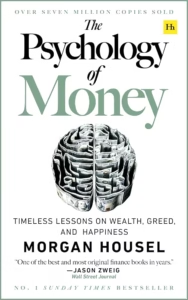
Core Focus: Behavioral finance, money habits, and emotional control.
Morgan Housel’s masterpiece, The Psychology of Money, demonstrates that doing well with money has little to do with how smart you are and everything to do with how you behave. Housel presents 19 short stories illustrating how personal history, pride, fear, and greed shape everyday financial choices.
- Key Takeaway: Wealth is what you don’t see. It consists of the cars not purchased, the luxury items skipped, and the savings kept in the bank for future freedom.
- Why Beginners Need It: It removes guilt and replaces it with practical wisdom. Housel explains that flexibility and control over your time are the ultimate dividends money can buy.
Rich Dad Poor Dad by Robert T. Kiyosaki
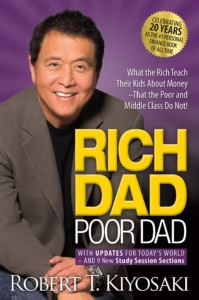
Core Focus: Mindset shifts, assets vs. liabilities, and financial independence.
A classic entry point for millions worldwide, Rich Dad Poor Dad contrasts two distinct approaches to money. Kiyosaki contrasts his biological father (Poor Dad), who worked hard for a steady paycheck, with his friend’s father (Rich Dad), who built passive wealth through investments and cash-flowing businesses.
- Key Takeaway: Learn the strict difference between an asset (something that puts money into your pocket) and a liability (something that takes money out of your pocket).
- Why Beginners Need It: It challenges conventional thinking about job security, homeownership, and traditional career paths, inspiring readers to build income-producing assets.
Secrets of the Millionaire Mind by T. Harv Eker
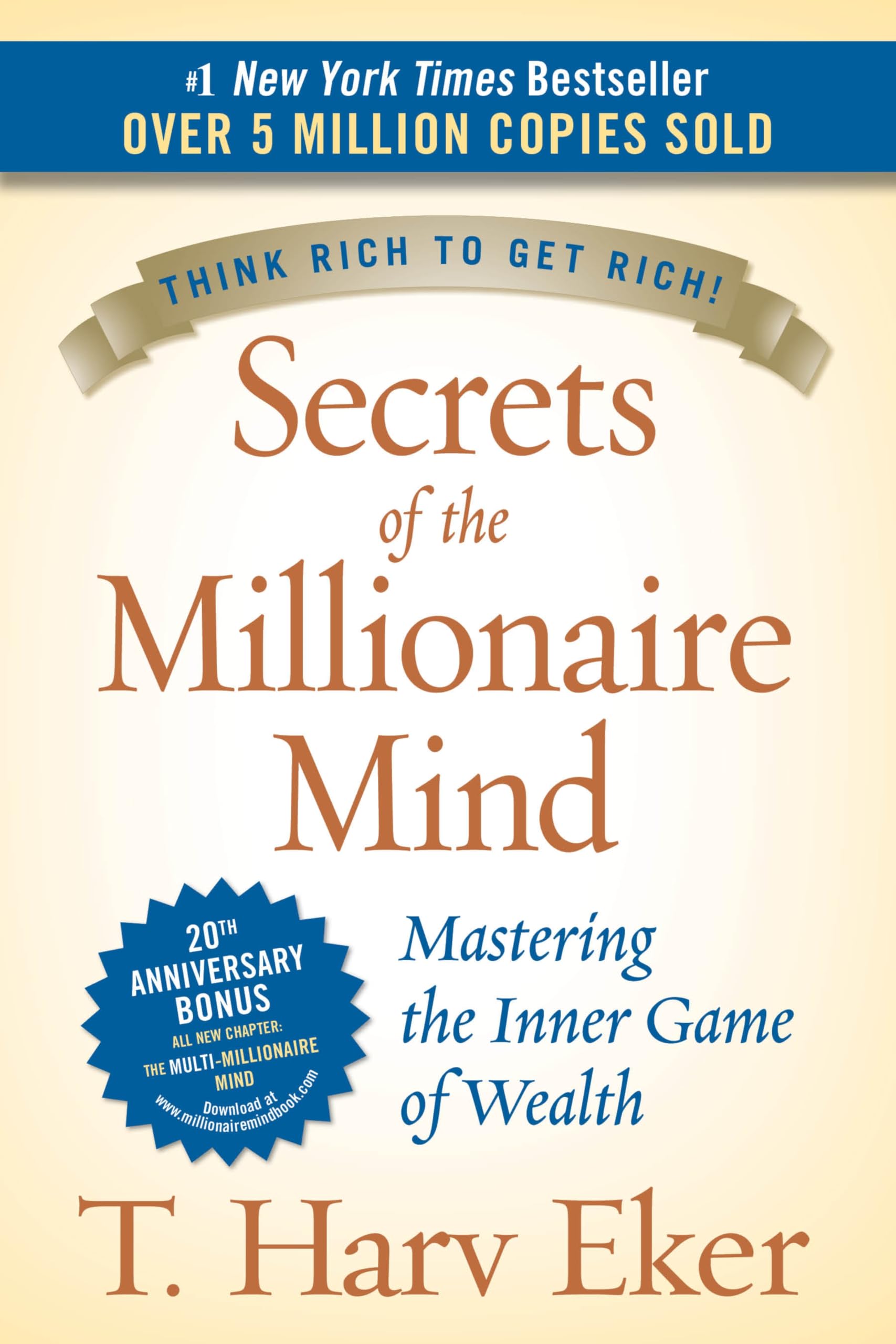
Core Focus: Money scripts, subconscious beliefs, and wealth blueprinting.
T. Harv Eker argues that everyone carries a subconscious “money blueprint” ingrained from childhood. If your subconscious blueprint isn’t set for success, no amount of financial knowledge will change your bottom line.
- Key Takeaway: Rich people play the money game to win, while broke people play the money game not to lose. Shift from a mindset of scarcity to one of growth.
- Why Beginners Need It: It uncovers deep-seated money habits and offers actionable principles to reshape your subconscious financial baseline.
3. Best Personal Finance Books for Budgeting and Automation
Once your mindset is aligned, the next phase is building systems to organize income, curb excess spending, and put savings on autopilot.
I Will Teach You to Be Rich by Ramit Sethi
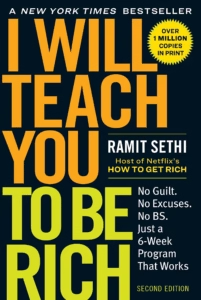
Core Focus: Automated banking, conscious spending, and guilt-free enjoyment.
Ramit Sethi offers a practical, zero-BS 6-week program designed specifically for young adults and beginners. Sethi cuts through boring advice—like giving up your daily latte—and instead focuses on high-impact wins: optimizing credit cards, automating bank accounts, negotiating salaries, and spending money guilt-free on things you truly love.
- Key Takeaway: Build a “Conscious Spending Plan.” Allocate money to fixed costs, investments, and savings first, leaving a set pool for guilt-free fun.
- Why Beginners Need It: It is actionable, humorous, and removes the tedious manual effort of budgeting through smart account automation.
The Total Money Makeover by Dave Ramsey
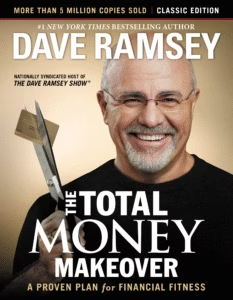
Core Focus: Debt elimination, emergency funds, and disciplined budgeting.
Dave Ramsey’s straight-talking guide is ideal for anyone feeling overwhelmed by debt, credit cards, or financial disorganization. His “7 Baby Steps” method provides a simple, sequential path out of financial distress and into stability.
- Key Takeaway: Use the “Debt Snowball” method: pay off your smallest balance first to build emotional momentum while making minimum payments on the rest.
- Why Beginners Need It: It offers clarity and structure for people needing a step-by-step plan to eliminate debt and stop living paycheck to paycheck.
Broke Millennial by Erin Lowry

Core Focus: Real-world financial situations, modern banking, and student loan management.
Erin Lowry addresses the unique money challenges faced by young adults in today’s economy. Broke Millennial goes beyond basic budgeting to cover tricky topics like splitting restaurant bills with friends, managing student loans, dealing with money awkwardness in relationships, and navigating side hustles.
- Key Takeaway: Get honest about your current financial state and pick a budgeting strategy that fits your real personality instead of forcing a rigid system.
- Why Beginners Need It: Written in an approachable, relatable tone, it feels like receiving money advice from a knowledgeable friend.
4. Best Personal Finance Books for Simple Investing and Wealth Building
Saving money is only half the battle; to beat inflation and achieve true financial independence, your money must work for you. These books strip away Wall Street complexity and reveal straightforward investing strategies.
The Simple Path to Wealth by JL Collins
Core Focus: Low-cost index fund investing, asset allocation, and financial independence.
Originally written as a series of letters to his daughter, JL Collins’ book presents one of the clearest paths to wealth available. Collins argues that Wall Street intentionally makes investing look complex to extract unnecessary management fees.
- Key Takeaway: Invest consistently in broad-market, low-cost index funds (such as total stock market index funds), keep debt at zero, and ignore short-term market noise.
- Why Beginners Need It: It demystifies the stock market completely, proving that simple, low-effort strategies consistently outperform complex stock picking.
The Millionaire Next Door by Thomas J. Stanley & William D. Danko
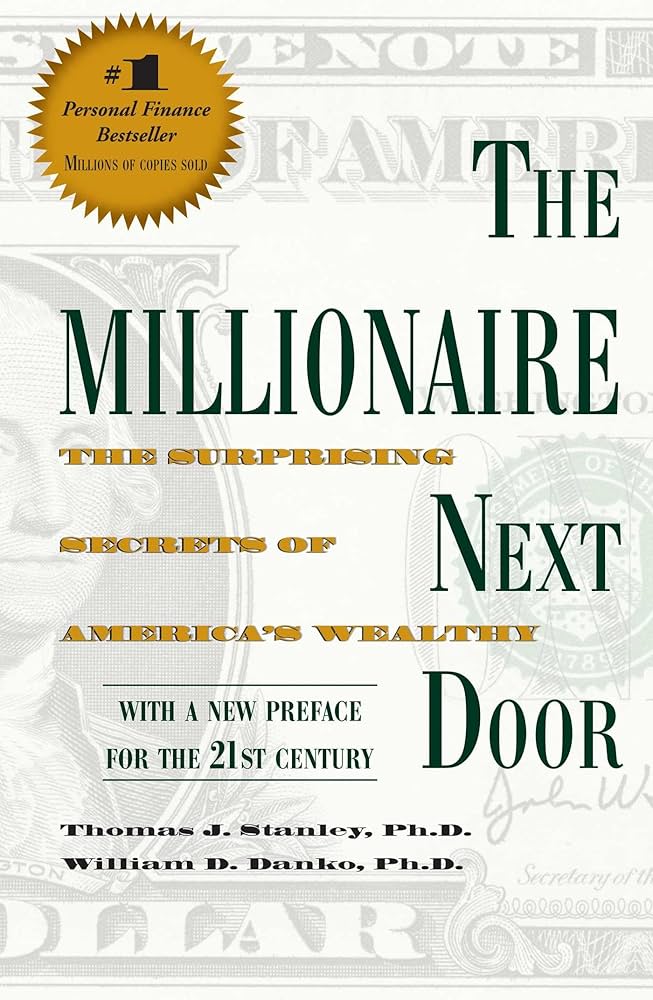
Core Focus: Wealth preservation, frugal living, and spending habits of real millionaires.
Based on extensive research and interviews with actual U.S. millionaires, this book dispels common pop-culture myths about wealth. The authors reveal that most true millionaires do not drive luxury sports cars, wear high-end designer clothing, or live in massive mansions. Instead, they live below their means, prioritize financial independence over status, and build quiet assets.
- Key Takeaway: High income is not the same as high net worth. True wealth is built through continuous saving and modest living, not flash display.
- Why Beginners Need It: It keeps young investors anchored, preventing them from falling into lifestyle inflation as their income grows.
Your Money or Your Life by Vicki Robin & Joe Dominguez
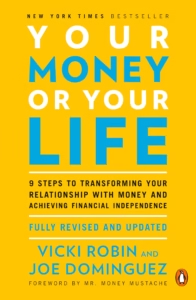
Core Focus: Aligning spending with personal values, tracking life energy, and early retirement.
Considered the foundational text of the FIRE (Financial Independence, Retire Early) movement, Your Money or Your Life introduces a 9-step program to redefine your relationship with money. It teaches you to view money as “life energy”—the actual hours of your life traded to earn each dollar.
- Key Takeaway: Calculate your true hourly wage (accounting for commute time, work clothing, and stress relief expenses) to evaluate purchases based on how much life energy they cost.
- Why Beginners Need It: It introduces intentional living, encouraging readers to spend money on things that bring genuine value while ruthlessly cutting out excess waste.
5. Quick Comparison: Personal Finance Books for Beginners
To help you pick the perfect starting point based on your current financial goals, here is a breakdown of top beginner titles:
| Book Title | Primary Author | Best For | Core Focus Area |
|---|---|---|---|
| The Psychology of Money | Morgan Housel | Mindset & Emotions | Understanding behavioral habits & long-term wealth |
| Rich Dad Poor Dad | Robert Kiyosaki | Mindset & Freedom | Distinguishing assets from liabilities |
| I Will Teach You to Be Rich | Ramit Sethi | Action & Automation | Automating bank accounts & conscious spending |
| The Total Money Makeover | Dave Ramsey | Debt Reduction | Paying off debt with the Debt Snowball strategy |
| The Simple Path to Wealth | JL Collins | Beginner Investing | Building simple wealth using low-cost index funds |
| Your Money or Your Life | Vicki Robin & Joe Dominguez | Lifestyle Alignment | Calculating life energy & achieving financial freedom |
6. How to Apply What You Learn from Personal Finance Books
Reading finance books is inspiring, but reading alone won’t change your bank account. Action is what produces results. Here is a step-by-step framework to convert knowledge into financial progress:
- Start with One Book at a Time: Avoid information overload by focusing on one book that aligns with your immediate goals (e.g., debt elimination, mindset, or investing).
- Track Your Current Net Worth: List your total assets (cash, savings, retirement accounts) minus your liabilities (credit cards, loans, mortgages). Know your starting number.
- Establish an Emergency Fund: Set aside 3 to 6 months of basic living expenses in a High-Yield Savings Account (HYSA) before taking on significant market risks.
- Automate Your Monthly Money Flow: Set up direct deposits so savings and retirement contributions are deducted automatically every payday.
- Implement Low-Cost Index Investing: Open a retirement account (such as a Roth IRA or 401k) and consistently purchase broad-market index funds.
- Review Progress Quarterly: Revisit your budget and asset growth every three months to adjust your goals as your life evolves.
7. Essential Money Concepts Every Beginner Must Understand
As you read personal finance literature, you will frequently encounter fundamental concepts. Mastering these core terms makes any finance book easier to digest:
Compound Interest
Compound interest is the interest you earn on both your original deposit and the interest that accumulates over time. Albert Einstein famously called it the eighth wonder of the world. Starting early gives compounding the time needed to build significant wealth.
Inflation
Inflation is the gradual loss of purchasing power over time, causing everyday goods to cost more. Holding all your capital in cash causes it to lose value over time, which is why investing in growth assets is essential.
Index Funds
An index fund is a type of mutual fund or ETF designed to match the performance of a specific market index, like the S&P 500. Instead of hiring an expensive manager to pick individual stocks, index funds automatically hold shares of top companies at minimal cost.
High-Yield Savings Accounts (HYSA)
Unlike standard traditional savings accounts that pay minimal interest, a High-Yield Savings Account offers significantly higher annual yields. It is the ideal place to park your emergency fund while maintaining complete liquidity.
8. Common Personal Finance Mistakes Beginners Should Avoid

As you begin your financial journey, keeping an eye out for predictable roadblocks will keep you on track:
- Waiting for the “Perfect Time” to Start: Timing the market is virtually impossible. Time in the market consistently beats timing the market. Start with whatever small amount you can save today.
- Falling for High-Yield Speculative Traps: Get-rich-quick schemes, unvetted stock tips, and speculative hype often lead to sharp losses. Stick to proven wealth strategies.
- Ignoring High-Interest Credit Card Debt: Paying interest rates over 20% on credit cards guarantees a negative return on your money. Eliminate high-interest balances before aggressive investing.
- Increasing Spending as Earnings Increase: Upgrading your lifestyle every time you get a raise prevents true wealth creation. Direct salary increases straight into savings and investments instead.
Take Control of Your Financial Future Today
Building wealth and reaching financial peace is a marathon, not a sprint. You do not need to master every technical detail of Wall Street to secure your financial future. By picking up just one of these top personal finance books for beginners, learning its core lessons, and putting automated systems in place, you take the crucial first steps toward lifelong independence.
Choose the title above that best fits your current goals, start reading today, and put your money to work for your future!