10 Finance Books That Offer Different Perspectives on Building Wealth
Explore 10 finance books that offer valuable insights into building wealth

1. The Psychology of Money by Morgan Housel: Understanding Behavioral Finance and Risk Management
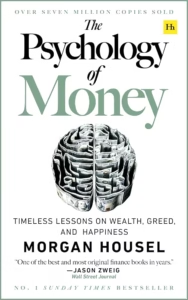
Most money advice focuses heavily on mathematical formulas, balance sheets, and technical stock picking. In The Psychology of Money, financial journalist Morgan Housel argues that doing well with money has very little to do with how smart you are and a lot to do with how you behave. Behavioral finance demonstrates that personal financial success is driven primarily by human psychology, ego, self-control, and individual risk tolerance.
Housel uses short, memorable stories to illustrate how personal history shapes risk perception. Someone who grew up during high inflation views investments differently than someone who grew up during a prolonged bull market. The book stresses that building wealth is about keeping money rather than constantly taking outsized risks to grow it quickly.
Key Takeaways for Wealth Builders:
- Reasonable Over Rational: Aim for financial decisions that allow you to sleep well at night rather than trying to maximize every mathematical percentage point.
- The Power of Compounding: Time is the most critical element in wealth accumulation; remaining consistent over decades outweighs short-term high returns.
- True Wealth is Hidden: Wealth is the money you haven’t spent—it is the freedom, flexibility, and options you retain for future decisions.
2. Die with Zero by Bill Perkins: Maximizing Life Experiences Over Eternal Asset Accumulation
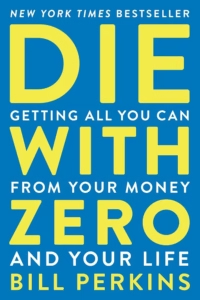
Traditional retirement planning focuses on building the largest nest egg possible to ensure you never run out of money. In Die with Zero, energy trader Bill Perkins presents a provocative alternative mindset: your goal should be to maximize life fulfillment rather than simply maximizing a bank balance at the end of your life.
Perkins argues that saving money excessively without enjoying it during your prime health years leads to wasted vitality. Money loses utility as health declines, meaning that experiences enjoyed in your twenties, thirties, or forties yield a lifelong “memory dividend” that cannot be acquired in late retirement.
Key Takeaways for Wealth Builders:
- Optimize Your Life Utility Curve: Balance asset accumulation with deliberate spending on meaningful life experiences while you have the physical health to enjoy them.
- Give Inheritances Early: If you plan to leave money to children or charities, transfer assets when the recipients are in their 20s or 30s and need it most, rather than upon your passing decades later.
- Annuities and Risk Hedging: Utilize structured financial products to eliminate the fear of running out of money while systematically spending down assets.
3. The Millionaire Fastlane by M.J. DeMarco: Escaping Slow Financial Growth Through Business Scale
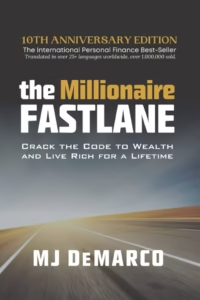
For decades, standard financial advice has promoted the “Slowlane”—getting a traditional job, saving 10% of your income, and relying on stock market index funds to make you rich by age 65. M.J. DeMarco’s The Millionaire Fastlane aggressively challenges this premise, contending that trading time for money creates an artificial ceiling on earnings.
DeMarco advocates for building scalable business systems that operate independently of your personal time. By satisfying market needs at scale, entrepreneurs can generate substantial enterprise value and create life-changing liquid wealth in years rather than decades.
Key Takeaways for Wealth Builders:
- The CENTS Framework: Sustainable wealth-generating businesses must satisfy the laws of Control, Entry, Need, Time, and Scale.
- Decouple Income from Time: True financial freedom comes from owning assets that produce income regardless of your hourly input.
- Producer Mindset: Shift from being a passive consumer of products and services to an active creator of market solutions.
4. The Simple Path to Wealth by JL Collins: Streamlining Asset Allocation with Low-Cost Index Funds
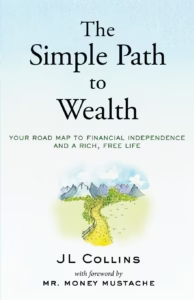
Financial media and Wall Street institutions often present investing as an overly complex endeavor requiring constant stock updates, market timing, and expensive management fees. JL Collins strips away this artificial complexity in The Simple Path to Wealth, presenting a streamlined approach to building financial independence.
Originally written as letters to the author’s daughter, the book highlights why low-cost broad-market index funds consistently outperform active portfolio management over long time horizons. By minimizing investment fees and maintaining a calm discipline during market downturns, everyday investors can quietly accumulate significant personal net worth.
Key Takeaways for Wealth Builders:
- F-You Money: Financial independence provides the freedom to walk away from bad working environments and pursue fulfilling projects.
- Total Stock Market Allocation: Invest heavily in low-cost total market index funds (such as VTSAX) to capture overall economic growth.
- Avoid Market Timing: Market volatility is completely normal; remaining invested during market panics is the single greatest factor in long-term performance.
5. Rich Dad Poor Dad by Robert Kiyosaki: Rethinking Cash Flow, Assets, and Passive Income
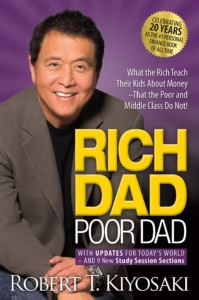
As one of the most widely read books in personal finance history, Robert Kiyosaki’s Rich Dad Poor Dad introduces a clear contrast between traditional employment thinking and investor thinking. The core thesis revolves around understanding the precise definition of an asset versus a liability.
Kiyosaki argues that formal education prepares individuals to work for money, whereas financial education teaches people how to make money work for them. Instead of focusing solely on earned salary income, wealth builders prioritize building or acquiring real estate, businesses, and paper assets that generate consistent cash flow.
Key Takeaways for Wealth Builders:
- Assets Put Money in Your Pocket: An asset generates cash flow; a liability takes money out of your pocket regardless of its retail valuation.
- Financial Literacy Over High Income: Earning a high salary does not build net worth if expenses scale alongside earnings (lifestyle inflation).
- Work to Learn, Not to Earn: Choose career opportunities based on the skills you will acquire—such as sales, marketing, and systems management—rather than immediate compensation.
6. Your Money or Your Life by Vicki Robin and Joe Dominguez: Evaluating Spending Through Time Value
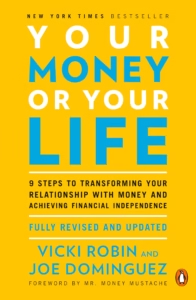
Your Money or Your Life is widely recognized as a foundational text for the Financial Independence, Retire Early (FIRE) movement. Authors Vicki Robin and Joe Dominguez present a practical framework that measures money not in currency units, but in terms of human life energy.
When you compute your actual hourly wage—factoring in commuting costs, work wardrobe, stress relief, and unpaid travel time—you gain a clear baseline for financial decisions. Spending money requires exchanging a specific block of your limited time on earth, fundamentally altering how you evaluate consumer purchases.
Key Takeaways for Wealth Builders:
- Calculate Your Real Hourly Wage: Subtract work-related expenses and time commitments from your gross salary to discover what your time is truly worth.
- Conscious Frugality: Align your spending habits with your personal values rather than societal expectations.
- Tracking Net Investment Returns: Monitor capital accumulation until your investment yields permanently cover your baseline living expenses.
7. The Millionaire Next Door by Thomas J. Stanley and William D. Danko: Emphasizing Discipline and Frugality
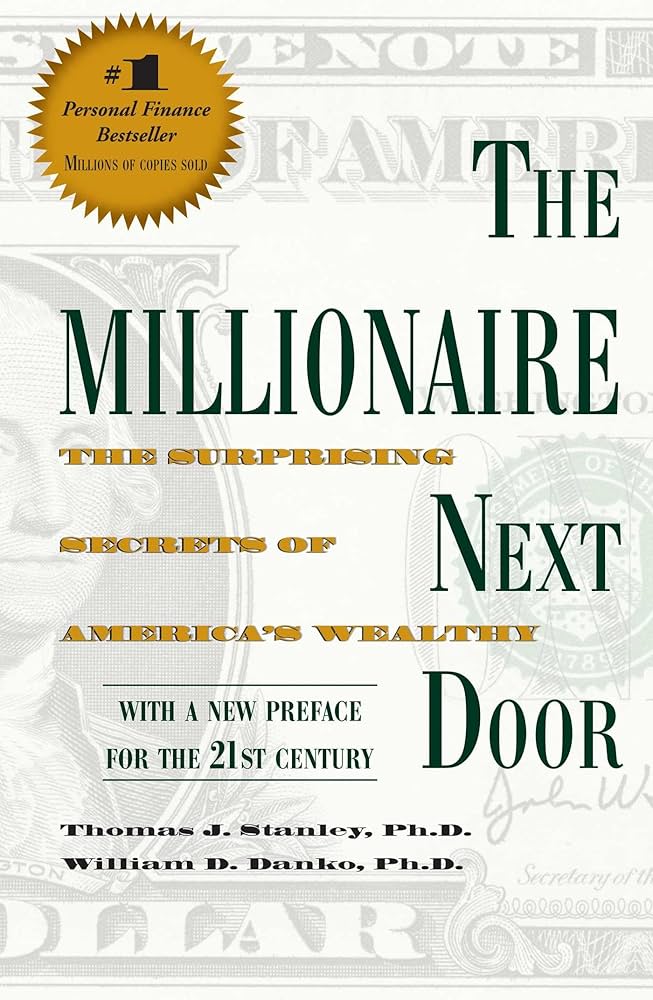
Popular culture often equates high net worth with lavish spending, luxury automobiles, and opulent lifestyles. In The Millionaire Next Door, researchers Thomas Stanley and William Danko utilize extensive empirical data to expose the stark contrast between public displays of wealth and actual net worth accumulation.
The authors categorize individuals into two distinct groups: Hyper Accumulators of Wealth (PAWs), who systematically convert income into net worth, and Under Accumulators of Wealth (UAWs), who spend high incomes on high-consumption lifestyles. The vast majority of self-made millionaires live far below their means in unassuming neighborhoods.
Key Takeaways for Wealth Builders:
- Income is Not Wealth: High earnings mean little if consumption depletes your liquidity and investment capability.
- Financial Independence Over Social Status: Prioritize long-term security over the public appearance of wealth.
- Economic Outbound Assistance: Avoid providing continuous financial subsidies to adult children, as it often hinders their ability to build financial independence.
8. The Almanack of Naval Ravikant by Eric Jorgenson: Leveraging Capital, Code, and Intellectual Property
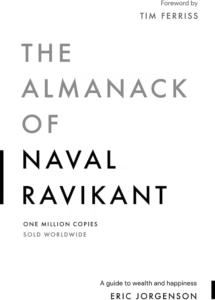
In The Almanack of Naval Ravikant, compiled by Eric Jorgenson, silicon valley investor Naval Ravikant offers a modern philosophy on wealth generation in the digital age. Ravikant separates hard work from high output, asserting that physical labor does not create asymmetric wealth without leverage.
Modern leverage consists of capital, labor, media, and code. While capital and labor require permission from third parties, modern digital leverage (software products, digital content, media networks) operates continuously with zero marginal cost of reproduction. Building specific knowledge and combining it with scalable modern permissionless leverage is the ultimate blueprint for digital asset creation.
Key Takeaways for Wealth Builders:
- Seek Permissionless Leverage: Focus on building software, writing content, or creating digital media that works for you while you sleep.
- Develop Specific Knowledge: Cultivate specialized skills at the intersection of your natural curiosities and market demands.
- Own Equity: You will not achieve true financial freedom by trading hours for dollar amounts; you must own equity in assets or businesses.
9. The Value of Debt in Building Wealth by Thomas J. Anderson: Strategic Balance Sheet Management
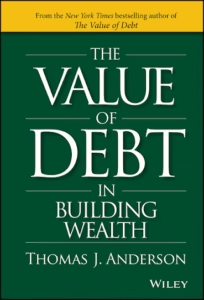
While mainstream personal finance advice often treats all debt as an inherent danger that must be eliminated immediately, investment professional Thomas J. Anderson presents a nuanced counter-perspective in The Value of Debt in Building Wealth. Anderson illustrates how conservative, low-cost debt can be used strategically to preserve liquidity and optimize personal balance sheets.
By distinguishing between destructive debt (high-interest consumer credit cards) and strategic debt (asset-backed loans, fixed-rate mortgages, and business credit), real estate investors and high-net-worth individuals can avoid unnecessary tax events and maintain capital liquidity for higher-returning opportunities.
Key Takeaways for Wealth Builders:
- Liquidity Management: Maintaining accessible liquidity prevents forced asset sales during broader market crashes.
- Good Debt vs. Bad Debt: Utilize low-cost, fixed-rate leverage exclusively for income-generating assets rather than depreciating consumer items.
- Balance Sheet Optimization: View personal finances through a corporate framework, balancing assets, liabilities, and debt-to-asset ratios.
10. I Will Teach You to Be Rich by Ramit Sethi: Conscious Spending and Financial Automation
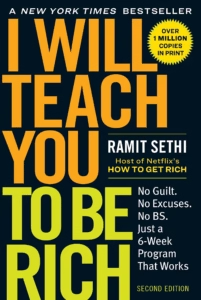
Many traditional budgeting frameworks rely on strict restriction, guilt, and micro-managing tiny expenses like morning coffee. In I Will Teach You to Be Rich, Ramit Sethi introduces a practical, guilt-free system built around automated money management and conscious spending.
Sethi encourages readers to identify their personal “Rich Life” vision. The objective is to spend extravagantly on the things you love while relentlessly cutting costs on the things you do not care about. By building automated systems that handle bill payments, savings transfers, and investment accounts in the background, you eliminate decision fatigue and consistently grow your money.
Key Takeaways for Wealth Builders:
- Automate Your Cash Flow: Direct your income automatically into savings accounts, retirement funds, and bill pay immediately upon receiving your paycheck.
- Conscious Spending Plan: Allocate funds intentionally toward personal priorities without feel-good restrictions or guilt.
- Focus on Big Wins: Negotiating salary increases, optimizing investment fees, and buying house properties correctly have far greater financial impact than micro-budgeting daily coffee purchases.
Comparative Overview of Key Wealth-Building Frameworks
To help you choose the right financial reading path for your current goals, the following matrix compares the core focus, target audience, and primary wealth mechanism across these ten perspectives:
| Book Title & Author | Core Philosophy Focus | Primary Wealth Mechanism | Best For |
|---|---|---|---|
| The Psychology of Money Morgan Housel |
Behavioral finance & mindset | Compounding & capital retention | Beginners & active investors |
| Die with Zero Bill Perkins |
Life experience optimization | Strategic expenditure & annuities | Mid-career & high-earning savers |
| The Millionaire Fastlane M.J. DeMarco |
Scalable entrepreneurship | Business leverage & systems | Aspiring entrepreneurs |
| The Simple Path to Wealth JL Collins |
Passive index fund investing | Low-cost total stock market funds | Long-term passive investors |
| Rich Dad Poor Dad Robert Kiyosaki |
Asset purchase & cash flow | Real estate & cash-flowing assets | Beginners changing money mindsets |
| Your Money or Your Life Vicki Robin & Joe Dominguez |
Time energy & alignment | Frugality & systematic saving | FIRE movement participants |
| The Millionaire Next Door Thomas Stanley & William Danko |
Empirical frugal living | Living below income means | Traditional accumulators |
| The Almanack of Naval Ravikant Eric Jorgenson |
Modern digital leverage | Code, media, & specific knowledge | Tech workers & digital creators |
| The Value of Debt in Building Wealth Thomas J. Anderson |
Balance sheet leverage | Strategic asset-backed credit | Advanced investors & business owners |
| I Will Teach You to Be Rich Ramit Sethi |
Automation & conscious spending | Systematized accounts & big wins | Young professionals & beginners |
Synthesizing Different Wealth Perspectives into Your Personal Strategy
Building wealth is not about adhering strictly to one single financial book or dogma. The most effective approach is to absorb these diverse perspectives, evaluate your personal goals, and combine the best strategies into an actionable personal policy.
For instance, you might adopt the broad-market index investing rules from The Simple Path to Wealth for your retirement accounts, apply the automation systems from I Will Teach You to Be Rich for monthly cash management, build digital leverage using the principles from The Almanack of Naval Ravikant, and maintain the mental discipline highlighted in The Psychology of Money.
By studying how different money experts approach asset accumulation, risk management, business scaling, and spending alignment, you gain full control over your financial journey. Choose the perspectives that align with your values, implement their frameworks consistently, and review your financial strategy regularly as your life evolves.