Is The Psychology of Money Worth Reading?
Explore the key lessons from Morgan Housel's book on money, risk, and financial success
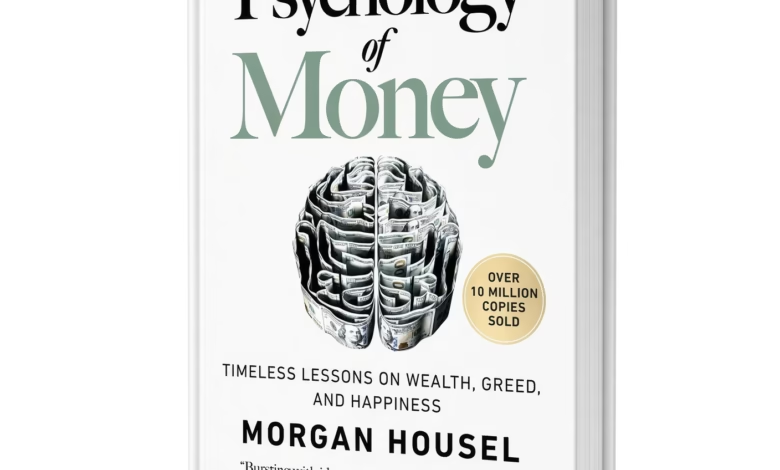
When searching for the best personal finance literature, one title constantly tops recommendations, podcast references, and reading lists: Morgan Housel’s international bestseller. However, with hundreds of personal finance books promising financial independence and wealth creation, it is completely normal to ask: Is The Psychology of Money worth reading?
The short answer is yes. Unlike traditional finance guides that focus heavily on complex mathematical formulas, stock charts, or technical balance sheet analysis, Morgan Housel’s book approaches financial management through the human brain, behavior, and emotional patterns. It addresses the exact reasons why smart people make irrational money choices and how ordinary individuals build sustainable wealth.
In this detailed review and analysis, we will explore the key concepts, core lessons, and overall value of the book to help you decide whether it deserves a place on your bookshelf.
What Is The Psychology of Money About?
Published in 2020 by Morgan Housel, a former columnist for The Wall Street Journal and partner at Collaborative Fund, The Psychology of Money: Timeless Lessons on Wealth, Greed, and Happiness is structured as a collection of 20 short, engaging stories. Each chapter explores a distinct aspect of how human psychology influences financial decision-making.
The primary thesis of the book is straightforward yet profound: doing well with money has little to do with how smart you are and everything to do with how you behave. Behavioral financial management is significantly more impactful than raw financial intelligence.
Instead of treating money as a pure science governed by physics or mathematics, Housel treats financial choices as an extension of personal history, individual worldviews, pride, risk tolerance, and human emotion.
Key Takeaways and Lessons from Morgan Housel
To evaluate if this book fits your goals, let us break down the primary principles covered throughout its chapters in clear, easy-to-understand terms.
1. No One Is Crazy
Everyone comes from different generations, raised by parents who earned different incomes and held different values. Because of these distinct background experiences, everyone views the economy differently. A person who grew up during high inflation views financial risk in a way that someone raised during a steady bull market never can. Housel points out that while some financial decisions look completely irrational on paper, they make absolute sense to the person making them based on their life experiences.
2. Luck versus Risk
Luck and risk are sibling forces. Both represent the reality that every outcome in life and business is guided by forces other than individual effort. When evaluating success—whether looking at famous entrepreneurs or personal achievements—it is easy to mistake raw luck for genius, or sudden bad luck for poor judgment. Recognizing the immense role of luck keeps you humble, while understanding risk keeps you prepared.
3. Never Enough
One of the most dangerous financial behaviors is moving the goalpost. When expectations rise alongside income, there is no rationale for saving, and peace of mind becomes impossible. Housel highlights the tragic stories of high earners who ruined their lives because they did not know when to step back and realize they already had enough.
4. Freedom Is the Ultimate Dividend
The greatest intrinsic value of money is giving you control over your time. The ability to wake up every morning and say, “I can do whatever I want today,” is the highest financial dividend achievable. Wealth is not about buying luxury goods; it is about buying your freedom, flexibility, and independence.
5. Wealth Is What You Don’t See
There is a massive distinction between being rich and being wealthy:
- Being Rich: Relates to current income. People who drive expensive sports cars or buy luxury watches are rich because they have enough income to afford those monthly payments.
- Being Wealthy: Relates to unspent income, assets not purchased, and options preserved. Wealth is hidden in bank accounts, index funds, and investment portfolios. It provides optionality and security.
6. Room for Error (Margin of Safety)
Plan for your plan not going according to plan. The most critical part of any financial strategy is having a margin of safety. Whether saving for emergencies or maintaining conservative leverage, giving yourself room for unexpected events ensures that market downturns or personal setbacks will not wipe you out entirely.
Who Should Read The Psychology of Money?
This book is remarkably accessible, making it suitable for a broad audience regardless of financial background:
- Beginners in Personal Finance: If you are overwhelmed by complex financial jargon, technical stock indicators, or accounting formulas, this book serves as the perfect low-stress entry point.
- Experienced Investors: Seasoned investors who understand technical analysis often fail because of emotional trading, panic-selling, or hubris. Housel’s writing acts as a crucial reminder of behavioral discipline.
- Young Professionals and Students: Developing a healthy, psychological relationship with savings, spending, and lifestyle inflation early in your career pays massive dividends over decades.
- Casual Readers: Thanks to Housel’s background in journalism, the book reads like a series of compelling short stories rather than a dry academic textbook.
Pros and Cons of The Psychology of Money

Evaluating the strengths and limitations of the book helps set accurate expectations before reading.
Pros:
- Engaging Storytelling: Uses historical anecdotes, real-life examples, and relatable metaphors rather than dense charts.
- Quick and Digestible: Concise chapters make it easy to read in short sessions.
- Focus on Long-Term Well-Being: Prioritizes mental peace, time freedom, and emotional stability over high-risk wealth strategies.
- Universal Relevance: The principles apply across different income brackets, economic climate conditions, and global markets.
Cons:
- Lack of Technical Step-by-Step Instructions: Readers looking for specific asset allocation models, tax-optimization strategies, or step-by-step budgeting systems will not find them here.
- Repetitive Core Themes: Some readers may feel that a few chapters repeat similar core messages around patience, compounding, and humility.
How It Compares to Other Classic Finance Books
Understanding how Housel’s masterpiece fits into the broader personal finance landscape can help clarify its unique position:
Vs. Rich Dad Poor Dad (Robert Kiyosaki): While Kiyosaki focuses heavily on real estate, cash flow assets, and shifting away from the employee mindset, Housel focuses on human emotion, behavioral discipline, and long-term risk management. Housel’s tone is noticeably more cautious and reflective.
Vs. The Intelligent Investor (Benjamin Graham): Benjamin Graham provides the foundational mechanics of value investing, fundamental stock analysis, and balance sheet valuation. In contrast, Housel discusses the human element—how investors actually react when their portfolio drops by 30 percent.
Vs. The Total Money Makeover (Dave Ramsey): Ramsey provides a practical, step-by-step debt elimination process for everyday consumers. Housel provides the psychological framework explaining why people end up in debt or struggle to maintain financial discipline in the first place.
Is The Psychology of Money Worth Reading?

Without question, The Psychology of Money is absolute top-tier required reading for anyone who interacts with money. Its strength lies in its ability to strip away complex economic theory and deliver timeless truths about human nature.
Navigating personal finance effectively requires managing personal habits, controlling emotional impulses, and defining what true success looks like for your life. Housel provides an invaluable blueprint for achieving financial security while keeping your mind at ease.
If you are looking for a practical, insightful, and enjoyable book that will fundamentally transform how you view savings, risk, wealth, and life satisfaction, pick up a copy of The Psychology of Money today. It is an investment of time that pays lifelong interest.