Financial Security
How Does Two-Factor Authentication Protect Your Money?
Discover how 2FA works and why it can help prevent unauthorized access to your bank and financial accounts
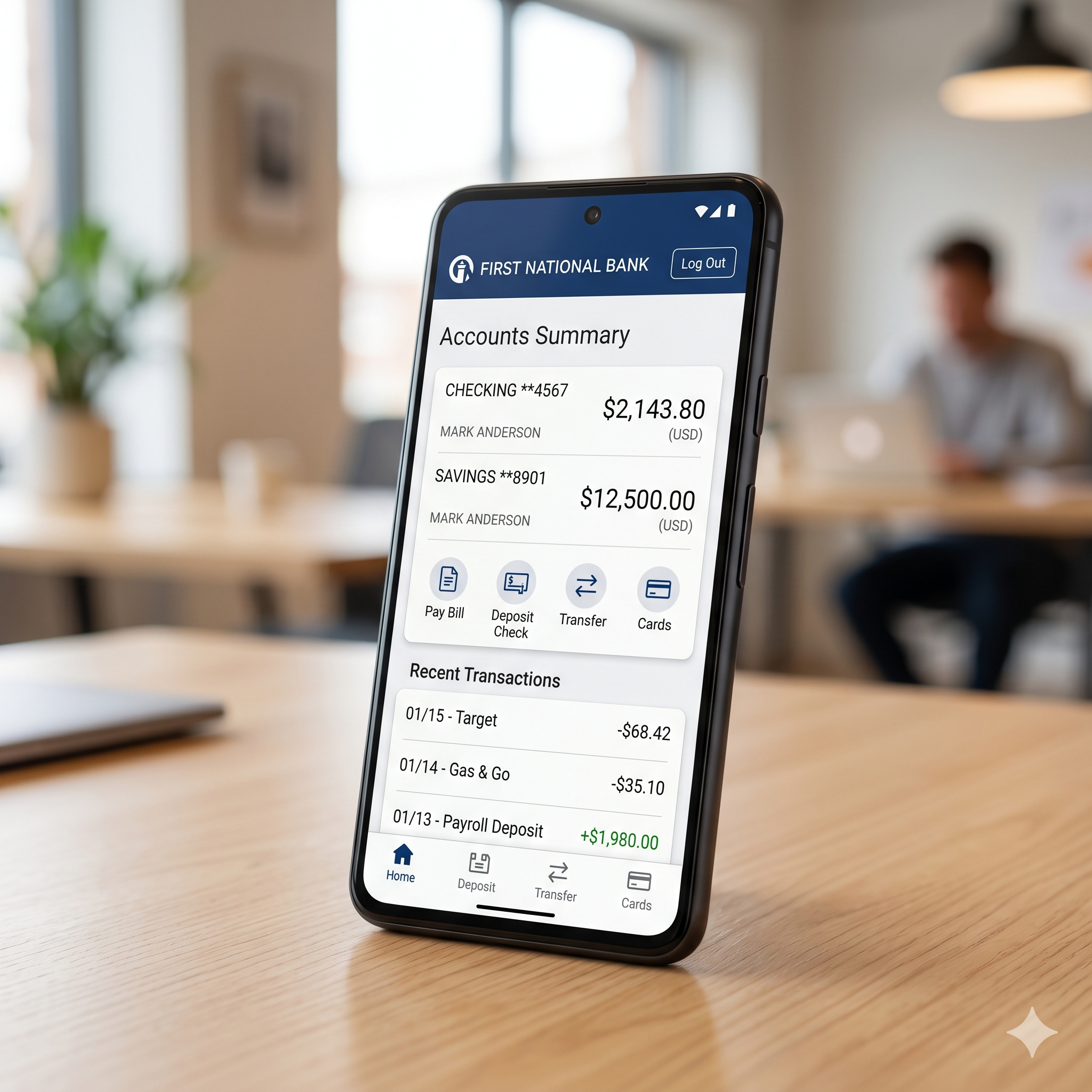
In an era where physical wallets are rapidly being replaced by digital banking apps, crypto wallets, and online investment platforms, the nature of financial crime has fundamentally shifted. Gone are the days when securing your money meant simply locking the front door or keeping a sturdy padlock on a metal safe. Today, your life savings, retirement accounts, and everyday spending money exist as bits and bytes traversing global networks. While this digital evolution offers unprecedented convenience—allowing you to transfer funds across continents in seconds or check your portfolio balance while waiting in line for coffee—it also exposes you to sophisticated cyber threats.
Cybercriminals no longer need to break into a brick-and-mortar bank branch to steal your hard-earned capital. Instead, they leverage automated botnets, phishing campaigns, keyloggers, and credential-stuffing attacks to infiltrate your online accounts from thousands of miles away. Once inside, they can drain accounts, max out linked credit lines, and disrupt your financial stability in a matter of minutes.
This is where the concept of financial security evolves from a luxury into an absolute necessity. Protecting your money online requires more than just hoping your password is complex enough to withstand a brute-force attack. Passwords, even long and intricate ones, are inherently fragile. They can be intercepted, guessed, shared accidentally, or leaked in massive corporate data breaches.
To bridge this critical vulnerability, cybersecurity experts and financial institutions rely on a foundational security standard: Two-Factor Authentication (2FA). Far more than just an annoying extra step when logging into your bank account, 2FA serves as a robust barrier between your financial assets and malicious actors. Understanding how this technology works, why it is indispensable for modern wealth protection, and how it thwarts even the most determined hackers is essential for anyone serious about safeguarding their financial future.
Understanding the Vulnerability of Single-Factor Authentication
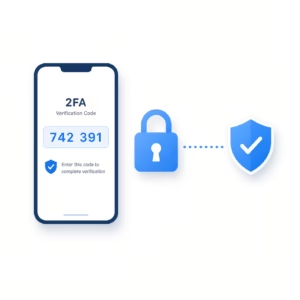
To truly appreciate the protective power of Two-Factor Authentication, we must first examine the inherent flaws of the security measure most people still rely on: single-factor authentication, commonly known as the traditional username and password combination.
For decades, the password has been the digital gatekeeper of our personal and financial lives. However, human psychology and technological limitations have turned passwords into our weakest security link. To make passwords memorable, people routinely use predictable patterns, personal information such as birthdays or pet names, or recycled credentials across multiple websites. If a malicious actor compromises your password on a low-security e-commerce site, they can often use that exact same credential combination to access your high-value online banking portal through a technique known as credential stuffing.
Furthermore, cybercriminals utilize advanced tools to compromise passwords without your knowledge:
-
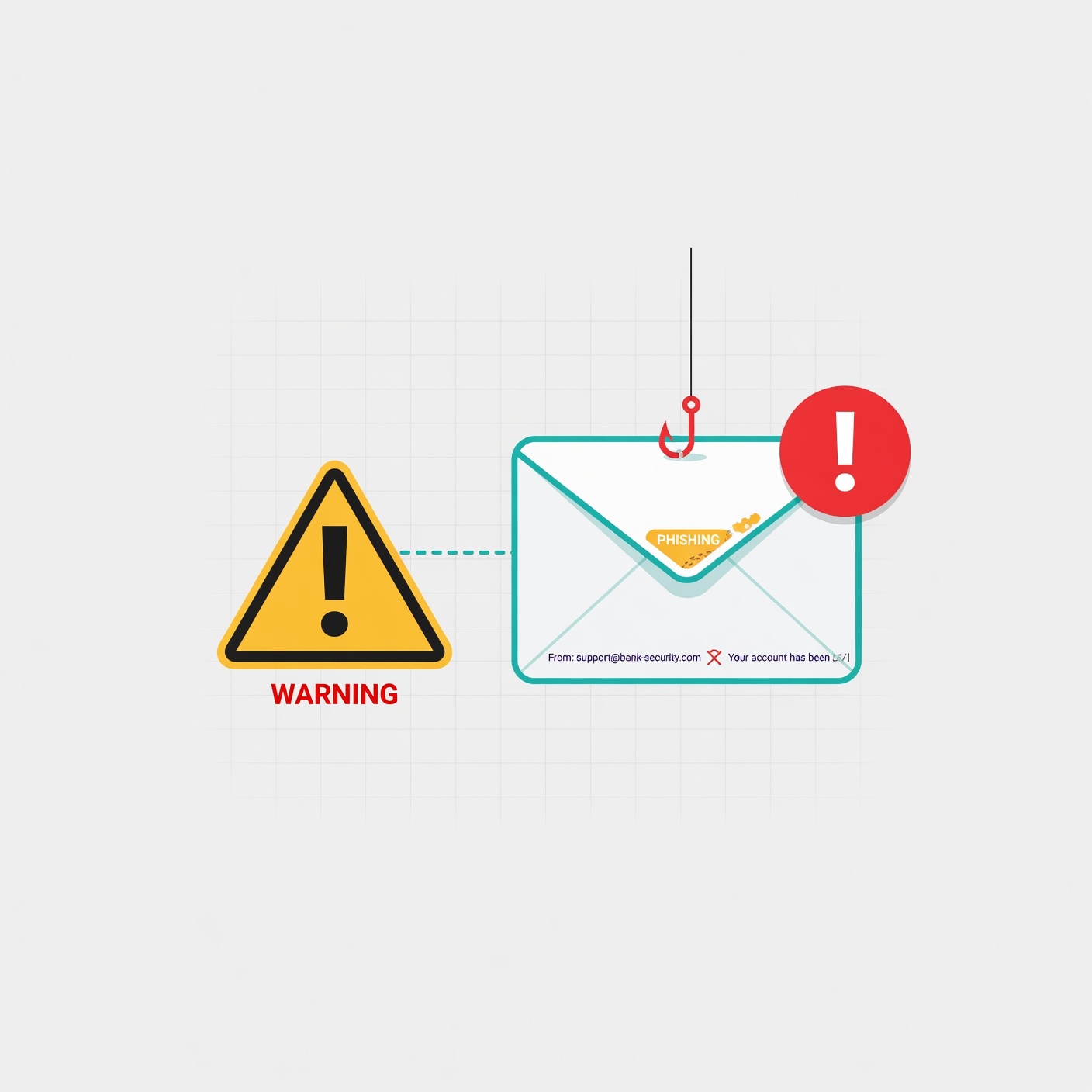
Phishing Scams: Fraudulent emails, text messages, and spoofed websites designed to mimic trusted financial institutions trick users into willingly handing over their login credentials.
-
Keylogging Malware: Malicious software secretly installed on a user’s computer or mobile device records every keystroke, capturing passwords the moment they are typed.
-
Data Breaches: When third-party platforms with lax security protocols experience a breach, millions of plaintext or poorly hashed passwords are leaked onto the dark web, becoming instantly available to fraudsters.
When a hacker obtains your single-factor password, they possess a master key to your digital life. There are no secondary checks, no alerts, and no roadblocks to stop them from transferring your funds. Single-factor authentication assumes that whoever knows the password is the legitimate owner of the account. In the modern threat landscape, that assumption is dangerously obsolete.
What Is Two-Factor Authentication and How Does It Work?
Two-Factor Authentication revolutionizes digital security by fundamentally changing the verification equation. Instead of relying solely on something you know—your password—2FA requires the presentation of two or more distinct categories of evidence, often referred to as “factors,” to confirm your identity before granting access to an account.
The core philosophy behind multi-layered security rests on three primary authentication factors:
-
Knowledge Factor: Something you know, such as a password, a PIN, or the answer to a security question.
-
Possession Factor: Something you have, such as a physical smartphone, a hardware security key, or a trusted device in your physical possession.
-
Inherence Factor: Something you are, referring to biometric markers like a fingerprint, facial recognition scan, or voice pattern.
Two-Factor Authentication bridges the gap by combining a knowledge factor (your password) with a possession factor (your phone or security token) or an inherence factor (your biometrics). Even if a cybercriminal successfully executes a phishing attack and steals your password, they are immediately blocked at the second gate because they do not physically possess the device or token required to generate or receive the secondary verification code.
This layered approach transforms security from a single binary check into a complex obstacle course. For a hacker to compromise your financial accounts, they would need to breach not only your digital credentials but also compromise your physical environment or personal device—a feat that is exponentially more difficult, expensive, and time-consuming.
The Different Types of Two-Factor Authentication Methods
Not all 2FA implementations offer the same level of security. As cyber threats have evolved, so too have the technologies used to verify identity. Understanding the nuances of each method allows you to configure the strongest possible defenses for your banking apps, brokerage accounts, and digital wallets.
SMS-Based Verification Codes
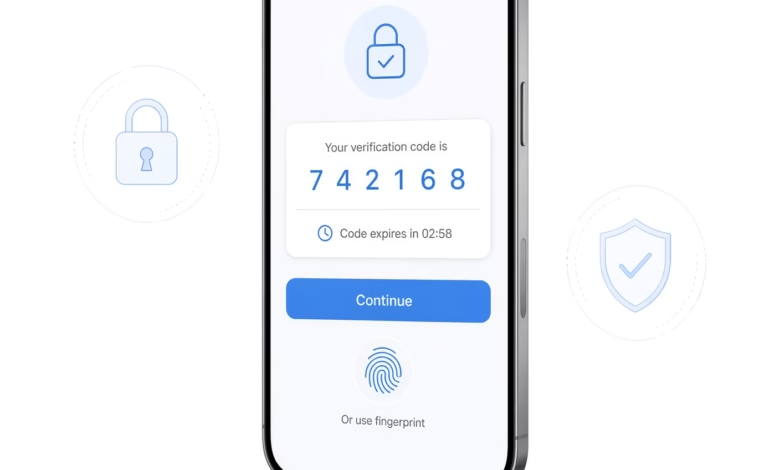
SMS-based 2FA is the most widely adopted form of secondary verification. When you log into an account, the platform sends a temporary six-digit code via text message to your registered mobile number. While vastly superior to having no 2FA at all, SMS verification is increasingly recognized by cybersecurity experts as the least secure form of 2FA due to vulnerabilities like SIM swapping, where attackers manipulate mobile carriers into transferring a victim’s phone number to a device controlled by the fraudster.
Authenticator Apps (TOTP)
Time-based One-Time Password (TOTP) applications, such as Google Authenticator, Authy, or Duo, represent a massive security upgrade over SMS. These apps generate unique, temporary codes directly on your smartphone using an offline algorithm synchronized with the service provider. Because these codes do not travel across cellular networks, they cannot be intercepted via SMS interception or SIM swapping. Even if your cellular connection is compromised, your authenticator app remains secure.
Hardware Security Keys (FIDO2 / WebAuthn)
Currently considered the gold standard of digital security, hardware security keys are physical USB or NFC devices—such as YubiKeys or Google Titan keys—that plug into your computer or tap against your smartphone. These devices use public-key cryptography to verify your identity. Because they require physical interaction (such as pressing a button on the key) and use advanced cryptographic challenges that are immune to phishing, hardware keys provide virtually impenetrable defense against even sophisticated, real-time phishing proxy attacks.
Biometric Authentication
Leveraging physical traits such as facial recognition (Face ID) or fingerprint scanning (Touch ID), biometric 2FA offers a seamless user experience combined with high security. Because your biological markers are processed locally on your trusted device and rarely transmitted across networks, biometrics provide a convenient way to approve financial transactions without sacrificing security rigor.
How 2FA Stops Financial Fraud and Account Takeovers
The financial stakes of a compromised online account are catastrophic. Account takeovers (ATOs) allow malicious actors to rewrite account profiles, drain savings accounts, apply for unsecured loans in your name, and liquidate investment portfolios. Implementing Two-Factor Authentication acts as a vital structural defense against these specific predatory tactics.
Consider a common attack vector: the credential-stuffing botnet. Automated scripts test millions of leaked username and password combinations across various financial websites simultaneously. On a single-factor platform, thousands of accounts fall victim within seconds as bots log in and initiate unauthorized transfers. However, when an account is protected by 2FA, the automated bot hits an immediate wall. Even if the password is correct, the bot cannot receive the SMS code, generate the TOTP token, or tap a physical security key. The automated attack is halted instantly.
Furthermore, 2FA neutralizes man-in-the-middle and session-hijacking attempts in many consumer scenarios. Because the second factor is tied to a secure session on a verified hardware device, unauthorized remote attempts to access funds trigger immediate security flags and block access. By forcing an interactive, multi-step validation process for sensitive financial actions—such as changing passwords, updating wire transfer destinations, or withdrawing large sums—2FA ensures that an opportunistic breach cannot instantly escalate into total financial devastation.
The Psychology of Convenience Versus Security

One of the greatest hurdles in widespread digital wealth protection is human behavior. Users naturally gravitate toward paths of least resistance. Entering a password is already viewed by many as a tedious chore; adding an extra step to grab a phone, open an app, or type in a verification code can feel burdensome, particularly when executing routine financial checks.
This friction often leads to “security fatigue,” where individuals disable 2FA or bypass security prompts out of frustration. However, redefining how we view this friction is crucial for long-term financial health. The minor inconvenience of spending five seconds entering an authentication code is an infinitesimally small price to pay when weighed against the catastrophic cost of having your life savings stolen.
Financial institutions and users alike must treat 2FA not as an optional feature or an annoying hurdle, but as an indispensable seatbelt for the digital highway. Just as buckling up before driving becomes an automatic, thoughtless habit born from understanding the risks of the road, enabling and utilizing 2FA across every financial touchpoint must become second nature. Cultivating this security mindset ensures that convenience never supersedes safety, keeping your accumulated wealth insulated from evolving cyber threats.
Best Practices for Implementing Robust Two-Factor Protection
Setting up Two-Factor Authentication is not a “set-and-forget” task. To maximize your financial security posture, you must implement best practices that account for edge cases, device loss, and emerging cyber threats.
-
Prioritize Stronger Factors: Whenever given the option by a financial institution, choose hardware security keys or authenticator apps over SMS-based verification codes to eliminate mobile network vulnerabilities.
-
Secure Your Recovery Methods: Most platforms provide backup codes or recovery phone numbers in case you lose access to your primary 2FA device. Store these backup codes in a secure, encrypted password manager or a physical safe rather than leaving them unprotected in your email inbox.
-
Enable 2FA Everywhere: Do not limit 2FA solely to your primary bank accounts. Secure your email accounts, password managers, cloud storage, cryptocurrency exchanges, and investment platforms. If a hacker breaches your email, they can often reset the passwords to your financial accounts, bypassing your financial institution’s defenses entirely.
-
Regularly Audit Connected Devices: Periodically review the list of trusted devices and active sessions across your financial applications. Remove any old smartphones, tablets, or computers that you no longer use or own.
By treating security configuration as an ongoing maintenance routine rather than a one-time chore, you build a resilient digital fortress around your capital, ensuring that your financial well-being remains entirely under your control.
The Future of Authentication and Wealth Protection
As financial technology continues to evolve at a blistering pace, the mechanisms securing our money are undergoing a parallel transformation. The horizon of digital security points toward a world increasingly defined by frictionless, passwordless authentication standards.
Industry giants and security consortia are heavily investing in protocols like Passkeys, backed by the FIDO Alliance. Passkeys replace traditional passwords entirely with cryptographic key pairs stored securely on your personal devices, unlocked via biometric verification or device PINs. This advancement eliminates the vulnerability of human-created passwords, eradicates credential stuffing, and neutralizes phishing attacks because the cryptographic keys cannot be used on fraudulent websites.
Simultaneously, artificial intelligence and behavioral biometrics are weaving background security layers into our financial interactions. Systems analyze how you type, how you hold your phone, your typical transaction times, and your geographical location to verify identity continuously and invisibly, stepping up security challenges only when anomalous behavior is detected.
Yet, despite these technological leaps, the foundational principle remains unchanged: defense in depth. Relying on a single layer of security is an invitation for exploitation. Two-Factor Authentication represents the critical bedrock of this defensive philosophy—a proven, accessible, and highly effective barrier standing between your hard-earned assets and the ever-present threats of the digital underground. By embracing robust authentication standards today, you secure not just your accounts, but your peace of mind and your financial future.