Brokerages
Which Brokerages Offer Access to International Stocks?
Discover which brokerages provide access to international stocks and compare their features, fees, and investment options
Investing beyond domestic borders has evolved from an exclusive strategy used only by institutional wealth managers into an accessible approach for everyday retail investors. Adding international stocks to your portfolio introduces powerful geographical diversification, hedges against local economic downturns, and provides exposure to fast-growing emerging markets or dominant multinational corporations headquartered overseas.
However, trading shares on foreign exchanges is not quite as simple as buying domestic equities. Different time zones, varying regulatory frameworks, foreign exchange rates, and varying custody fees mean that your choice of brokerage matters immensely. Not all online brokerages are built the same, and finding the right platform depends entirely on which global markets you want to reach, how much you are willing to pay in currency conversion fees, and what kind of trading tools you prefer to use.
Understanding International Stock Access Through Modern Brokerage Accounts
Before diving into specific platforms, it helps to understand how international stock trading actually works for retail investors. Generally, brokerages provide access to foreign markets through a few distinct mechanisms. The first and most common method for everyday investors is trading American Depositary Receipts, commonly known as ADRs. These are certificates issued by a U.S. financial institution representing shares of a foreign company, and they trade right on domestic exchanges like the New York Stock Exchange or Nasdaq in U.S. dollars.
The second method involves using a specialized multi-currency brokerage account that lets you convert your native currency into foreign fiat currencies—such as Euros, British Pounds, Japanese Yen, or Canadian Dollars—and purchase shares directly on foreign stock exchanges like the London Stock Exchange, Tokyo Stock Exchange, or Euronext.
Evaluating your potential broker requires looking closely at how they handle foreign exchange (Forex) spreads, settlement periods, corporate actions, and dividend withholdings. Choosing a robust platform ensures you will not lose your investment gains to hidden administrative costs or restrictive trading barriers.
Interactive Brokers: The Gold Standard for Global Market Access
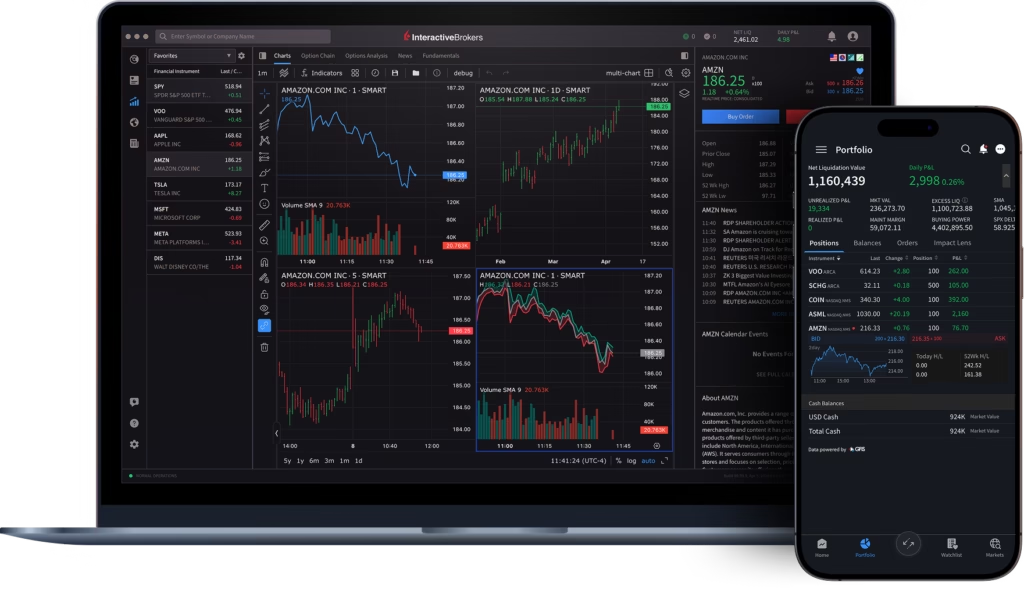
When experts discuss trading securities across international boundaries, Interactive Brokers consistently ranks at the top of the list. Designed for both active traders and long-term global investors, this platform provides access to well over 100 market centers across dozens of countries and territories worldwide.
One of the standout features of this platform is its powerful suite of analytical tools, including its proprietary global screening capabilities. These tools allow users to evaluate fundamental metrics, compare financial statements, and review asset valuations across multiple international regions seamlessly using a single unified interface. Furthermore, the platform accommodates multi-currency accounts, meaning you can hold cash balances in various foreign currencies, helping you avoid unnecessary conversion fees every single time you execute a trade.
Pricing structures are famously transparent, offering remarkably low transaction commissions on foreign exchange conversions and international equities compared to traditional legacy institutions. While the sheer depth of professional-grade tools and menus can feel slightly overwhelming for absolute beginners, the platform offers streamlined mobile applications designed to make global portfolio management much more approachable for newer market participants.
Charles Schwab: Comprehensive Research and Global Investing Services
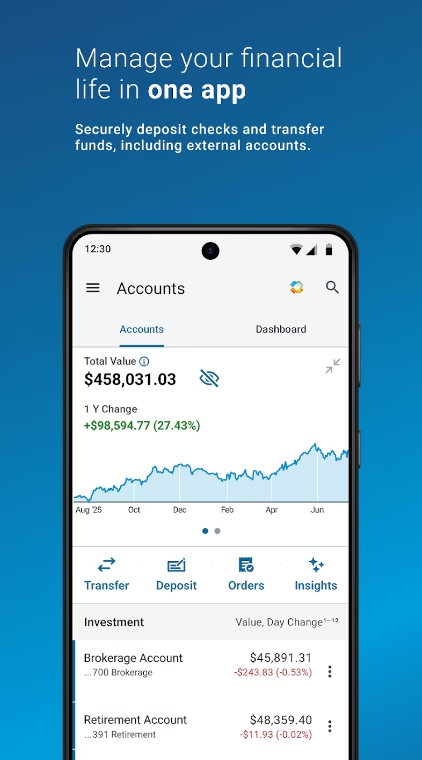
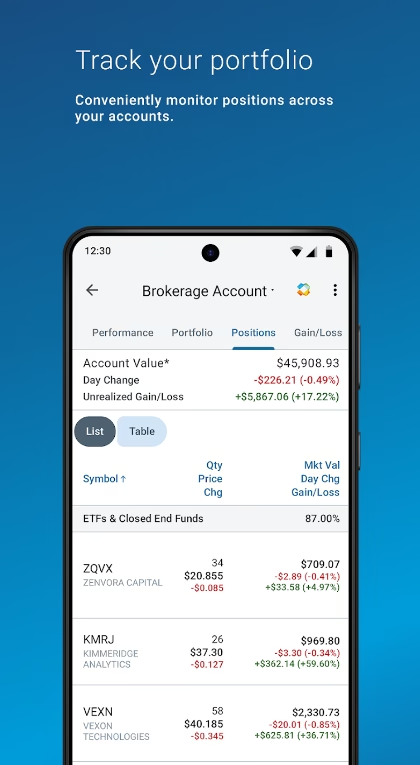
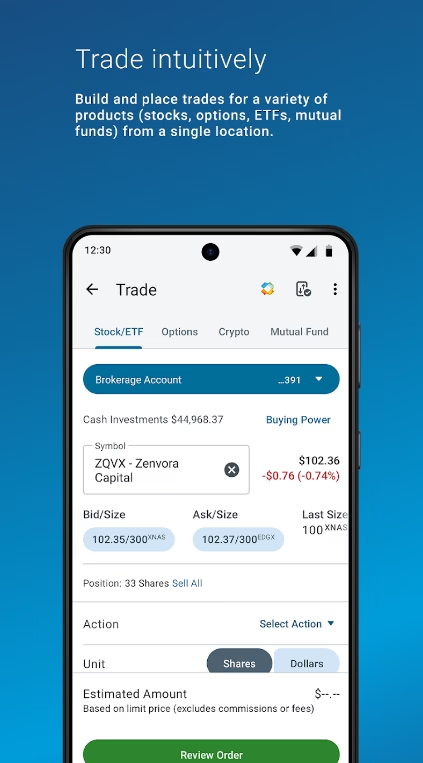
Charles Schwab has long built an outstanding reputation for combining user-friendly digital platforms with top-tier customer service and robust educational materials. For investors seeking direct access to international exchanges without navigating overly complex technical interfaces, Schwab serves as an exceptional choice.
The firm allows clients to trade directly in dozens of foreign markets, with options to execute trades in local foreign currencies through specialized international accounts. This minimizes the friction typically associated with cross-border transactions. Investors also benefit from extensive third-party research reports, dedicated global trading support desks, and comprehensive international stock screeners that help surface high-quality companies operating outside domestic borders.
While online trade execution costs for standard domestic equities remain exceptionally low across the industry, investors should carefully review the specific phone-assistance or broker-assisted transaction fees associated with certain manual foreign market orders. Even so, the deep educational ecosystem and powerful desktop research suites make Schwab a favorite for long-term wealth builders who value peace of mind and stellar customer assistance.
Fidelity Investments: Solid Research and Streamlined Global Trading
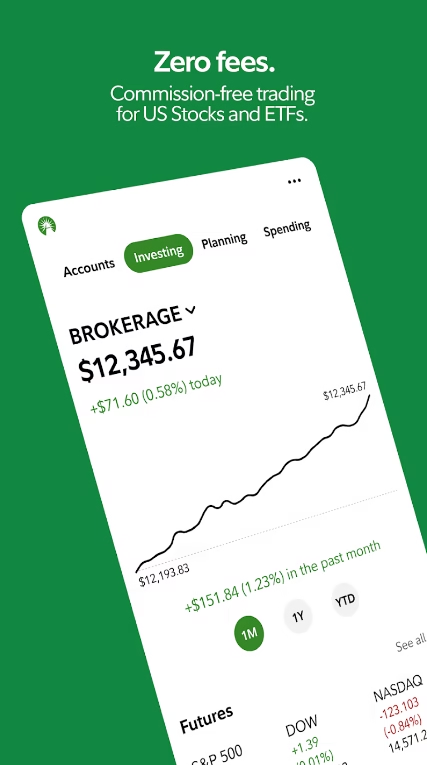
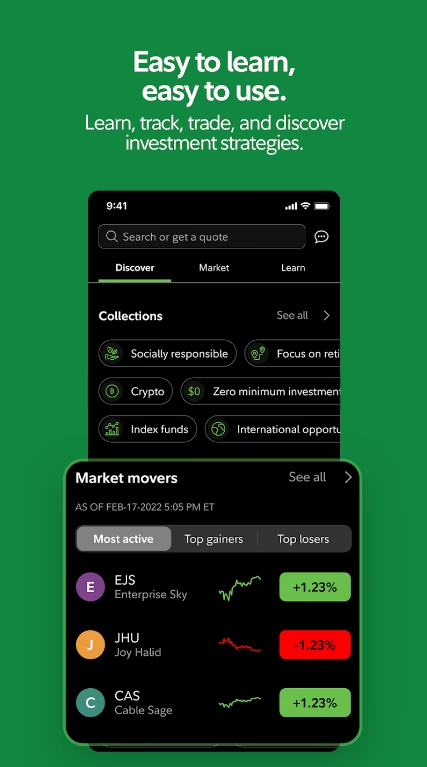
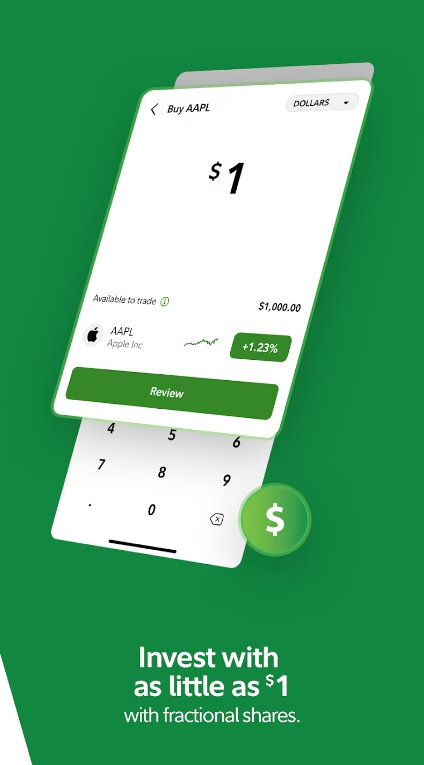
Fidelity Investments stands shoulder-to-shoulder with other major legacy financial institutions by offering robust pathways to international diversification. Investors using Fidelity can buy and sell ordinary shares across a substantial number of international countries and easily settle transactions across multiple distinct foreign currencies.
The platform excels in providing clean, intuitive account dashboards alongside powerful analytical software. Users can pull up comprehensive international equity research, track foreign market trends, and rely on 24/7 customer support to answer questions regarding international settlement cycles or dividend tax treaties.
Although direct routing to every small international exchange may be slightly more limited compared to specialized institutional brokers, Fidelity covers all major global financial hubs in Europe, Asia, and the Americas. This makes it more than sufficient for retail investors looking to build a well-rounded, globally diversified core portfolio of blue-chip international equities.
TradeStation: Advanced Technology and Broad International Reach
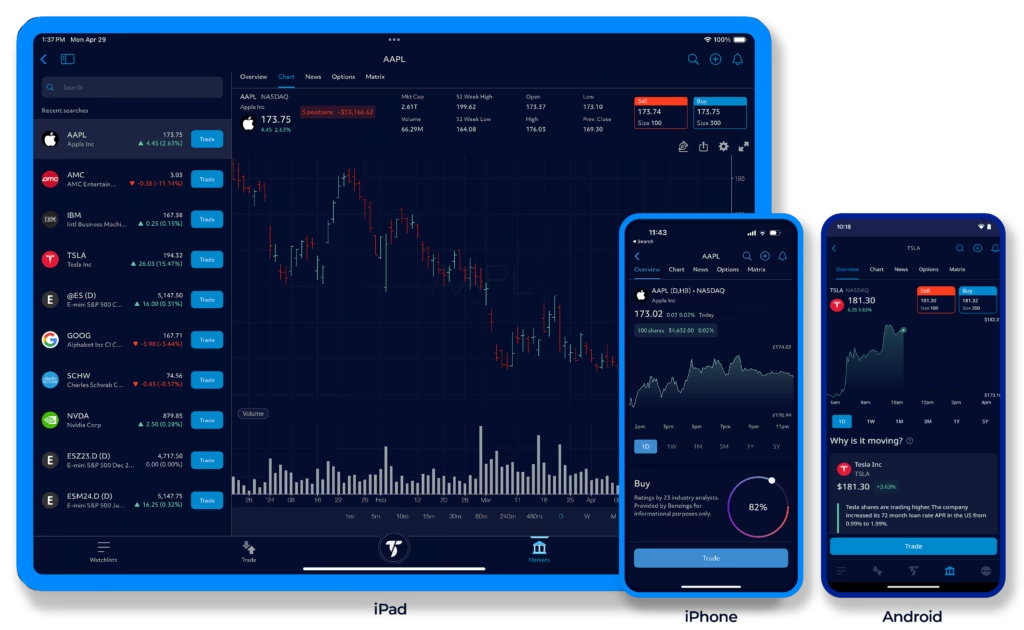
TradeStation has historically catered to sophisticated and active market participants, but its modern iteration provides impressive gateway access to global trading infrastructure. Through its comprehensive multi-asset framework, users can gain access to an extensive array of international markets spanning Europe, the United Kingdom, Asia-Pacific regions, and beyond.
The platform stands out for its high-performance charting engines, algorithmic strategy backtesting capabilities, and flexible execution suites. For investors who want granular control over their order routing and desire professional-grade technical analysis tools while managing cross-border assets, TradeStation delivers a compelling package.
Pricing remains competitive for foreign asset transactions, and the platform supports a wide array of foreign currency denominations, allowing users to manage currency exposure effectively alongside their stock selections. Much like other advanced platforms, it requires a short learning curve, but the technological payoff is well worth the effort for dedicated market enthusiasts.
Key Factors to Evaluate When Choosing an International Broker
Selecting the right online brokerage for your international investing journey requires looking beyond marketing claims and analyzing specific operational factors. Keep these core criteria in mind during your evaluation process:
-
Market Coverage: Determine whether the broker offers direct market access to the specific countries and foreign exchanges you care about, or if they only provide access via standard ADRs.
-
Currency Conversion Costs: Pay close attention to foreign exchange spreads. Some brokers charge a hefty percentage markup on every currency conversion, while others offer near-spot wholesale interbank exchange rates for a flat transparent fee.
-
Account Fees and Minimums: Look for platforms that impose zero monthly maintenance fees and low or no minimum deposit requirements, allowing you to scale your international exposure at your own pace.
-
Platform Usability: Ensure the mobile app or web interface matches your comfort level. A cluttered or overly complex interface can lead to costly execution errors, whereas a clean, intuitive dashboard keeps your workflow smooth.
-
Tax and Dividend Handling: Check how the broker manages foreign tax withholdings on international dividend payouts, as navigating local tax treaties automatically saves you administrative headaches during tax season.
Selecting the Right Path for Your Portfolio

Expanding your financial horizons through international stocks is one of the most effective ways to build a resilient, well-diversified long-term portfolio. Whether you prioritize the unmatched global reach and low currency costs of Interactive Brokers, the stellar customer guidance and research depth of Charles Schwab, the dependable execution of Fidelity, or the advanced analytical tools of TradeStation, options abound to suit every investing style.
Take time to assess your personal financial goals, review the fee schedules of each platform, and choose the brokerage that aligns best with your strategy. By opening the right account today, you can unlock a world of international growth opportunities and position your wealth for success across global borders.