Behavioral Finance
How Social Media Influences Your Spending Habits
Discover how influencers, advertising, and social comparison can affect the way you spend money
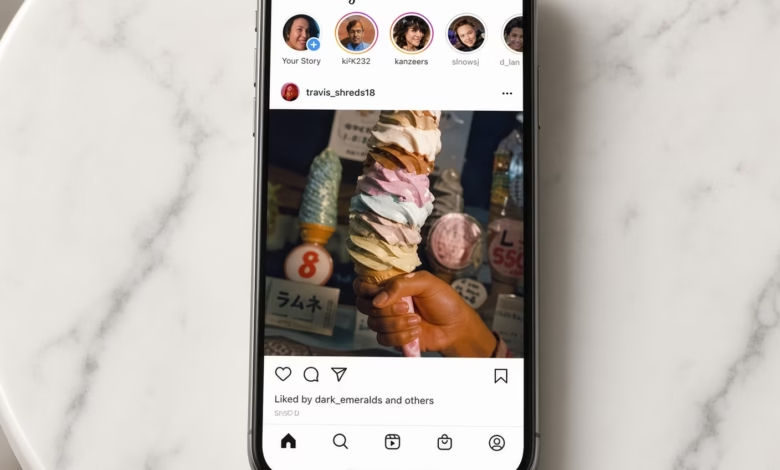
Every single day, we unlock our phones, open our favorite apps, and step into the most sophisticated, persuasive, and relentless shopping mall in human history. Unlike traditional malls with closing hours and physical exits, this digital marketplace lives right in our pockets, operating 24 hours a day, 7 days a week. It does not look like a store; instead, it looks like a fun community, a creative outlet, a window into our friends’ lives, and a source of daily entertainment.
However, beneath the surface of glowing screens, aesthetic photo grids, and entertaining video clips lies a powerful economic engine. Platforms like Instagram, TikTok, YouTube, and Pinterest are not merely designed to connect people—they are meticulously engineered monetization machines. They leverage advanced behavioral psychology, cutting-edge algorithms, and peer-to-peer influence to subtly reshape how we perceive value, status, and our own financial needs.
If you have ever found yourself clicking “Buy Now” on a product you saw in a 15-second video, wondering just how you ended up spending money on something you did not know existed an hour prior, you are far from alone. Understanding the psychological mechanics behind this phenomenon is the first step toward reclaiming control of your wallet, optimizing your personal finances, and mastering your financial behavior.
The Psychology of Social Proof: Why We Trust Recommendations Online

At the core of digital consumerism is a deeply ingrained human psychological phenomenon known as social proof. Coined by psychologist Robert Cialdini, social proof describes our tendency to look to the actions, opinions, and behaviors of others to guide our own decisions, particularly when we are uncertain about what choice to make.
From Word-of-Mouth to Global Endorsement
Historically, social proof was localized. If your neighbor bought a reliable lawnmower or a comfortable pair of shoes, you might consider purchasing the same item based on their direct recommendation. Today, social media has hyper-charged this natural human instinct.
When you scroll through your feed, you are constantly bombarded with testimonials, reviews, unboxing videos, and lifestyle showcases from creators you follow. Even though you may intellectually understand that these creators are often compensated or receiving free products, your brain processes their content through an evolutionary lens of trust. We tend to associate visual familiarity with safety and credibility.
The Illusion of Intimacy and Parasocial Relationships
Social media creators cultivate parasocial relationships—one-sided psychological bonds where followers feel a genuine sense of friendship and intimacy with an influencer they have never met in person. Because these creators share glimpses of their daily routines, personal struggles, and home lives, their recommendations feel less like traditional corporate advertisements and more like advice from a trusted friend.
When a trusted digital personality shares a skincare routine, a productivity gadget, or a financial app, our natural skepticism drops. We no longer evaluate the product purely on its objective utility or price-to-value ratio; instead, we evaluate it through the emotional warmth and trust we feel toward the creator. This emotional bypassing is one of the most potent drivers of impulse spending in the modern digital economy.
The Fear of Missing Out (FOMO) and Artificial Scarcity
Behavioral finance teaches us that human beings are naturally loss-averse; we feel the pain of a loss much more acutely than the pleasure of an equivalent gain. Social media platforms weaponize this evolutionary trait through the pervasive emotional state known as FOMO (Fear of Missing Out).
Curated Perfection and Relative Deprivation
Your social media feed is a highlight reel of the best moments, luxury purchases, exotic vacations, and aesthetic milestones of hundreds or thousands of people simultaneously. When you view a continuous stream of curated success and lifestyle perfection, your brain subconsciously establishes a skewed baseline for what constitutes a “normal” standard of living.
This triggers relative deprivation—the feeling that you are falling behind your peers because your life, wardrobe, home decor, or financial net worth does not match the glowing snapshots you see online. To bridge this psychological gap, consumers often turn to retail therapy. Buying the items showcased by others becomes a quick, accessible way to soothe the temporary anxiety of feeling left behind, even if that purchase comes at the expense of long-term savings goals.
Urgency and Flash Trends
Platforms like TikTok have accelerated the speed of cultural micro-trends. A specific clothing item, kitchen gadget, or aesthetic accessory can go viral overnight, achieve massive popularity for two weeks, and vanish just as quickly.
This hyper-fast cycle of trends creates an intense sense of artificial urgency. Consumers feel pressured to buy immediately to participate in the cultural moment before the trend becomes obsolete. This manufactured urgency bypasses rational financial planning, converting considered purchases into impulsive emotional reactions.
Algorithmic Personalization: The Invisible Hand Steering Your Wallet
Behind every scroll, like, save, and share is an invisible, highly sophisticated web of data science and machine learning algorithms. These algorithms are not neutral conduits of information; they have a distinct objective: maximizing user engagement and retention.
Hyper-Targeted Behavioral Profiling
To keep you on the platform longer, algorithms analyze your micro-behaviors. They track how many seconds you linger on a specific video, which products you zoom in on, what types of aesthetics catch your eye, and how your emotional state fluctuates based on the content you consume.
Over time, the platform builds a remarkably accurate psychological profile of your desires, insecurities, and spending triggers. If the data shows you are vulnerable to fitness content, financial anxiety, or home organization aesthetics, your feed is flooded with products tailored precisely to those interests.
The Frictionless Shopping Experience
Social media companies have seamlessly integrated e-commerce directly into the browsing experience. Gone are the days of seeing an interesting product, opening a separate browser, searching for the website, creating an account, and manually entering your credit card details.
Today, features like Instagram Checkout and TikTok Shop allow users to purchase items with a single tap or biometric confirmation. By eliminating transactional friction—the small delays and moments of reflection that historically caused consumers to reconsider impulse buys—these platforms make spending money as effortless as scrolling to the next post. When parting with money requires zero cognitive effort, our natural budgeting defenses crumble.
The Rise of Aspirational Consumption and the “Soft Life” Aesthetic
Language and cultural movements on social media significantly influence how we justify our purchases. Over recent years, we have witnessed the rise of lifestyle movements such as “treating yourself,” “luxuriating in the little things,” and the pursuit of the “soft life.”
Rebranding Consumerism as Self-Care
While self-care and mental well-being are vital components of a healthy life, social media has successfully co-opted these concepts and commercialized them. Purchasing luxury coffee mugs, expensive workout sets, premium candles, or elaborate organizational systems is frequently framed as an act of self-love and emotional investment in one’s happiness.
This psychological reframing is brilliant from a marketing perspective because it disarms financial guilt. When buying a non-essential item is reframed as necessary mental health maintenance or self-care, budgeting boundaries dissolve. Consumers stop viewing unnecessary spending as a threat to their financial security and begin viewing it as a moral reward for working hard.
Lifestyle Creep Accelerated
In traditional economic theory, lifestyle creep—the tendency to increase spending as income rises—happened slowly over decades as individuals received promotions, raises, or career advancements. Social media has radically accelerated this process, introducing lifestyle creep to younger demographics long before peak earning years.
Consumers now feel internal pressure to achieve a mature, highly polished, luxury-adjacent lifestyle immediately out of college or early in their careers. High-end apartments, premium tech gadgets, designer athleisure, and curated travel are no longer seen as milestones of middle age; they are presented as baseline expectations for young adults online.
Behavioral Finance Strategies to Protect Your Wallet
Recognizing the psychological mechanisms at play is empowering, but awareness alone is rarely enough to combat billion-dollar algorithms designed by behavioral psychologists. To protect your financial health, you need to implement active structural defenses and behavioral speed bumps in your daily life.
1. Implement the 72-Hour Rule for Non-Essential Purchases
When you see a product advertised on social media that triggers an immediate emotional desire to buy, do not purchase it instantly. Add it to a cart or a wishlist and enforce a strict 72-hour waiting period.
During these three days, the initial emotional dopamine spike generated by the video or post will fade, allowing your rational prefrontal cortex to re-engage. Ask yourself objective questions: Do I actually need this item, or did I simply want the feeling of novelty and excitement associated with it? Will I still care about this item in thirty days?
2. Curate Your Digital Environment and Feed
You have complete control over your digital environment. If certain accounts, creators, or brand pages consistently trigger feelings of inadequacy, envy, or an urge to spend money, use the unfollow or mute buttons ruthlessly.
Cleanse your feeds to prioritize educational content, friends, family, and hobbies that do not center around consumption. By reducing your exposure to targeted lifestyle marketing, you dramatically lower the psychological triggers that lead to impulse shopping.
3. Separate Entertainment Apps from Financial Accounts
Remove saved credit card information from your social media applications and web browsers. Reintroducing a small amount of transactional friction—requiring yourself to physically get up, find your wallet, and type out a 16-digit card number—gives your brain critical seconds to evaluate whether the purchase is genuinely worthwhile.
Additionally, maintain strict physical and digital separation between your primary spending accounts and your long-term savings or investment accounts. Automate your savings and investments on payday so that your money is put to work for your future before you ever have the chance to spend it on digital impulses.
Mastering Financial Mindfulness in a Digital Age

Social media is an extraordinary tool for connection, learning, and entertainment, but it operates under a business model that fundamentally conflicts with sound personal finance and wealth-building principles. By understanding how social proof, FOMO, algorithmic personalization, and lifestyle branding manipulate our spending habits, we can transform ourselves from passive consumers into mindful, empowered decision-makers.
True financial freedom is not about deprivation; it is about intentionality. When you align your spending with your core values rather than the temporary desires manufactured by your phone screen, you take back control of your financial destiny and build a secure, prosperous future.