Minimum Payment on Credit Cards: What You Need to Know
Understand how minimum payments work and how they affect your debt
Understanding the fine print on your credit card statement can feel like deciphering an ancient language. Among the various numbers, dates, and terms, one phrase stands out prominently: The Minimum Payment.
To the uninitiated, the minimum payment looks like a financial lifeline—a small, manageable amount that keeps your account in good standing. However, for those looking to build long-term wealth and maintain a high credit score, the minimum payment is often a wolf in sheep’s clothing. This comprehensive guide will pull back the curtain on how minimum payments are calculated, why they can lead to a “debt trap,” and the advanced strategies you can use to manage your credit effectively.
What Exactly is a Credit Card Minimum Payment?
At its core, the minimum payment is the lowest amount of money you are contractually obligated to pay your credit card issuer by the due date to avoid late fees and protect your credit score.
While it keeps you “current” in the eyes of the bank, it does not mean you are using your credit card for free. In fact, making only the minimum payment is the most expensive way to borrow money. When you pay only this amount, the remaining balance on your card is carried over (or “revolved”) to the next month, where it begins to accrue interest at your card’s Annual Percentage Rate (APR).
How Is the Minimum Payment Calculated?
Most credit card issuers use one of two primary methods to determine your minimum due:
-
Percentage of the Balance: Usually between 1% and 3% of your total statement balance.
-
Percentage + Interest + Fees: A smaller percentage (like 1%) of your principal balance plus the interest and any late fees charged during that billing cycle.
Understanding the “Statement Closing Date” versus the “Due Date” is crucial. The minimum payment is calculated based on the balance at the closing date, but you must pay it before the due date to avoid penalties.
Why Only Paying the Minimum is a Dangerous Financial Trap
The “Minimum Payment Trap” is a psychological and mathematical phenomenon designed to keep consumers in debt for as long as possible. Because the payment is so low, it provides a false sense of security, making it tempting to spend more than you can afford to pay off in full.
The Power of Compounding Interest
Credit cards typically use daily compounding interest. This means that every day you carry a balance, the bank calculates interest on your balance plus the interest that has already accumulated. When you pay only the minimum, you are often barely covering the interest itself, meaning your actual debt (the principal) remains virtually unchanged.
An Illustrative Example:
Imagine you have a $5,000 balance on a card with a 20% APR.
-
If your minimum payment is 2% of the balance ($100), and you only pay that amount:
-
It would take you over 20 years to pay off the debt.
-
You would end up paying over $6,000 in interest alone—more than the original amount you spent.
How Minimum Payments Impact Your Credit Score
Many consumers believe that as long as they pay the minimum, their credit score will remain high. While it is true that paying the minimum prevents “late payment” marks (which account for 35% of your FICO score), it negatively impacts another massive factor: Credit Utilization.
The Credit Utilization Ratio
This ratio represents how much of your available credit you are using. If you have a $10,000 limit and carry a $9,000 balance because you only pay the minimum, your utilization is 90%.
-
High Utilization (Over 30%): Signals to lenders that you are financially overextended, which can cause your credit score to drop significantly.
-
Optimal Utilization (Under 10%): Demonstrates disciplined credit use and is common among “Ultra-High” credit scorers.
By only paying the minimum, your balance stays high, your utilization stays high, and your credit score remains suppressed, even if you are never “late.”
Decoding the “Minimum Payment Warning” on Your Statement

Thanks to the CARD Act of 2009, credit card issuers in the United States are required to include a “Minimum Payment Warning” on every billing statement. This is one of the most useful tools for a consumer, yet many ignore it.
What the Warning Tells You:
-
The 3-Year Comparison: It shows you how much you would need to pay each month to eliminate the balance in exactly three years, including the total interest saved compared to making only minimum payments.
-
The Total Cost: It explicitly states the total amount (principal + interest) you will pay if you stick to the minimum.
Expert Insight: Next time you receive your statement, look for this table. It serves as a stark mathematical reality check of the “cost of waiting.”
The Psychology of Anchoring: Why Banks Want You to See the Minimum
In behavioral economics, “anchoring” is a cognitive bias where an individual relies too heavily on the first piece of information offered. By placing the “Minimum Payment Due” in large, bold letters at the top of the statement, banks “anchor” your mind to that small number.
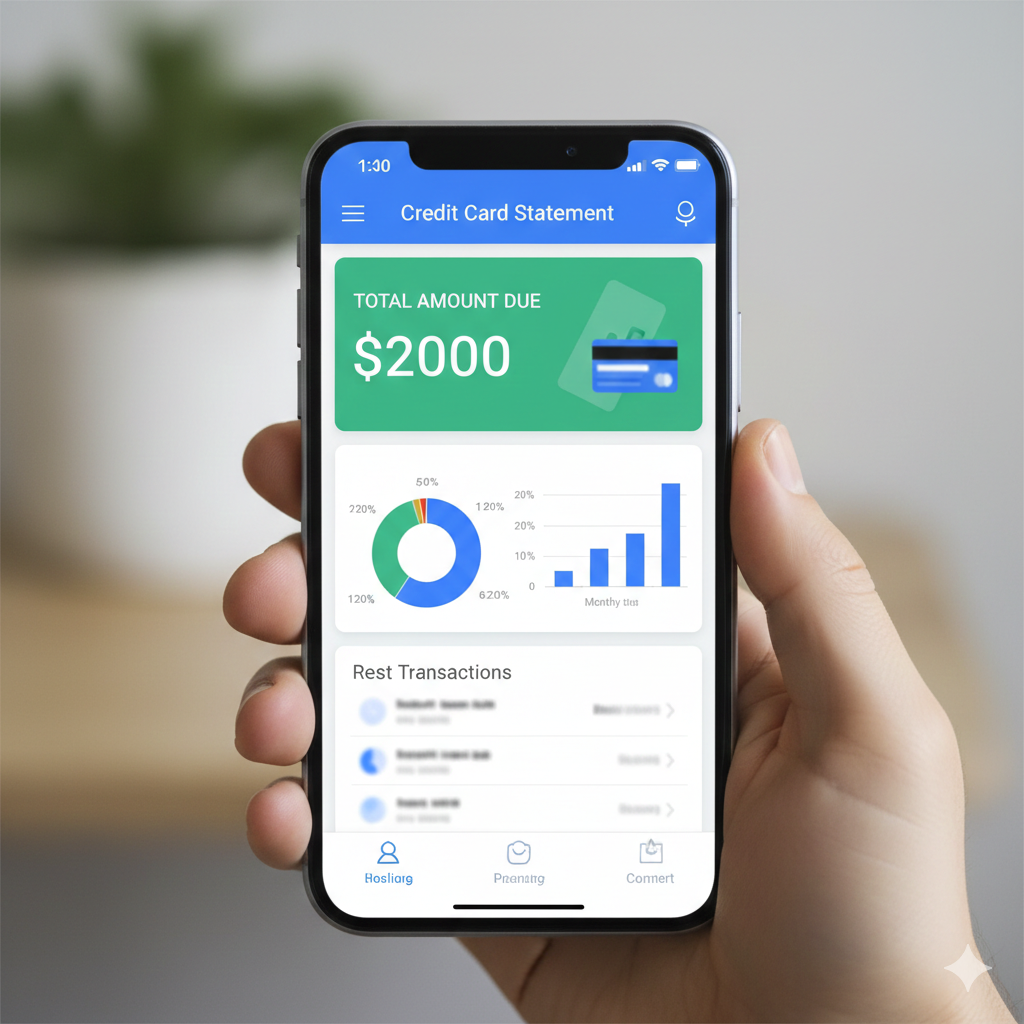
When you see “$35 due” next to a “$2,000 balance,” the $35 feels like the “correct” or “standard” amount to pay. This reduces the psychological “pain” of the debt, making it easier for you to justify carrying the balance and continuing to spend. To combat this, train your brain to look only at the “New Balance” or “Statement Balance” as the only number that matters.
When Does Making Only the Minimum Payment Actually Make Sense?
While financial experts generally advise paying in full, there are rare, strategic instances where paying the minimum is a valid tactical move.
1. The 0% Introductory APR Period
Many cards offer a 0% APR on purchases or balance transfers for 12 to 21 months. During this window, your debt does not grow. You might choose to pay the minimum and keep your cash in a high-yield savings account to earn interest, provided you have a guaranteed plan to pay off the entire balance before the 0% period expires.
2. Emergency Liquidity Management
In a genuine crisis—such as sudden job loss or a medical emergency—cash flow becomes the priority. In these cases, paying the minimum on your credit cards allows you to divert your liquid cash toward “survival” expenses like rent, utilities, and groceries. However, this should be a short-term emergency measure, not a lifestyle choice.
Strategic Alternatives to the Minimum Payment Cycle
If you find yourself stuck in a cycle of minimum payments, you need a proactive exit strategy. Here are three advanced methods to regain control.
The Debt Avalanche Method
List your cards by interest rate. Pay the minimum on everything except the card with the highest APR. Throw every extra dollar at that card. Once it’s gone, move to the next highest rate. This is mathematically the fastest way to save money.
The Debt Snowball Method
Focus on the card with the lowest balance first. The psychological “win” of closing an account quickly can provide the momentum needed to tackle larger debts.
Balance Transfer Credit Cards
If you have a high credit score but are struggling with interest, moving your balance to a 0% APR balance transfer card can “pause” the interest for over a year, allowing 100% of your payments to go toward the principal.
Common Myths About Credit Card Payments Debunked
To manage credit naturally and effectively, you must ignore common “water cooler” financial advice that is often factually incorrect.
-
Myth: “Carrying a small balance month-to-month helps your credit score.”
-
Reality: This is false. You do not need to pay interest to build credit. Paying in full every month shows the same (or better) activity to credit bureaus without costing you a cent.
-
-
Myth: “If I pay more than the minimum, the bank will lower my credit limit.”
-
Reality: Banks generally love “transactors” (people who pay in full) because they are low-risk. Paying more than the minimum often leads to increased credit limits over time.
-
How to Automate Your Way to Financial Freedom
The easiest way to avoid the minimum payment trap is to remove the human element. Most modern banking apps allow for sophisticated automation.
Level 1: Automatic Minimum Payment
Set an AutoPay for the minimum amount to occur 5 days before the due date. This is your “safety net” to ensure you never have a late fee if you forget to log in.
Level 2: Automatic Statement Balance
The “Gold Standard.” Set your AutoPay to deduct the full Statement Balance every month. This ensures you never pay interest and maximizes your rewards.
Level 3: The “Weekly Reset”
Instead of waiting for the monthly statement, log into your app every Friday and pay off the week’s purchases. This keeps your utilization extremely low and ensures your bank account balance always reflects your true “available” money.
Mastering the Tool
A credit card is a financial tool, no different from a hammer or a saw. If you hold it by the wrong end—by only paying the minimum—it will eventually hurt your financial health. By understanding the mechanics of interest, the importance of utilization, and the psychological traps set by lenders, you can flip the script.
The goal should always be to use the bank’s money for 30 days for free, collect your rewards points, and pay the balance in full. If you are currently stuck in the minimum payment cycle, use the strategies outlined above to break free. Your future self, and your bank account, will thank you.