Why Investors Change Strategies Too Frequently
Discover how emotions, market volatility, and short-term thinking influence investment decisions
Have you ever carefully researched a mutual fund, built a diversified portfolio, and promised yourself you would stick to the plan for the next ten years—only to abandon the entire strategy six months later? If so, you are far from alone. Across the financial world, millions of everyday investors start with solid, well-reasoned intentions, yet find themselves constantly hitting the reset button.
One year, you might be convinced that dividend-paying blue-chip stocks are the ultimate path to financial independence. A few months later, after reading headlines about explosive tech rallies or seeing a neighbor boast about cryptocurrency gains, you sell your steady earners to chase high-growth momentum. When the market dips, panic sets in, and you pivot again—this time toward cash, bonds, or gold. By constantly switching lanes, you end up paying more in taxes and fees while missing out on the very gains you were chasing.
In the field of behavioral finance, this destructive habit is often referred to as style drift or performance chasing. Understanding why our brains push us to abandon perfectly good investment plans is the first step toward breaking the cycle. Let us explore the deep-rooted psychological triggers behind frequent strategy changes, the real financial cost of portfolio hopping, and practical frameworks you can use to stay the course.
What Is Strategy Hopping in Behavioral Finance?

In traditional economics, textbooks assume that investors are entirely rational beings who weigh probabilities, analyze financial statements objectively, and make decisions solely to maximize long-term wealth. Behavioral finance challenges that assumption by recognizing a simple truth: investors are human beings driven by emotion, survival instincts, and mental shortcuts.
Strategy hopping occurs when an investor repeatedly alters their core investment methodology before giving their original thesis enough time to play out. Unlike planned portfolio rebalancing—where you systematically trim winners and buy laggards to maintain a target asset allocation—strategy hopping is reactive, emotional, and impulsive.
Common examples of frequent strategy changes include:
- Switching from passive to active investing: Abandoning broad-market index funds during a flat market to pick individual stocks, only to switch back after suffering sharp losses.
- Chasing recent sector winners: Moving money out of healthcare or industrials into artificial intelligence or energy stocks solely because those sectors topped last year’s performance charts.
- Abandoning value for growth (and vice versa): Selling undervalued companies because they feel “boring” during a speculative bull run, then dumping growth stocks at the bottom of a bear market.
- Market timing via cash pivots: Cashing out of equities completely whenever recession rumors circulate, then waiting until markets hit new all-time highs before feeling “safe” enough to reinvest.
Every investment philosophy—whether value investing, growth investing, dividend growth, or passive indexing—experiences periods of underperformance. No strategy beats the market every single month or every single year. When investors mistake normal cyclical underperformance for a broken strategy, they fall into a perpetual loop of buying high and selling low.
The Cognitive Biases Driving Constant Portfolio Changes
Why do intelligent, hardworking people make self-sabotaging financial moves? The answer lies in evolutionary psychology. The same mental wiring that kept our ancestors safe from predators on the savannah works against us when we stare at flashing red and green stock tickers.
Recency Bias and the Illusion of Endless Trends
Recency bias is the tendency to place disproportionate weight on recent events while ignoring long-term historical data. If the stock market has climbed steadily for the past nine months, your brain projects that upward trajectory indefinitely into the future. Conversely, if the market has dropped for three straight weeks, it feels as though prices will keep falling forever.
Recency bias convinces investors that whatever worked yesterday will continue working tomorrow. When a specific strategy lags behind the broader market for a year or two, recency bias whispers that the old rules no longer apply and that you must switch to whatever is currently hot.
Loss Aversion: Why Falling Markets Hurt Twice as Much
Nobel laureate Daniel Kahneman and psychologist Amos Tversky demonstrated that humans experience the psychological pain of a financial loss roughly twice as intensely as the pleasure of an equivalent gain. Losing $1,000 feels far worse than winning $1,000 feels good.
Because losses hurt so deeply, seeing a temporary decline in your brokerage account triggers an urgent fight-or-flight response. Changing your strategy gives you the immediate—though false—sense that you are taking control and stopping the bleeding. In reality, switching strategies mid-downturn usually locks in temporary paper losses and turns them into permanent capital destruction.
Herd Mentality and Fear of Missing Out (FOMO)
Humans are deeply social creatures. For thousands of years, straying from the tribe meant danger, while following the crowd meant safety. In modern financial markets, this instinct manifests as herd mentality and FOMO.
When coworkers, social media influencers, and financial news anchors all talk about a booming asset class, sticking to a quiet, methodical investment plan feels lonely and foolish. Envy takes over. Even if your portfolio is generating a healthy 8% annual return, watching someone else claim a 40% gain makes your steady progress feel like failure—prompting you to abandon your plan and join the crowd right near the top.
Action Bias: Mistaking Activity for Progress
In almost every area of life, hard work and constant effort lead to better results. If you want to get in shape, you exercise more. If you want a promotion, you take on extra projects. Investing is one of the rare domains where doing less almost always produces superior outcomes.
Action bias is the urge to do something—anything—when faced with uncertainty. Sitting on your hands during a turbulent market feels passive and irresponsible. Tweaking your asset allocation, researching new funds, and executing trades feels productive, even when those moves actively erode your net worth.
Confirmation Bias and Selective Research
Once an investor starts doubting their current strategy, confirmation bias steps in to seal the deal. Instead of seeking objective data, we subconsciously search for articles, videos, and charts that validate our desire to switch. If you are frustrated with dividend stocks, you will gravitate toward headlines declaring that “dividend investing is dead.” If you want an excuse to buy speculative tech stocks, you will find endless commentary explaining why valuation metrics no longer matter.
The Real Financial Cost of Changing Investment Strategies
Switching strategies does not just create mental exhaustion—it leaves a measurable, devastating dent in your compounding returns. Major financial research firms, including Morningstar and Dalbar, have spent decades studying the “behavior gap”—the difference between the returns an investment fund generates and the actual returns its investors pocket.
Consistently, studies show that average equity fund investors earn significantly less than the very funds they own, largely because they buy after strong runs and sell after downturns. Here is how frequent strategy shifts eat away at your wealth:
| Hidden Cost Factor | How It Happens During Strategy Shifts | Long-Term Impact on Your Portfolio |
|---|---|---|
| Missed Best Market Days | Selling out of one strategy and waiting on the sidelines before entering another. | Missing just the 10 best trading days over a 20-year period can cut your total portfolio value roughly in half. |
| Short-Term Capital Gains Taxes | Selling appreciated assets held for one year or less in taxable brokerage accounts. | Profits are taxed at higher ordinary income rates rather than favorable long-term capital gains rates, reducing compounding capital. |
| Bid-Ask Spreads and Friction | Frequent buying and selling across thinly traded ETFs, mutual funds, or individual equities. | Small fractional losses on every trade quietly compound into thousands of dollars lost over decades. |
| Buying High, Selling Low | Abandoning an out-of-favor strategy at cyclical lows to buy an overheated strategy at cyclical highs. | Permanent erosion of principal and chronic underperformance relative to a simple buy-and-hold benchmark. |
Consider a straightforward example. Suppose two investors, Alex and Jordan, each start with $50,000 and contribute $500 per month over 25 years. Jordan picks a low-cost, diversified strategy and sticks with it through bull and bear markets, earning an average annual return of 8%. Alex, however, switches strategies every two years based on market headlines, shaving just 2.5% off annual returns due to bad timing, tax drag, and missed recovery days—resulting in a 5.5% annualized return.
After 25 years, Jordan’s portfolio grows to approximately $798,000. Alex’s portfolio reaches only $528,000. That $270,000 difference did not come from picking bad investments; it came entirely from failing to stick to one coherent plan.
How Financial Media and Trading Apps Fuel Impulsive Decisions

Internal psychology is only half the battle. Modern investors operate inside an environment engineered to provoke emotional reactions and frequent trading.
Twenty-four-hour financial television networks and click-driven news websites do not make money when you calmly hold a diversified portfolio for twenty years. Calmness does not generate ratings or clicks. Instead, financial media relies on urgency, fear, and sensationalism. Words like “crash,” “historic rally,” “bubble,” and “once-in-a-generation opportunity” appear daily, creating a perpetual sense of crisis that pressures viewers into making immediate changes.
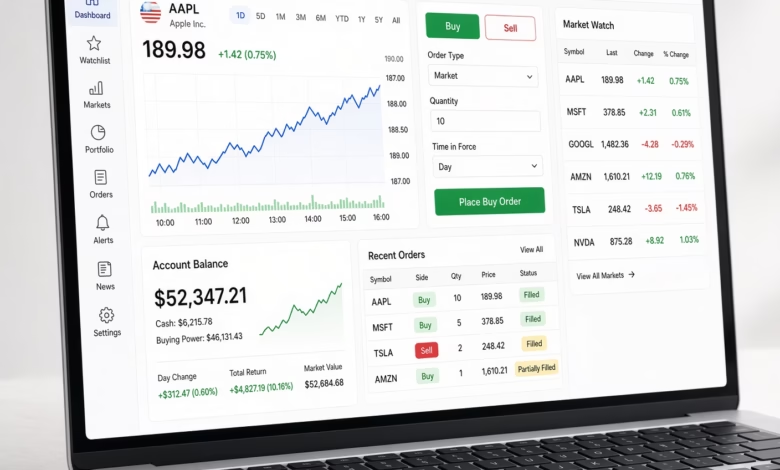
At the same time, modern brokerage apps have gamified investing. Zero-commission trading, instant fractional shares, push notifications about daily movers, and celebratory animations make altering your portfolio as effortless as ordering takeout. While low fees and accessibility are wonderful innovations, removing all friction from trading also removes the natural cooling-off period that once protected investors from their worst impulses.
How to Stop Changing Your Investment Strategy: 7 Proven Rules
You cannot rewire millions of years of human evolution overnight, nor can you shut off the noise of global markets. What you can do is build structural guardrails around your money so that your long-term strategy is protected from short-term emotions.
1. Draft a Written Investment Policy Statement (IPS)
Institutional endowments and pension funds do not make portfolio decisions based on morning headlines; they follow a formal Investment Policy Statement. You can create a simple one-page version for yourself when your mind is calm and objective.
Your IPS should clearly state:
- Your specific financial goals and time horizon (for example, retirement in 20 years).
- Your target asset allocation (such as 80% global equities and 20% fixed income).
- Your exact criteria for buying and selling investments.
- A commitment to review your strategy only once per year—never during a market panic.
Whenever you feel the urge to overhaul your portfolio, pull out your IPS and read it aloud. If the market conditions you are reacting to were already anticipated when you wrote the document, you have no valid reason to change course.
2. Implement a Mandatory 30-Day Cooling-Off Period
Impulse decisions thrive on immediacy. Establish an ironclad personal rule: you are never allowed to switch investment strategies, sell core holdings, or enter a new asset class on the same day you get the idea. Instead, write the proposed change down in a notebook and wait 30 full days.
In nine out of ten cases, the emotional wave that triggered the urge—whether panic over a market dip or excitement over a hot stock tip—will fade within a month, saving you from a costly mistake.
3. Distinguish Between a Broken Thesis and Normal Underperformance
Before abandoning any strategy, ask yourself a critical question: Has the fundamental logic of this strategy permanently broken, or is it simply experiencing a normal cyclical slump?
Every asset class goes through multi-year droughts. Between 2000 and 2009—often called the “lost decade” for U.S. large-cap stocks—many investors gave up on American equities entirely, right before one of the longest bull runs in history began. Reviewing 30 to 50 years of historical performance puts a single bad year into proper perspective.
4. Automate Contributions and Rebalancing
Automation removes willpower from the equation. Set up automatic transfers from your checking account into your investment accounts on every payday. When your money is invested automatically regardless of whether the market is up or down, you naturally buy more shares when prices are low and fewer shares when prices are high—a proven method known as dollar-cost averaging.
Similarly, set a fixed calendar date—such as your birthday or the first week of January—to rebalance your portfolio back to its original target weights. Scheduled rebalancing gives you a structured, constructive outlet for action without derailing your overarching strategy.
5. Reduce How Often You Check Your Portfolio
Behavioral researchers have documented a phenomenon called myopic loss aversion: the more frequently you evaluate your portfolio, the more likely you are to see losses, and the more anxious you become. Checking stock prices every hour exposes you to random daily noise that has zero bearing on your 15-year financial future.
Delete brokerage apps from your phone’s home screen, turn off price-alert notifications, and limit portfolio check-ins to once a month or once a quarter. Distance brings clarity.
6. Use a Small “Sandbox” Account to Satisfy Curiosity
If you genuinely enjoy researching market trends, testing new strategies, or trading individual stocks, trying to suppress that curiosity completely can backfire—leading you to blow up your entire retirement nest egg out of boredom.
Instead, carve out no more than 5% of your total investable portfolio into a separate “sandbox” or exploration account. Keep 95% of your wealth locked inside your core, long-term strategy, and use the remaining 5% to experiment freely. If your experiments underperform, your financial future remains completely intact.
7. Focus on Variables You Actually Control
No investor—not even the most celebrated Wall Street fund manager—can control interest rates, inflation reports, geopolitical events, or short-term stock prices. Obsessing over uncontrollable variables breeds helplessness and erratic decision-making.
Shift your energy entirely toward the levers within your direct command: your savings rate, your investment expenses, your tax efficiency, your diversification, and your emotional discipline. Mastering those five controllable factors will outweigh almost any market fluctuation over time.
When Is It Actually Appropriate to Change Your Investment Strategy?
Staying the course does not mean being rigid when your actual life circumstances change. There is a clear difference between emotional strategy hopping and legitimate life-stage adjustments. Reviewing or modifying your approach makes complete sense when:
- Your time horizon shortens significantly: Moving from an aggressive growth allocation toward capital preservation and income as you approach within five years of retirement or a major purchase like a home down payment.
- Your financial responsibilities shift: Experiencing major life events such as marriage, having children, starting a business, or receiving a substantial inheritance that alters your risk capacity.
- You discover your original risk tolerance was overestimated: Realizing during your first real downturn that a 100% stock portfolio keeps you awake at night, and making a one-time permanent shift to a balanced 70/30 or 60/40 portfolio you can genuinely hold through thick and thin.
- Fundamental tax laws or fee structures change: Moving from high-fee actively managed funds into lower-cost index vehicles with the same underlying market exposure.
Notice what all legitimate reasons have in common: they are driven by changes in your personal life and financial goals, never by what the stock market did last week.
Building the Temperament for Lasting Wealth

Successful investing is rarely about finding a secret formula or predicting the next big market rotation. More often than not, an average strategy executed with unwavering discipline will dramatically outperform a brilliant strategy abandoned at the first sign of trouble.
When you recognize recency bias, loss aversion, and FOMO for what they truly are—natural human instincts rather than reliable financial signals—they lose their power over your wallet. Write down your plan, automate your contributions, tune out the daily market noise, and give compounding the uninterrupted time it needs to work in your favor.