Financial Security
How QR Code Scams Can Steal Your Money
Learn how QR code scams work and how scammers can use fake codes to steal your money or personal information

The convenience of modern technology has fundamentally transformed how we interact with the physical and digital world. With a quick flick of a wrist and a flash of a smartphone camera, everyday consumers can pay for parking, order meals at crowded restaurants, settle utility bills, and check into flights. This seamless integration of physical touchpoints and digital convenience relies heavily on a small, geometric grid of black and white squares known as the Quick Response code. However, this widespread reliance has created an unforeseen loophole for malicious entities seeking financial gain.
Cybercriminals have rapidly pivoted toward exploiting these pixelated pathways, deploying sophisticated financial schemes designed to bypass traditional security awareness. Because people instinctively trust a visual code printed on a poster, sticker, or digital display, the psychological barrier to interaction drops significantly. Understanding the mechanisms behind these fraudulent operations is essential for anyone aiming to preserve their financial security in an increasingly digitized economy.
The Evolution of Social Engineering and the Birth of Quishing

Social engineering has always relied on manipulating human psychology rather than breaking complex technological encryption. For decades, fraudsters utilized deceptive phone calls, text messages, and email links to siphon funds or harvest credentials. Today, that playbook has expanded into the physical realm through a technique widely known in cybersecurity circles as “quishing,” or QR code phishing.
Traditional phishing relies on text-based hyperlinks embedded within correspondence. Standard security filters, email gateways, and endpoint detection software can easily parse these text URLs, flag suspicious domains, and warn users before they click. Quishing alters this dynamic entirely. By embedding the malicious destination link inside an image matrix rather than raw text, the harmful URL remains hidden from text-based detection layers.
When a user captures the pixel pattern with a mobile camera, the device immediately translates the graphic into an active web address. Because mobile browsers lack the comprehensive security toolbars found on desktop computers, users rarely inspect the destination domain before loading the page. Fraudsters exploit this blind spot by crafting landing pages that perfectly mirror trusted institutions, utility providers, and payment processors, turning a routine scan into an immediate financial compromise.
Physical Tampering and Public Space Vulnerabilities
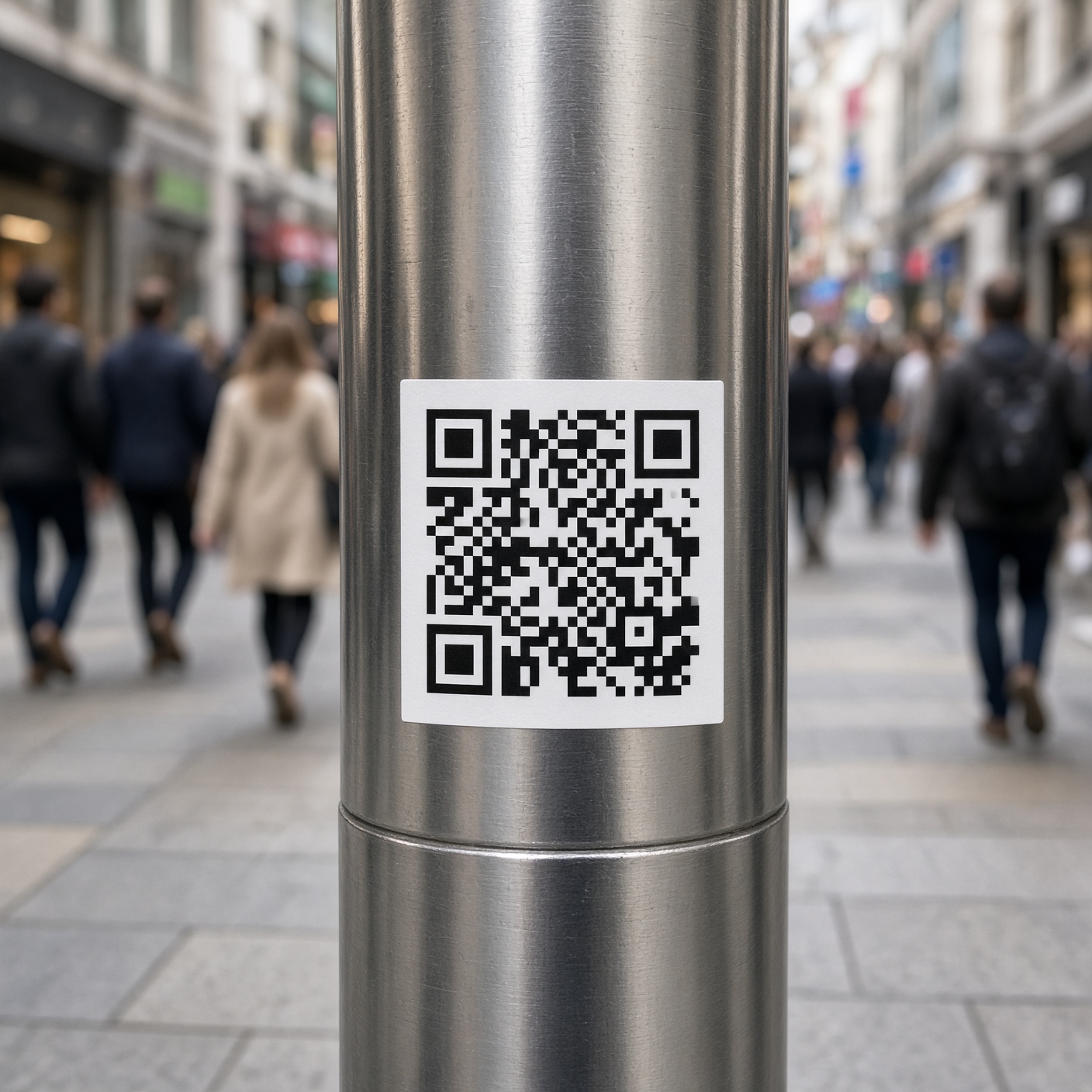
One of the most concerning developments in modern financial fraud involves the physical manipulation of public infrastructure. Across metropolitan areas, transit hubs, parking meters, and retail counters, malicious actors have begun covering legitimate payment codes with high-quality counterfeit stickers.
Imagine pulling up to a municipal parking meter, rushing to make a meeting, and noticing a prominent sign urging drivers to scan the code for quick digital payment. The sticker looks authentic, featuring official branding and professional design language. Once scanned, the victim is directed to a convincing, cloned payment portal. Eager to settle the small fee and avoid a ticket, the user inputs their credit card details, billing address, and personal information.
Instead of processing a modest parking fee, the hidden backend script registers the credit card data into an automated harvesting database. Within minutes, unauthorized charges begin appearing on the victim’s account. Because these fraudulent stickers can be applied and removed in seconds, public-facing venues often remain unaware of the tampering until multiple consumers report unexpected financial losses. This physical vulnerability turns ordinary urban environments into hunting grounds for opportunistic cybercriminals.
The Mechanics of Fake Payment Portals and Cloned Apps
Beyond public placards, financial fraud involving pixelated codes frequently targets peer-to-peer payment ecosystems and digital wallets. Small businesses, independent vendors, and pop-up markets frequently display digital or printed signs allowing customers to settle transactions instantly using mobile apps.
Fraudsters capitalize on this ecosystem by generating counterfeit destination codes that redirect transactions to accounts controlled by the syndicate. In more advanced schemes, the scanned link leads to an intermediary web app designed to mimic popular payment gateways. The interface prompts the user to log into their primary financial application or digital wallet to authorize a transfer.
When the user inputs their credentials, the system captures the login tokens in real time. Armed with these credentials, bad actors can initiate unauthorized wire transfers, drain digital balances, or apply for secondary credit lines under the victim’s name. The seamless nature of modern authentication workflows often means that victims do not realize their funds have been redirected until they manually reconcile their monthly bank statements.
Advanced Cryptocurrency Drainers and Smart Contract Exploits
As decentralized finance and digital assets have grown in mainstream popularity, fraudulent actors have adapted their strategies to target cryptocurrency enthusiasts and investors. In the digital asset landscape, recovering stolen funds is exceptionally difficult due to the immutable and decentralized nature of blockchain networks.
Scammers frequently distribute promotional materials, flyers at tech conferences, or digital advertisements offering exclusive token distributions, airdrops, or investment rewards. These promotional pieces feature graphic codes promising instant asset claims. However, when an enthusiast scans the code using a Web3-enabled mobile wallet, the underlying link triggers a malicious smart contract interaction.
Instead of depositing free tokens into the user’s account, the smart contract requests approval to interact with the wallet’s contents. If the user blindly signs the transaction authorization, the automated script gains sweeping permissions to transfer all valuable tokens and stablecoins out of the wallet instantly. Within seconds, years of accumulated digital assets can be completely wiped out with no recourse for reversal.
Psychological Triggers: Urgency, Authority, and Convenience
The success of these fraudulent operations depends heavily on exploiting fundamental human behaviors. Cybercriminals meticulously design their traps to provoke immediate reactions by leveraging specific psychological levers.
Manufactured Urgency
Fraudulent correspondence often relies on creating an artificial crisis. Notices regarding suspended utility services, immediate tax penalties, or compromised banking accounts compel individuals to act hastily without taking a moment to evaluate the situation. When individuals feel rushed, their analytical reasoning diminishes, making them far more likely to scan a code and submit sensitive information blindly.
The Illusion of Authority
Visual context matters significantly in consumer trust. By incorporating official logos, corporate branding, and professional typography onto fraudulent notices, bad actors project an aura of legitimacy. Consumers naturally assume that physical notices posted in professional settings or digital documents received from familiar corporate entities have undergone security vetting, lowering their natural skepticism.
Convenience Fatigue
Modern consumers navigate countless digital interactions daily, leading to cognitive fatigue. When faced with a choice between navigating a complex multi-step verification process or using a single camera scan to complete a task, most people choose the path of least resistance. Fraudsters rely entirely on this friction-free expectation, knowing that convenience often overrides caution.
Comprehensive Strategies for Safeguarding Personal Finances
Protecting your capital against evolving technological threats requires shifting from a passive consumer mindset to an active, verification-focused approach. Implementing robust defensive habits can neutralize the vast majority of malicious attempts before they result in financial damage.
Cultivate Healthy Verification Habits
Whenever you encounter a code in a public space, take a moment to evaluate its physical integrity. If the graphic appears to be a sticker layered over existing signage or painted surfaces, avoid scanning it entirely. For financial transactions, bills, or account notices received via mail or email, bypass the graphic completely. Open your web browser independently, type the official web address of the institution, and check your dashboard directly.
Practice URL Inspection
Modern mobile operating systems provide a vital safety feature when interacting with graphic codes. When your smartphone camera captures a matrix, a small preview bubble displaying the destination URL typically appears on the screen before the browser launches. Always pause to examine this domain name. Look for subtle misspellings, unfamiliar domain extensions, or strange character strings that deviate from the organization’s official web presence.
Fortify Your Digital Accounts
Implementing robust security measures on your financial accounts adds critical layers of protection. Utilize hardware security keys or modern passkeys rather than traditional SMS-based multi-factor authentication, which remains vulnerable to interception. Regularly audit your connected bank accounts, review active session authorizations, and set up real-time transaction alerts for any outgoing fund movements.
Maintain Operational Vigilance
Financial security is an ongoing practice rather than a one-time setup. Educating family members, sharing awareness about emerging digital scams, and treating unexpected requests for financial action with healthy skepticism ensures that your personal assets remain protected against sophisticated modern threats. By combining technical awareness with disciplined caution, you can navigate the digital landscape safely and securely.