How much money do you need to start investing?
Discover how much you really need to start investing today

For decades, there was a prevailing myth that the stock market was a playground reserved exclusively for the wealthy. If you didn’t have a briefcase full of cash and a high-end broker on speed dial, you were essentially locked out of the wealth-building machines of Wall Street.
Fortunately, those days are long gone. The democratization of finance—fueled by technology, the rise of fintech apps, and the elimination of trading commissions—has lowered the barrier to entry to almost zero.
But the question remains: How much money do you actually need to start investing? Is $5 enough? Do you need $1,000 to see real results? In this deep dive, we will break down the financial requirements for every type of investor, the “hidden” costs you need to watch out for, and how to build a million-dollar portfolio starting with whatever is in your pocket right now.
Is It Possible to Start Investing with Only $1?
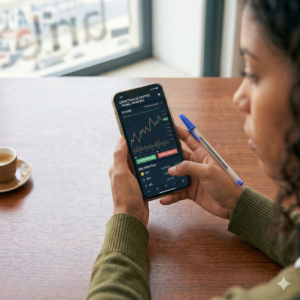
The short answer is: Yes. Thanks to a concept called fractional shares, you can now buy a piece of the world’s most expensive companies for the price of a cup of coffee.
In the past, if a single share of a major tech giant cost $3,000, you needed exactly $3,000 to become a shareholder. Today, most modern brokerage platforms allow you to buy “slices” of shares. If you have $10, you can buy 0.33% of that $3,000 share.
This shift is revolutionary for beginners. It means that the “minimum amount” is no longer determined by the price of a stock, but rather by the minimum deposit requirements of your chosen platform—which, for many popular apps, is exactly $0.
Why Your “Starting Amount” Matters Less Than Your “Starting Date”
One of the biggest mistakes new investors make is waiting until they have a “significant” amount of money before entering the market. They wait until they have $5,000 or $10,000 saved up, thinking that small amounts won’t make a difference.
Mathematically, this is a mistake. This is due to Compound Interest, which Albert Einstein famously called the “eighth wonder of the world.”
| Years Investing | Monthly Contribution | Total Invested | Ending Balance (7% Return) |
| 10 Years | $100 | $12,000 | ~$17,300 |
| 20 Years | $100 | $24,000 | ~$52,000 |
| 30 Years | $100 | $36,000 | ~$121,000 |
| 40 Years | $100 | $48,000 | ~$262,000 |
As you can see, the time your money spends in the market is more important than the amount you start with. A person who starts with $100 a month at age 25 will almost always end up wealthier than someone who starts with $500 a month at age 45.
The Pre-Investment Checklist: What to Do Before You Spend a Dime
Before you put your first dollar into the stock market, you need to ensure your financial foundation is solid. Investing is a long-term game; you don’t want to be forced to sell your stocks during a market downturn because you ran out of cash for rent.
1. Build a “Starter” Emergency Fund
Ideally, you should have three to six months of living expenses tucked away in a high-yield savings account. However, if you are eager to start, at least have a “starter” fund of $1,000 to $2,000 to cover unexpected car repairs or medical bills.
2. Kill High-Interest Debt
If you have credit card debt with an 18% or 24% interest rate, you should prioritize paying that off before investing. The stock market historically returns about 7% to 10% per year. If you invest while carrying 20% debt, you are effectively losing 10% to 13% of your net worth every year. Paying off high-interest debt is a “guaranteed” return on your money.
3. Understand Your Risk Tolerance
Investing involves risk. Prices go up, and prices go down. Ask yourself: “How would I feel if my $1,000 became $800 overnight?” If that thought keeps you awake at night, you may need a more conservative investment strategy.
Where to Invest Your First $100: Top Options for Beginners
If you’ve cleared your debt and have your emergency fund ready, where should that first $100 go? Here are the most effective vehicles for small-scale investing:
Exchange-Traded Funds (ETFs)
An ETF is a basket of different stocks or bonds. Instead of buying one company, you buy a tiny piece of hundreds of companies. This provides instant diversification. For example, an S&P 500 ETF buys you a piece of the 500 largest companies in the US. Even with $100, you can be diversified across tech, healthcare, energy, and retail.
Robo-Advisors
If you don’t want to pick your own stocks or ETFs, robo-advisors use algorithms to manage your money for you. You answer a few questions about your goals and risk tolerance, and the software builds a portfolio for you. Many robo-advisors have very low minimums (often $0 to $100).
Micro-Investing Apps
There are apps designed specifically to help you invest your “spare change.” They round up your daily purchases (like a $3.50 latte rounded to $4.00) and invest the difference. While this won’t make you a millionaire overnight, it is an excellent way to build the habit of investing without feeling the pinch in your budget.
Maximizing Your Returns with Tax-Advantaged Accounts
When asking “how much do I need,” you also need to ask “how much can I keep?” Taxes can eat a significant portion of your investment gains. In the US, there are specific accounts designed to help your money grow faster:
-
401(k) or 403(b): Often offered by employers. If your employer offers a “match” (e.g., they contribute $1 for every $1 you contribute up to a certain percentage), this is essentially a 100% return on your money. You should always aim to contribute enough to get the full match before investing elsewhere.
-
Roth IRA: You contribute money that has already been taxed, but the money grows tax-free, and you can withdraw it tax-free in retirement. This is a powerful tool for young investors.
-
Traditional IRA: You may get a tax deduction now, but you will pay taxes when you withdraw the money in the future.
How to Scale: From $10 a Month to $1,000 a Month

The secret to building wealth isn’t a one-time investment; it’s Dollar-Cost Averaging (DCA). This is the practice of investing a fixed amount of money at regular intervals, regardless of the share price.
-
Level 1 (The Habit): Start with $10 or $20 a week. Automate it so it leaves your bank account the day after you get paid.
-
Level 2 (The Optimization): As you get raises or bonuses, increase your contribution by 1% or 2%. You likely won’t notice the difference in your daily life, but your future self will.
-
Level 3 (The Portfolio): Once you have a few thousand dollars, start looking into broader diversification, perhaps adding international stocks or real estate investment trusts (REITs).
Common Fees That Can Kill Your Portfolio
Even if you start with a small amount, high fees can drain your account over time. When choosing where to put your money, keep an eye on:
-
Expense Ratios: This is the annual fee charged by ETFs or Mutual Funds. Look for “low-cost” index funds with expense ratios below 0.10%.
-
Management Fees: Some advisors charge 1% or more of your total assets. While 1% sounds small, over 30 years, it can cost you hundreds of thousands of dollars in lost growth.
-
Trading Commissions: Most major brokerages now offer $0 commissions for stocks and ETFs. If your broker is still charging you $5 or $10 per trade, it’s time to switch.
Psychological Barriers: The Cost of Waiting for a “Market Crash”
Many beginners hesitate to start because they are afraid the market is “too high” or that a crash is coming. They decide to “wait for a dip” before investing their first $1,000.
Historical data shows that “Time in the market beats timing the market.” If you missed the best 10 days of the stock market over the last two decades, your total returns would be roughly half of what they would have been if you had stayed invested. Since we can’t predict when those “best days” will happen, the best strategy is to be in the market all the time.
Summary: Your Step-by-Step Action Plan
-
Audit your finances: Ensure you have no high-interest debt and a small emergency fund.
-
Pick a platform: Choose a reputable, low-fee brokerage that offers fractional shares.
-
Start small, but start now: Even if it’s just $5 or $50.
-
Automate: Set up a recurring transfer so you don’t have to “remember” to invest.
-
Educate yourself: Focus on low-cost ETFs and index funds to start.
-
Think long-term: Ignore the daily news headlines and focus on your goals 10, 20, or 30 years from now.
The Best Time to Start was Yesterday
The answer to “How much money do you need to start investing?” is simply: Whatever you have right now. Whether it is $10 or $10,000, the most important step is the first one. By starting today, you are giving your money the greatest gift possible: Time. Don’t wait for the “perfect” amount or the “perfect” market conditions. Start small, stay consistent, and watch the power of compounding transform your financial future.