Personal loans have become one of the most versatile tools in the modern financial toolkit. Unlike a mortgage, which must be used for a home, or an auto loan, which is tied to a vehicle, a personal loan offers a level of flexibility that is hard to match. In the United States, the personal loan market has seen significant growth as consumers seek ways to manage high-interest debt, fund home improvements, or handle unexpected life events.
However, just because you can use a personal loan for almost anything doesn’t mean you should. Understanding the strategic advantages of this financial instrument is the difference between building wealth and falling into a debt trap.
In this guide, we will explore the most effective and financially sound uses for a personal loan, how they compare to other forms of credit, and what you need to know before signing the dotted line.
1. Debt Consolidation: Turning High-Interest Chaos into One Low-Interest Payment

The single most common and arguably the smartest use of a personal loan is debt consolidation. Many Americans find themselves juggling multiple credit card balances, each with interest rates hovering between 18% and 30%.
How It Works for Your Wallet
By taking out a personal loan with a lower interest rate (often in the 8% to 15% range for those with good credit), you can pay off all your high-interest credit cards at once. This leaves you with a single monthly payment.
-
Simplified Finances: Instead of five different due dates, you have one.
-
Reduced Interest Costs: You could potentially save thousands of dollars over the life of the loan.
-
Fixed End Date: Unlike credit cards, which allow for “minimum payments” that can last decades, a personal loan has a fixed term (e.g., 3 or 5 years), ensuring you will be debt-free by a specific date.
2. Strategic Home Improvements: Increasing Your Property Value
Investing in your home is often an investment in your net worth. While many homeowners look toward Home Equity Lines of Credit (HELOCs), a personal loan—often called a Home Improvement Loan—can be a faster, more accessible alternative.
Why Choose a Personal Loan for Remodeling?
If you don’t have enough equity in your home yet, or if you don’t want to use your house as collateral (which is required for a HELOC), a personal loan is an excellent choice.
-
Kitchen and Bathroom Upgrades: These typically offer the highest Return on Investment (ROI).
-
Necessary Repairs: Fixing a leaking roof or an aging HVAC system prevents further, more expensive damage down the road.
-
Speed of Funding: Personal loans can often be funded within 24 to 48 hours, allowing you to start your project immediately.
3. Covering Major Life Events: Weddings and Beyond
Life is full of milestones that come with hefty price tags. While it is always better to save in advance, sometimes a personal loan is used to bridge the gap for once-in-a-lifetime events like weddings or milestone anniversaries.
The Balanced Approach
Financial experts generally advise against going into deep debt for a party. However, if you have a solid repayment plan, a personal loan is vastly superior to putting a $15,000 wedding expense on a credit card. The fixed interest rate of a loan provides a structured way to pay back the celebration without the compounding interest nightmare of a revolving credit card balance.
4. Emergency Medical Expenses and Unforeseen Costs

Even with the best insurance, medical emergencies in the U.S. can result in significant out-of-pocket costs. Deductibles, specialized treatments, or emergency dental work can easily reach several thousand dollars.
A Safety Net for the Unexpected
When faced with a medical bill, many providers offer payment plans, but these can sometimes be restrictive. A personal loan allows you to pay the provider in full—potentially negotiating a “cash discount”—and then repay the bank on terms that fit your monthly budget. This also applies to other emergencies, such as urgent car repairs needed for your daily commute to work.
5. Moving Costs and Relocation Expenses
Relocating for a new job or a better lifestyle is often a smart career move, but the upfront costs are daunting. Security deposits, moving trucks, new furniture, and travel expenses add up quickly.
Using a personal loan to cover relocation can be seen as an investment in your career. If the new position comes with a significant salary increase, the loan can be paid back rapidly, while the “cost of moving” becomes a minor hurdle in your professional growth.
6. Boosting Your Credit Score through Credit Mix and Utilization
It might sound counterintuitive to take out a loan to improve your credit, but when managed correctly, a personal loan can be a powerful tool for your FICO score.
The Impact on Your Credit Profile
-
Credit Mix: Lenders like to see that you can handle different types of debt (revolving credit like cards and installment debt like loans). Adding an installment loan to a profile that only has credit cards can improve your score.
-
Lowering Credit Utilization: If you use a loan to pay off credit card balances, your “credit utilization ratio” drops instantly. Since this ratio accounts for 30% of your FICO score, many borrowers see a significant score increase within a month of consolidating.
7. Business Start-up Costs for Entrepreneurs
While there are specific “Small Business Loans” available, they often require years of business history and collateral. For a freelancer or a solo entrepreneur starting a side hustle, a personal loan can provide the initial capital needed for equipment, marketing, or inventory.
Note: Always ensure your business plan is solid enough to cover the loan payments, as you are personally liable for the debt regardless of how the business performs.
8. Comparing Personal Loans vs. Credit Cards: Which is Better?
To understand why a personal loan is a “best use” scenario, we must compare it to the most common alternative: the credit card.
| Feature | Personal Loan | Credit Card |
| Interest Rate | Generally Lower (Fixed) | Generally Higher (Variable) |
| Repayment Structure | Fixed monthly installments | Minimum monthly payments |
| Borrowing Limit | High (up to $50,000+) | Limited by credit line |
| Impact on Credit | Builds “Credit Mix” | Can hurt “Utilization” |
For any expense that will take more than three months to pay off, a personal loan is almost always the more mathematically sound choice.
9. Understanding the Real Cost: Interest Rates, APR, and Fees
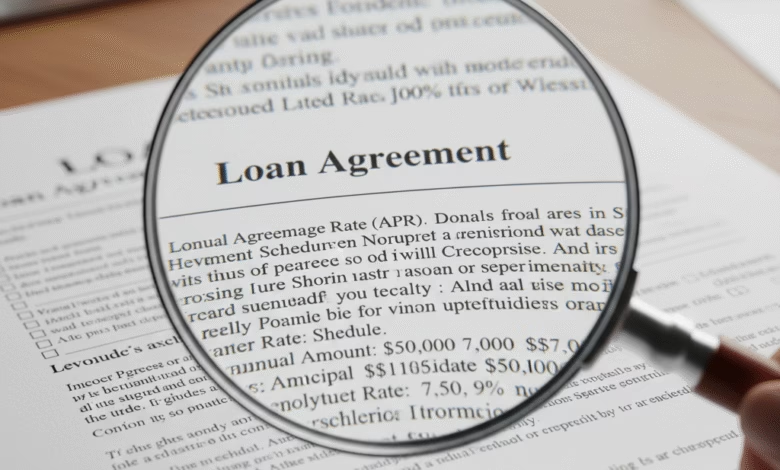
Before applying for a personal loan, you must look beyond the “monthly payment” and understand the Annual Percentage Rate (APR). The APR includes both the interest rate and any fees associated with the loan, such as:
-
Origination Fees: A percentage of the loan amount (usually 1% to 8%) charged by the lender for processing.
-
Prepayment Penalties: Some lenders charge a fee if you pay the loan off early. (Pro tip: Look for lenders that do not charge these).
-
Late Fees: Standard charges for missing a payment.
How to Calculate the Value
If you are using a loan for debt consolidation, ensure the APR of the new loan is significantly lower than the weighted average APR of your current debts. If it isn’t, you aren’t saving money; you’re just moving it around.
10. How to Qualify for the Best Rates in the US Market

To make a personal loan a “best use” tool, you need to qualify for the best possible terms. Lenders in the United States primarily look at three things:
-
Credit Score: A score of 720 or higher will unlock the lowest interest rates.
-
Debt-to-Income (DTI) Ratio: Lenders want to see that your total monthly debt payments (including the new loan) don’t exceed 35-40% of your gross monthly income.
-
Income Stability: Proof of steady employment or consistent 1099 income is crucial.
11. When You Should AVOID a Personal Loan
To remain compliant with Google’s quality guidelines and provide honest financial advice, we must discuss when a personal loan is a bad idea.
-
Investing in Volatile Markets: Never take out a personal loan to buy stocks, “meme coins,” or crypto. The risk of the asset losing value while you still owe the bank is a recipe for financial ruin.
-
Living Beyond Your Means: If you are using a loan to buy luxury clothes or vacations you simply cannot afford, you are treating the symptom rather than the cause of your financial stress.
-
Gambling: This is a violation of most lender agreements and a dangerous financial path.
12. Making an Informed Decision
A personal loan is a tool—and like any tool, its value depends on the hands that hold it. When used for debt consolidation, home improvement, or managing high-interest expenses, it can be a bridge to a more stable financial future.
By locking in a fixed interest rate and a clear path to repayment, you take control of your debt rather than letting your debt control you. Before you apply, compare multiple lenders, check your credit score, and ensure the monthly payment fits comfortably within your budget.