Understand how inflation affects your daily life
Learn how the power of inflation can impact your daily life
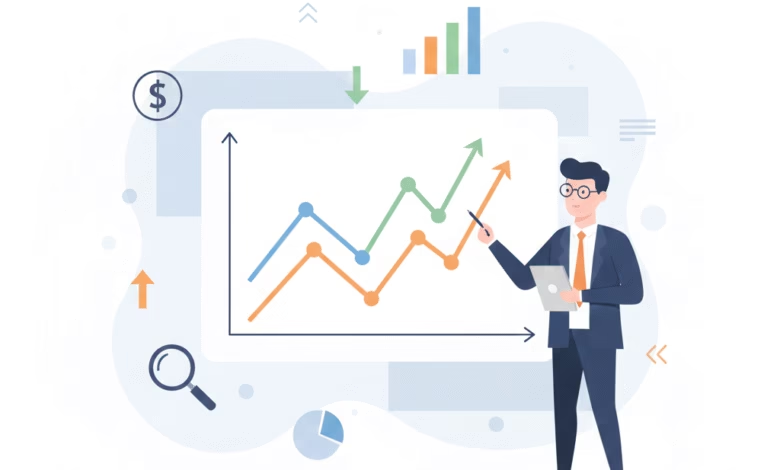
We have all felt it. You walk into the grocery store, pick up the same dozen eggs, the same gallon of milk, and the same loaf of bread you’ve bought for years, but the total at the register is suddenly $5 or $10 higher. You check your gas gauge, and the cost to fill your tank has climbed significantly since last month.
This isn’t just a string of bad luck; it is the tangible effect of inflation. Often described as “too much money chasing too few goods,” inflation is the steady increase in the prices of goods and services over time. While a small amount of inflation is considered a sign of a healthy, growing economy, rapid or unexpected inflation can feel like an invisible thief, stealing the value of the money in your pocket.
In this guide, we will break down exactly how inflation works, why it happens, and—most importantly—how it affects your daily life, your debts, and your long-term financial security.
1. What is Inflation? Understanding the Decline of Purchasing Power
At its core, inflation is about purchasing power. Purchasing power is the amount of goods or services that one unit of currency can buy. When inflation rises, your purchasing power falls.
Think of it this way: If one apple costs $1 today, and inflation causes that apple to cost $2 next year, your $1 is now only worth half an apple. The currency hasn’t changed, but what it can “do” for you has diminished.
How is Inflation Measured?
In the United States and most developed economies, inflation is measured primarily through the Consumer Price Index (CPI). The CPI tracks a “basket of goods” that an average urban consumer buys, including:
-
Food and beverages
-
Housing (rent or mortgages)
-
Transportation (gas, car repairs)
-
Medical care
-
Education and communication
When the government reports that inflation is at 5%, they mean that, on average, the items in that basket cost 5% more than they did one year ago.
2. The Causes of Inflation: Why Prices Don’t Stay the Same
Inflation doesn’t happen in a vacuum. Economists generally point to three main drivers that cause prices to climb:
Demand-Pull Inflation
This occurs when the demand for goods and services exceeds the economy’s ability to produce them. When consumers have plenty of cash and want to spend it, but there aren’t enough products to go around, businesses raise prices. It is the classic “supply and demand” struggle.
Cost-Push Inflation
This happens when the costs of production increase. If the price of oil goes up, it becomes more expensive to transport goods. If wages rise rapidly, companies may pass those labor costs on to consumers. To maintain their profit margins, businesses increase the retail price of their products.
Monetary Expansion
If a government prints too much money or keeps interest rates too low for too long, the economy becomes “flooded” with cash. When money is easy to get, its value naturally drops compared to hard assets like real estate or gold.
3. How Inflation Hits Your Monthly Budget: Beyond the Grocery Store
The most immediate way inflation affects your life is through your disposable income. If your salary stays the same while the cost of living rises, you are effectively taking a pay cut.
The Phenomenon of “Shrinkflation”
Have you ever noticed that your favorite bag of chips seems to have more air and fewer chips, but the price is the same? This is shrinkflation. Companies, wary of raising prices and losing customers, instead reduce the size or weight of the product. It is a hidden form of inflation that affects your daily life without being as obvious as a price tag change.
The Housing Squeeze
Housing is usually the largest expense for any household. Inflation often leads to higher property values and, consequently, higher rents. For those looking to buy a home, inflation typically forces the central bank to raise interest rates, making mortgages more expensive and further straining the monthly budget.
4. The Hidden Impact on Loans, Mortgages, and Credit Cards

Inflation is a double-edged sword when it comes to debt. Depending on what kind of loans you have, inflation could either be your best friend or your worst enemy.
Fixed-Rate vs. Variable-Rate Debt
-
Fixed-Rate Loans: If you have a 30-year fixed-rate mortgage at 3%, inflation can actually help you. You are paying back the bank with “cheaper” dollars—money that has less purchasing power than when you borrowed it. Effectively, the real value of your debt shrinks.
-
Variable-Rate Debt (Credit Cards): This is where it gets dangerous. To fight inflation, the Federal Reserve (or your local central bank) will raise interest rates. Most credit cards have variable APRs. When the Fed raises rates, your credit card interest rate jumps almost immediately, making it much harder to pay off your balance.
Personal Loans and Business Credit
During high inflation, banks become more cautious. They may tighten lending standards, making it harder to get a personal loan or a business line of credit. If you do qualify, the higher interest rates mean you will pay back significantly more over the life of the loan.
5. How Inflation Erodes Your Savings and Retirement Accounts
For savers, inflation is a silent predator. If you have $50,000 sitting in a traditional savings account earning 0.1% interest, but inflation is at 6%, you are losing 5.9% of your wealth’s value every single year.
6. Inflation vs. Deflation: Which One is Worse?
While high inflation is painful, its opposite—deflation—can be even more destructive. Deflation is a general decrease in prices. While it sounds great to have things become cheaper, it often leads to a “deflationary spiral.”
-
Consumers stop spending because they wait for prices to fall further.
-
Businesses see falling profits and start laying off workers.
-
Unemployment rises, leading to even less spending.
This is why central banks, like the Federal Reserve, target a modest inflation rate of around 2%. It is high enough to encourage people to spend and invest today, but low enough to keep the cost of living stable.
7. Smart Strategies to Protect Your Money from Rising Costs

You don’t have to be a victim of inflation. There are several strategic moves you can make to shield your wealth and even profit during periods of rising prices.
Invest in “Hard Assets”
Historically, certain assets perform well when inflation is high:
-
Real Estate: Property values and rents tend to rise with inflation.
-
Commodities: Gold, silver, and oil often act as “hedges” against a devaluing currency.
-
Stocks: Companies with “pricing power”—those that can easily raise prices without losing customers (like utilities or luxury brands)—tend to thrive.
Treasury Inflation-Protected Securities (TIPS)
In the US, the government offers TIPS. These are bonds where the principal increases with inflation (measured by the CPI). When the bond matures, you are paid the adjusted principal or the original principal, whichever is greater, protecting your investment from losing value.
Focus on High-Yield Savings
If you must keep cash for an emergency fund, move it out of “big box” banks and into High-Yield Savings Accounts (HYSA). While they may not always beat inflation, they offer significantly higher rates (often 4% or more) compared to the 0.01% offered by traditional banks.
8. The Role of the Central Bank: The Fight to Cool the Economy
In the United States, the Federal Reserve has a “dual mandate”: to promote maximum employment and to keep prices stable. When inflation gets too high, the Fed uses its primary tool—Interest Rates.
By raising the “Federal Funds Rate,” the Fed makes borrowing more expensive for everyone.
-
Businesses borrow less to expand.
-
Consumers buy fewer cars and houses.
-
Spending slows down.
-
As demand drops, the rate of price increases (inflation) begins to slow.
The challenge is the “soft landing.” If the Fed raises rates too high or too fast, they risk causing a recession.
9. The Psychological and Social Effects of Inflation
Inflation isn’t just about math; it’s about psychology. When people expect prices to keep rising, they change their behavior. They might “panic buy” goods they don’t need yet, which ironically creates more demand and pushes prices even higher.
Furthermore, inflation often hits lower-income families the hardest. While wealthy individuals often own assets like stocks and real estate that rise in value during inflation, those living paycheck to paycheck see their primary “asset”—their time and labor—become less valuable as their wages fail to keep up with the cost of rent and groceries.
10. Navigating Your Financial Future in an Inflationary World
Inflation is an unavoidable part of the modern economic landscape. While you cannot control the Federal Reserve’s interest rate decisions or the global supply chain, you can control how you position your finances.
By understanding that cash loses value over time, you can prioritize investing in assets that grow. By keeping an eye on your debt’s interest rates, you can avoid the trap of rising variable-rate payments. Most importantly, by staying informed, you can turn inflation from a threat into a manageable part of your broader financial strategy.
The key to beating inflation is proactivity. Don’t wait for your purchasing power to vanish—start building a portfolio that stands the test of time.