For anyone diving into the world of credit card rewards, the name “Chase” inevitably comes to the forefront. With a powerful and flexible rewards program in Ultimate Rewards® and a suite of top-tier travel and cash-back cards, getting your first Chase card often feels like a rite of passage. But soon after, a new question emerges: If one Chase card is good, are multiple Chase cards even better?
The answer, for the savvy and organized consumer, is a resounding yes. Holding multiple Chase cards isn’t just about having more plastic in your wallet; it’s about building a strategic, synergistic system that can dramatically accelerate your ability to earn free travel, get significant cash back, and unlock a trove of premium benefits. This strategy, often called the “Chase Trifecta” or “Quadfecta,” allows you to leverage the strengths of different cards to maximize every single dollar you spend.
This in-depth guide will explore the powerful reasons why having a multi-card Chase setup is one of the most effective rewards strategies in 2025. We’ll break down exactly how these combinations work, reveal how to pool your points for maximum value, and discuss the best card pairings for your specific goals. We will also address the important considerations, like managing annual fees and navigating Chase’s application rules, to help you decide if this advanced strategy is the right move for your financial journey.
The Core Concept: Why One Chase Card Isn’t Enough

While a single Chase card, like the excellent Chase Sapphire Preferred® Card, is a fantastic tool on its own, it has limitations. It offers great rewards on travel and dining, but what about your other major spending categories like gas, groceries, or everyday drugstore purchases? You’re likely earning just one point per dollar in those areas.
This is where a multi-card strategy comes in. By pairing a premium Chase card with one or more of their no-annual-fee “Freedom” cards, you create a powerhouse combination. The Freedom cards are designed to earn high rates of cash back (which is actually awarded as Ultimate Rewards points) in categories where the Sapphire cards are weaker. You can then transfer the points earned on your Freedom cards to your Sapphire card account. This single move transforms them from simple cash-back points into premium, transferable travel rewards, instantly increasing their value and flexibility. This synergy is the foundation of a successful Chase card ecosystem.
The Legendary “Chase Trifecta”: How Does This Powerful Combo Work?
The “Chase Trifecta” is the most popular and effective multi-card strategy. It involves holding three specific Chase cards that work together to cover a wide range of spending categories, ensuring you’re earning more than 1x point on almost every purchase. The classic Trifecta consists of:
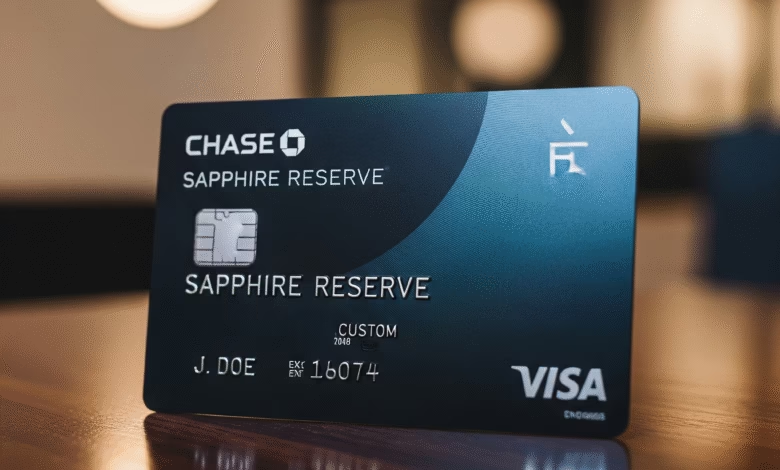
1. A Premium “Anchor” Card: Chase Sapphire Preferred® or Chase Sapphire Reserve®
- Role: This is the heart of your strategy. The Sapphire card is what allows you to transfer your points to high-value airline and hotel partners like United, Southwest, and World of Hyatt. It also provides a redemption bonus when booking travel through the Chase Travel℠ portal (25% with Preferred, 50% with Reserve) and comes with essential travel protections.
- Bonus Categories: 3x on dining, online groceries, and select streaming services (Preferred) or a broader 3x on all travel and dining (Reserve).
2. The Workhorse Card: Chase Freedom Unlimited®
- Role: This card acts as your baseline for all non-bonus spending. Instead of earning a meager 1x point, the Freedom Unlimited® ensures you’re always getting a solid return.
- Bonus Categories: At least 1.5% cash back (1.5x points) on every purchase, plus elevated rewards on dining, drugstores, and travel purchased through the Chase portal.
3. The Rotating Category Maximizer: Chase Freedom Flex℠
- Role: This card is your specialist for maximizing earnings on everyday spending that changes throughout the year.
- Bonus Categories: 5% cash back (5x points) on up to $1,500 in combined purchases in bonus categories that rotate each quarter (e.g., gas stations, Amazon.com, grocery stores, select streaming services). It also features 3x on dining and drugstores.
How the Trifecta Comes Together: A Real-World Example
Imagine your spending in a given month:
- $400 on dining
- $500 on groceries (during a 5x rotating category quarter for the Freedom Flex)
- $1,000 on other miscellaneous bills and retail shopping
With only a Sapphire Preferred card, you would earn:
- Dining: $400 x 3 points = 1,200 points
- Groceries: $500 x 1 point = 500 points
- Other: $1,000 x 1 point = 1,000 points
- Total = 2,700 points
Now, let’s use the Trifecta strategy:
- Pay for dining with your Sapphire Preferred ($400 x 3 points = 1,200 points)
- Pay for groceries with your Freedom Flex ($500 x 5 points = 2,500 points)
- Pay for other bills with your Freedom Unlimited ($1,000 x 1.5 points = 1,500 points)
- Total = 5,200 points
By simply using the right card for each purchase, you’ve nearly doubled your earnings without spending an extra dime. You can then transfer all 5,200 points to your Sapphire account to be used for high-value travel redemptions.
Leveling Up: Assembling the “Chase Quadfecta” for Business Owners

For freelancers, small business owners, or anyone with a side hustle, the strategy can be made even more potent by adding a fourth card: the Chase Ink Business Preferred® Credit Card. This creates what’s known as the “Chase Quadfecta.”
The Ink Business Preferred® earns an incredible 3x points on the first $150,000 spent annually across common business categories, including:
- Travel
- Shipping
- Internet, cable, and phone services
- Advertising on social media and search engines
By adding this card, a business owner can turn major operational costs into a massive influx of Ultimate Rewards points, supercharging their travel goals.
The Golden Ticket: How to Combine and Pool Your Chase Points
The magic that makes these strategies work is the ability to pool all your points into one central account. Chase makes this process incredibly simple.
From your Ultimate Rewards account online, you can combine points between your own cards or even transfer them to one other household member who shares your address. This means you can instantly move the points earned on your Freedom Unlimited® and Freedom Flex℠ to your Sapphire Preferred® or Sapphire Reserve® account.
This unlocks their full potential in two ways:
- Access to Transfer Partners: Your Freedom points, once moved to a Sapphire account, can now be transferred at a 1:1 ratio to partners like World of Hyatt, Marriott Bonvoy, Southwest Airlines Rapid Rewards, and United MileagePlus. This is often where you’ll find outsized value, such as booking luxury hotel nights or international business class flights.
- Higher Portal Redemption Value: The points also gain the travel portal bonus associated with your Sapphire card. A point that was worth 1 cent on your Freedom card becomes worth 1.25 cents (with Preferred) or 1.5 cents (with Reserve) when booking travel through Chase.
Potential Downsides: What to Consider Before Getting More Cards

While the benefits are substantial, a multi-card strategy isn’t for everyone. It requires a certain level of financial discipline and organization. Here are the key factors to consider:
1. Navigating the Chase 5/24 Rule
As a reminder, Chase will likely deny you for most of their cards if you’ve opened five or more personal credit cards from any bank in the past 24 months. This means you must be strategic about the order in which you apply for cards. It’s crucial to get the Chase cards you want before applying for cards from other issuers like American Express or Citi.
2. Managing Multiple Annual Fees
While the Freedom cards have no annual fee, your anchor Sapphire card and any business or co-branded cards will. The Chase Sapphire Preferred® has a manageable $95 fee, but the Sapphire Reserve® comes in at a steep $550. Before committing, you must be certain that you’ll use the card’s benefits (like the Reserve’s $300 annual travel credit) to offset the cost.
3. The Risk of Overspending and Debt
The primary purpose of a rewards strategy is to get value back on your everyday, budgeted spending. It is never a good idea to spend more than you can afford just to earn points. The high interest rates on credit cards will quickly wipe out the value of any rewards you earn if you carry a balance. This strategy is only recommended for those who pay their balances in full every single month.
4. Can Having Multiple Chase Cards Hurt Your Credit Score?
This is a common concern, and the answer is nuanced.
- Short-Term Impact: Each time you apply for a new card, a hard inquiry is placed on your credit report, which can cause a small, temporary dip in your score. Opening a new account will also lower your average age of accounts, another minor factor.
- Long-Term Impact: The long-term effects are generally positive, assuming responsible use. Having more cards increases your total available credit, which lowers your overall credit utilization ratio—a major factor in your credit score. A long history of on-time payments across multiple accounts is a powerful positive signal to the credit bureaus.
For most people with good financial habits, the long-term benefits to their credit score will outweigh the minor, short-term dips from new applications.
The Verdict: Is a Multi-Card Chase Strategy Right for You?

So, is it worth having multiple Chase cards?
If you are someone who pays your credit card bills in full every month, can stay organized with different cards for different categories, and are looking to maximize travel rewards or cash back, then absolutely.
A well-executed Chase Trifecta or Quadfecta is arguably the most powerful and accessible credit card rewards strategy available today. It allows you to transform every dollar of your spending—from your morning coffee to your monthly business software subscription—into a valuable reward. By understanding how to leverage the strengths of each card and pool your points effectively, you can unlock a world of travel and financial benefits that a single card simply cannot offer.