How to Organize Your Finances From Scratch
Learn how to organize your finances, control your spending, and create a budget that fits your income
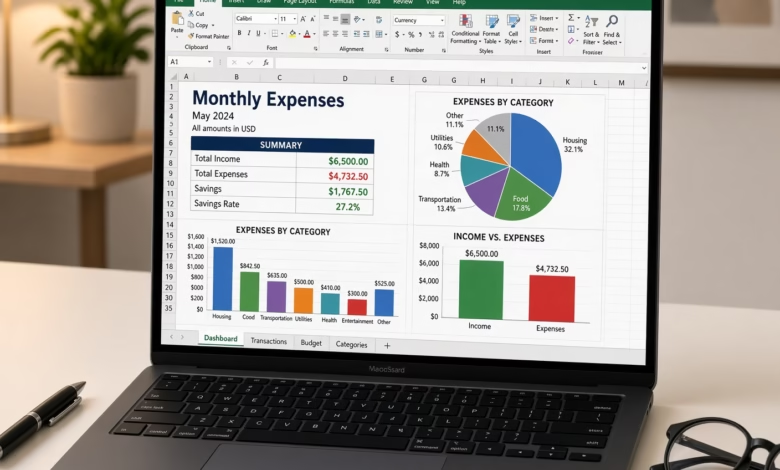
Taking control of your money can feel overwhelming, especially if you have never followed a structured system before. High cost of living, unexpected expenses, and confusing financial terminology often make people delay getting started. However, learning how to organize your finances from scratch does not require an accounting degree or complex mathematical formulas. It simply requires a clear roadmap, practical habits, and a realistic strategy.
This comprehensive guide breaks down the process of personal financial organization into simple, actionable steps. Whether you are living paycheck to paycheck, trying to pay off debt, or planning for long-term wealth, this guide will help you build a solid financial foundation step by step.
Understanding Your Current Financial Picture: Income, Expenses, and Cash Flow

Before creating budget categories or choosing financial apps, you must gain total clarity on your current financial position. You cannot navigate toward financial independence without knowing where you are starting from.
To calculate your current financial standing, gather all your monetary documents from the last three to six months. This includes bank statements, credit card bills, pay stubs, loan agreements, and routine utility bills.
Step 1: Calculate Your Net Monthly Income
Your gross income is the amount you earn before taxes and deductions, but your net income is what actually enters your checking account. Base your financial plan strictly on your net income. If you work on commission, freelancing, or variable hours, calculate your average net monthly earnings over the last 12 months, or base your budget on your lowest-earning month to remain conservative.
Step 2: Categorize and Track Your Expenses
Review every expense from recent bank statements and split them into two core groups:
- Fixed Expenses: These are mandatory, recurring bills that stay mostly constant each month. Examples include rent or mortgage payments, insurance premiums, car payments, subscription services, and basic utility bills.
- Variable Expenses: These expenses fluctuate depending on choices, lifestyle, and seasonal demands. Examples include groceries, dining out, gas, leisure activities, shopping, and household maintenance.
Step 3: Identify Your Net Cash Flow
Subtract your total monthly expenses from your net monthly income.
- Positive Cash Flow: You are spending less than you earn, leaving extra money for savings, investments, or debt paydown.
- Negative Cash Flow: You are spending more than you earn, which leads to reliance on credit cards or loans.
- Zero Cash Flow: You are living paycheck to paycheck with no room for unexpected emergencies.
Choosing the Right Budgeting Method for Your Lifestyle
A budget is not a restriction on your freedom; it is a tool that gives every dollar a specific purpose. Choosing a budgeting methodology that matches your personality ensures long-term consistency.
The 50/30/20 Budgeting Rule
The 50/30/20 model is one of the most popular frameworks for beginners due to its simplicity and flexibility:
- 50% Needs: Allocate half of your net income to basic survival necessities, including shelter, utilities, essential groceries, minimum debt payments, and basic transportation.
- 30% Wants: Allocate thirty percent to non-essential lifestyle choices, such as eating out, entertainment, streaming services, and vacations.
- 20% Savings and Debt Repayment: Reserve twenty percent for building emergency funds, paying down principal debt, and contributing to retirement accounts.
Zero-Based Budgeting
In a zero-based budget, every dollar earned is assigned a specific job—whether for living expenses, savings, investments, or debt payments—until your remaining unallocated balance equals zero. This method prevents unallocated cash from leaking into impulse purchases.
The Envelope System
For those who struggle with overspending on credit or debit cards, the envelope system uses physical cash stored in labeled envelopes for discretionary categories like groceries, clothes, and dining out. Once an envelope is empty, spending in that category stops until the next pay cycle.
Building a Bulletproof Emergency Reserve Fund
An emergency fund is the protective barrier between your life and financial distress. Without cash reserves, sudden medical emergencies, home repairs, job losses, or car trouble can easily force you into high-interest debt.
Determining the Optimal Size of Your Fund
Financial standard practices suggest saving three to six months worth of essential living expenses. Note that this covers essential needs only (rent, groceries, utilities), not discretionary lifestyle spending.
| Financial Situation | Recommended Reserve Size | Primary Focus Area |
|---|---|---|
| Dual Income, Stable Job | 3 Months of Living Expenses | High-Yield Savings Accounts |
| Single Income, Dependents | 6 Months of Living Expenses | Capital Preservation & Liquidity |
| Freelancer / Self-Employed | 6 to 9 Months of Living Expenses | Conservative Cash Reserves |
Where to Store Emergency Cash
Keep your emergency fund liquid, meaning easily accessible without financial penalty, but separated from your main checking account so you are not tempted to spend it. A High-Yield Savings Account (HYSA) is ideal because it earns competitive interest while offering full liquidity and insurance protection.
Strategies to Pay Off Debt Fast and Eliminate High Interest

Carrying high-interest debt, such as credit card balances or personal loans, severely hinders long-term wealth building. Eliminating debt systematically allows you to redirect funds into interest-earning accounts.
The Debt Avalanche Method
The debt avalanche approach targets high interest rates first:
- List all debts from the highest interest rate to the lowest interest rate.
- Make minimum payments on all accounts.
- Throw all remaining extra cash toward the balance with the highest interest rate.
- Once paid off, roll the entire payment amount into the next highest interest rate balance.
Advantage: Saves the most money in total interest charges and speeds up overall debt-free timelines mathematically.
The Debt Snowball Method
The debt snowball approach targets low balances first:
- List all debts from the smallest total balance to the largest total balance, regardless of interest rates.
- Make minimum payments on all accounts.
- Focus extra cash on fully clearing the smallest balance first.
- Once cleared, add that payment power to the next smallest balance.
Advantage: Provides rapid psychological wins that build momentum and keep motivation high.
Setting Up Smart Financial Goals: Short, Medium, and Long Term
A financial organization strategy is far easier to follow when linked to concrete life goals. Grouping your goals by time horizon clarifies which accounts or tools are best suited to achieve them.
Short-Term Goals (0 to 2 Years)
- Examples: Emergency reserve, annual insurance premiums, home repairs, or vacations.
- Strategy: Keep capital preserved in insured, high-yield savings accounts or low-risk short-term money market instruments.
Medium-Term Goals (2 to 7 Years)
- Examples: Down payment on a home, purchasing a car, or funding higher education.
- Strategy: Utilize conservative investment vehicles, fixed certificates of deposit (CDs), or balanced income funds that provide stability while outpacing inflation.
Long-Term Goals (7+ Years)
- Examples: Financial independence, retirement, and legacy planning.
- Strategy: Invest in wealth-building assets like broad-market equity index funds, exchange-traded funds (ETFs), and long-term tax-advantaged retirement accounts.
Automating Your Money to Prevent Human Error and Late Fees
Manual financial management relies heavily on willpower and memory, both of which can fail during busy or stressful periods. Automating your financial accounts removes monthly friction and keeps your progress consistent.
Setting Up Direct Deposits
Split your paycheck directly at the payroll level if your employer supports it. For example, direct 80% into your main checking account for routine bills and 20% directly into your high-yield savings or investment account.
Automating Bill Payments
Set up automatic recurring payments for fixed regular expenses such as rent, utility bills, internet, insurance, and minimum credit card balances. This eliminates late fees and protects your credit history score.
Scheduling Automated Investments
Establish recurring automatic transfers from your checking account to your investment portfolios immediately following paydays. Investing automatically ensures you prioritize your long-term goals without second-guessing market trends.
Understanding Credit Scores and Protecting Your Credit Profile
Your credit score acts as a financial reputation score. A healthy credit score unlocks lower interest rates on mortgages, auto loans, and personal borrowing, saving you tens of thousands of dollars over time.
Factors That Impact Your Credit Rating
- Payment History (35%): Paying bills on time is the single most critical factor.
- Credit Utilization Ratio (30%): Keep total used credit below 30%—and ideally below 10%—of your total available limit.
- Length of Credit History (15%): Older accounts boost your average credit age. Keep initial credit accounts open when possible.
- New Credit Accounts (10%): Avoid opening multiple new credit lines in a short period.
- Credit Mix (10%): A healthy combination of revolving credit (credit cards) and installment loans (auto, mortgage).
Simplifying Insurance and Protecting Personal Wealth

Financial organization involves both growing assets and protecting them from unexpected risk. Having appropriate insurance policies prevents major life disruptions from undermining years of financial progress.
- Health Insurance: Protects against catastrophic medical debts.
- Auto & Homeowners/Renters Insurance: Guards valuable physical assets against theft, liability claims, or natural damage.
- Life Insurance: Provides income protection for dependents in the event of an unexpected tragedy. Term life insurance offers straightforward coverage at lower rates compared to permanent options.
- Disability Insurance: Protects your primary asset—your earning capability—if illness or injury prevents you from working.
How to Periodically Review, Refine, and Maintain Your Plan
Organizing your finances from scratch is not a one-time event; it is an ongoing practice. Life circumstances change, incomes grow, and personal goals evolve over time.
The Monthly 15-Minute Financial Audit
Set aside 15 minutes at the end of every month to review actual spending against your budget, verify incoming transactions, and check that automatic savings transfers went through smoothly.
The Annual Financial Review
Once a year, conduct a deeper review of your overall financial standing:
- Rebalance investment portfolios to match your long-term risk tolerance.
- Shop around and negotiate rates for car, home, or health insurance.
- Adjust retirement contributions whenever you receive a raise or bonus.
- Update insurance beneficiary designations and estate documents as family dynamics shift.