Books to learn financial literacy from scratch
Learn key financial literacy concepts through books recommended for beginners

The journey to financial independence does not require an Ivy League degree in economics or a background in Wall Street trading. In fact, some of the most profound, life-changing financial wisdom is locked within the pages of simple, accessible books written by people who started with absolutely nothing. If you have ever felt overwhelmed by credit card debt, confused by the concept of investing, or anxious about your financial future, you are not alone. The modern financial landscape is deliberately complex, but the foundational principles of wealth creation remain remarkably simple.
Learning how to manage, save, and grow your money is a classic self-taught skill. While traditional school systems teach us how to work for money, they rarely teach us how to make money work for us. This gap in our education is precisely why financial literacy books are so incredibly valuable. They act as mentors in print, distilling decades of trial, error, and ultimate success into structured, easy-to-digest lessons.
By dedicating time to reading the right books, you can systematically dismantle the limiting beliefs keeping you broke, establish a foolproof budgeting system, and build a passive income engine that works for you even while you sleep. This comprehensive guide details the absolute best books to learn financial education from scratch, organized by the specific financial milestones they help you achieve.
Why Books Remain the Best Investment for Financial Freedom
In an era of short-form videos, quick financial hacks, and overnight investment trends, it is easy to wonder why anyone should spend hours reading a book on personal finance. The reality is that true financial literacy requires depth, context, and a fundamental shift in perspective—things that cannot be effectively packaged into a sixty-second clip.
When you read a well-crafted book on finance, you are buying access to a highly structured framework. Authors spend years researching, organizing, and refining their arguments to ensure that complex financial vehicles like compound interest, tax-advantaged accounts, and index funds are explained in a logical sequence. This structured learning prevents the cognitive overload that often comes with jumping from one random piece of online advice to another.
Furthermore, books excel at addressing the psychological side of money. Building wealth is rarely just about math; it is about behavior. You can know exactly how to write a budget, but if you do not understand the emotional triggers that cause you to overspend, your budget will fail. Books offer the space to explore these internal behavioral patterns, helping you build the mental resilience required to stick to your long-term financial plans during volatile economic cycles.
The Essential Mindset Shift: Best Books to Rewrite Your Relationship with Money
Before you can successfully implement a budget or choose an investment portfolio, you must address your money mindset. Most of our financial habits are formed in childhood, influenced by how our parents talked about—or avoided talking about—money. If you grew up believing that money is scarce, difficult to obtain, or the root of all stress, you may be unconsciously sabotaging your own financial success. The following books are masterclasses in restructuring your relationship with wealth.
1. The Psychology of Money by Morgan Housel
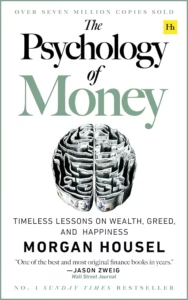
If you only read one book on this list, make it this one. Morgan Housel does a brilliant job of showing that doing well with money has very little to do with how smart you are and a lot to do with how you behave. Through nineteen short stories, Housel explores the strange ways people think about money and teaches readers how to make better sense of one of life’s most important topics.
-
Core Philosophy: Wealth is not what you see; it is the cars not purchased, the diamonds not bought, and the renovations postponed. Wealth is the flexibility and freedom that saved money provides.
-
Key Takeaway: True financial success is about staying rich, not just getting rich. This requires a combination of humility, frugality, and an acceptance that luck plays a massive role in financial outcomes.
-
Best For: Absolute beginners who want a modern, highly engaging introduction to behavioral finance.
2. Rich Dad Poor Dad by Robert Kiyosaki
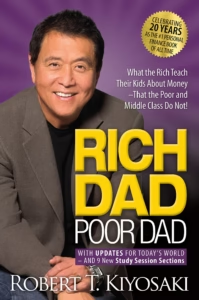
A classic that has served as the gateway to financial literacy for millions of people worldwide, this book challenges the traditional notion of working a 9-to-5 job to pay the bills. Kiyosaki contrasts the financial philosophies of his highly educated but financially struggling father (“Poor Dad”) with those of his friend’s self-made millionaire father (“Rich Dad”).
-
Core Philosophy: The rich buy assets, while the poor and middle class buy liabilities that they think are assets. An asset puts money in your pocket; a liability takes money out of your pocket.
-
Key Takeaway: To break free from the “rat race,” you must focus on acquiring income-producing assets like real estate, stocks, or businesses, rather than relying solely on a paycheck.
-
Best For: Readers who need a powerful wake-up call to start thinking like an entrepreneur and investor rather than just an employee.
3. Mindset: The New Psychology of Success by Carol S. Dweck
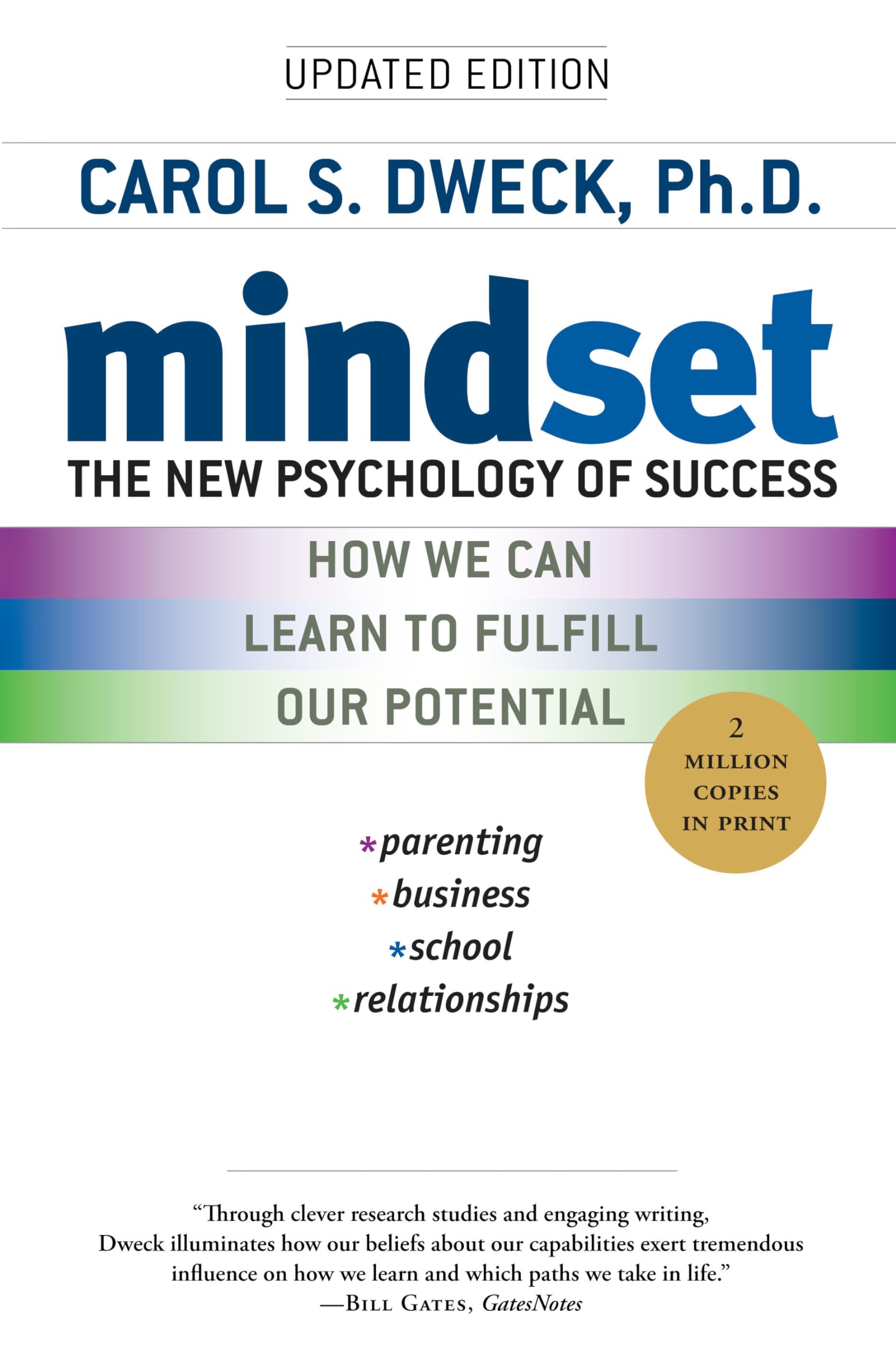
While not strictly a personal finance book, Dweck’s work on the “growth mindset” is essential for anyone trying to learn financial literacy from scratch. Many people suffer from a “fixed mindset” regarding money, believing that they are simply “bad with numbers” or “destined to be poor.”
-
Core Philosophy: Our abilities, intelligence, and financial acumen are not fixed traits; they can be developed through dedication, strategic learning, and hard work.
-
Key Takeaway: Believing that you can learn how to invest, negotiate a higher salary, and manage debt is the prerequisite to actually doing it.
-
Best For: Individuals who feel blocked by self-doubt or a sense of helplessness regarding their current financial situation.
Step-by-Step Budgeting and Debt Mastery: Top Reads for Getting Out of the Red
Once you have established a healthy financial mindset, the next logical step is to gain control over your daily cash flow. If you are carrying high-interest debt, such as credit card balances or personal loans, your immediate priority should be eliminating these wealth-killers. The books in this category offer highly actionable, step-by-step blueprints for organizing your money, creating functional budgets, and aggressively paying down debt.
1. The Total Money Makeover by Dave Ramsey
Dave Ramsey is a legendary figure in the personal finance space, known for his direct, no-nonsense approach to debt elimination. His book lays out a clear, linear path called the “Baby Steps” designed to take you from broke and stressed to financially secure and generous.
-
Core Philosophy: Debt is a drag on your greatest wealth-building tool: your income. By eliminating debt entirely, you free up cash flow to invest aggressively.
-
Key Takeaway: The “Debt Snowball” method—paying off your smallest debts first to build psychological momentum—is incredibly effective for changing long-term financial behavior.
-
Best For: Anyone buried under high-interest consumer debt who needs a rigid, highly disciplined plan to regain control.
2. I Will Teach You to Be Rich by Ramit Sethi
Ramit Sethi offers a refreshing, modern alternative to the traditional “frugal living” narrative. Instead of telling you to stop buying lattes and cut out all fun, Sethi advocates for “conscious spending.” He encourages readers to spend extravagantly on the things they love, while cutting costs mercilessly on the things they do not care about.
-
Core Philosophy: Personal finance should be automated. By setting up a system that automatically distributes your paycheck to your bills, savings, investments, and guilt-free spending, you remove the daily stress of money management.
-
Key Takeaway: Focus on the “Big Wins”—like negotiating a higher salary, buying a house the right way, or optimizing your credit cards—rather than stressing over minor three-dollar purchases.
-
Best For: Young professionals who want a practical, highly entertaining, and automated system to manage their money without giving up their social lives.
Building Wealth from Scratch: Beginner Guides to Smart Investing and Passive Income
You cannot save your way to true wealth. Because inflation continuously erodes the purchasing power of cash sitting in a standard bank account, you must learn how to invest. For beginners, the stock market can seem like a volatile casino, but when approached with a long-term, passive strategy, it is actually one of the most reliable wealth-generating tools in human history. These books simplify the world of investing so that anyone can participate safely and profitably.
1. The Simple Path to Wealth by JL Collins
Originally written as a series of letters to his daughter, JL Collins’ book demystifies the complex world of stock market investing. He argues that Wall Street deliberately complicates investing to justify its high fees, and that the most successful strategy is actually the simplest.
-
Core Philosophy: The ultimate way to build long-term wealth is to buy and hold low-cost broad-market index funds, which track the performance of the entire stock market over time.
-
Key Takeaway: You do not need to pick individual stocks or time the market. By consistently buying index funds and ignoring market panic, you will naturally build substantial wealth over the long haul.
-
Best For: Absolute beginners who want a straightforward, low-stress guide to investing without needing to monitor the stock market daily.
2. The Bogleheads’ Guide to Investing by Taylor Larimore, Mel Lindauer, and Michael LeBoeuf
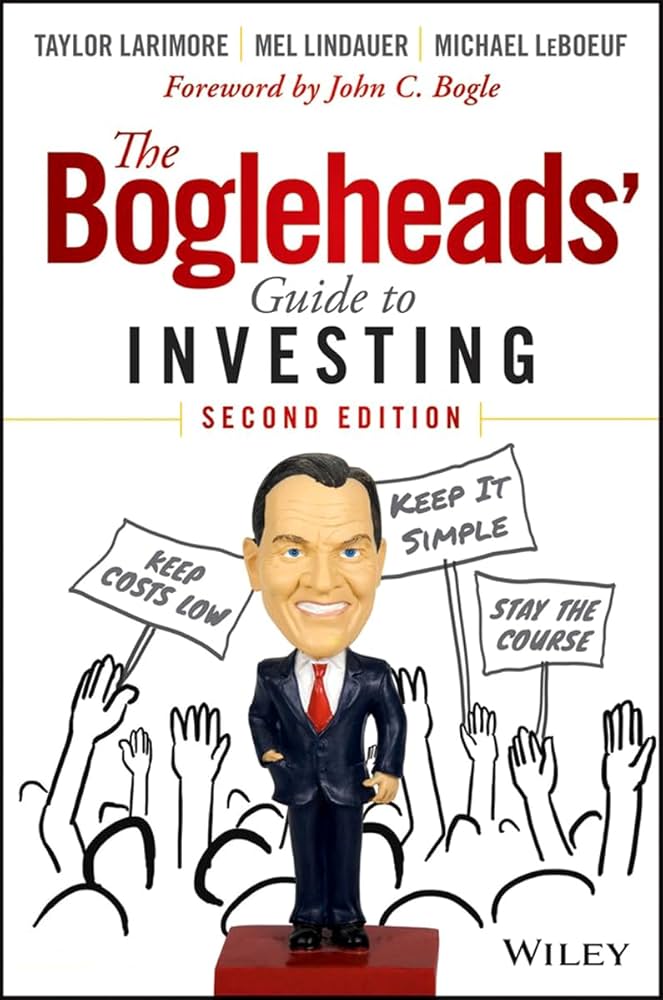
This book is a comprehensive manual based on the investing principles of John C. Bogle, the founder of Vanguard and the pioneer of index investing. It expands on the simple path of index investing by exploring tax strategies, asset allocation, and retirement planning in greater detail.
-
Core Philosophy: Keep your investment costs low, diversify your portfolio across entire asset classes, invest for the long term, and maintain realistic expectations.
-
Key Takeaway: Simple, low-cost portfolios consistently outperform the vast majority of actively managed mutual funds over a multi-decade horizon.
-
Best For: Readers who want a solid, practical understanding of index investing, retirement accounts, and portfolio diversification.
3. The Intelligent Investor by Benjamin Graham
Known as the bible of value investing, this classic text was written by Benjamin Graham, the mentor of Warren Buffett. While it is a bit more dense and technical than the other books on this list, its core principles are vital for anyone wanting a deeper understanding of market psychology.
-
Core Philosophy: An investor should treat a stock as a fractional share of a real business, focusing on intrinsic value rather than short-term price fluctuations.
-
Key Takeaway: Develop a disciplined, analytical approach to the market and protect yourself from emotional reactions to market highs and lows.
-
Best For: Intermediate learners who want to transition from passive index funds to a deeper understanding of market dynamics and value investing.
Overcoming Cognitive Biases: How Behavioral Finance Books Can Save Your Savings
As you progress in your financial education, you will realize that your own brain is often your worst enemy. Human beings did not evolve to manage digital currency, track compound interest, or watch stock portfolios drop by thirty percent without panicking. Understanding the cognitive biases that influence our choices is critical to protecting your hard-earned savings.
1. Thinking, Fast and Slow by Daniel Kahneman
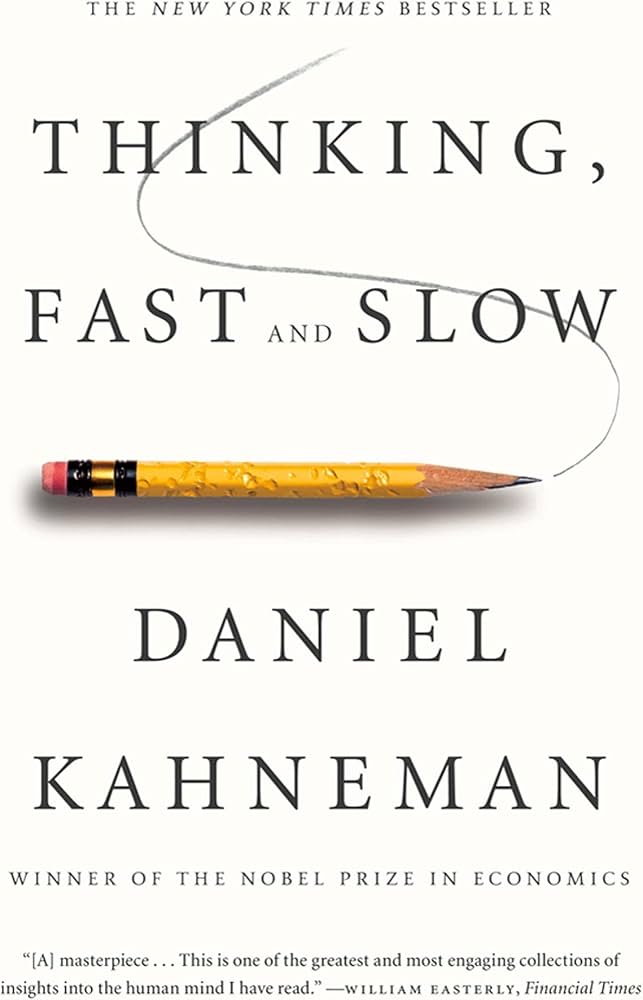
Nobel laureate Daniel Kahneman explores the two systems that drive the way we think: System 1, which is fast, intuitive, and emotional; and System 2, which is slower, more deliberative, and more logical.
-
Core Philosophy: Most financial mistakes occur when we rely on our fast, emotional System 1 to make complex financial decisions that require the slow, logical analysis of System 2.
-
Key Takeaway: By recognizing the limits of human intuition, we can design systems—like automated saving and long-term investing rules—that protect us from our own cognitive biases.
-
Best For: Those who want a deep, scientific understanding of why we make poor decisions and how to make better ones.
2. Nudge: Improving Decisions About Health, Wealth, and Happiness by Richard H. Thaler and Cass R. Sunstein
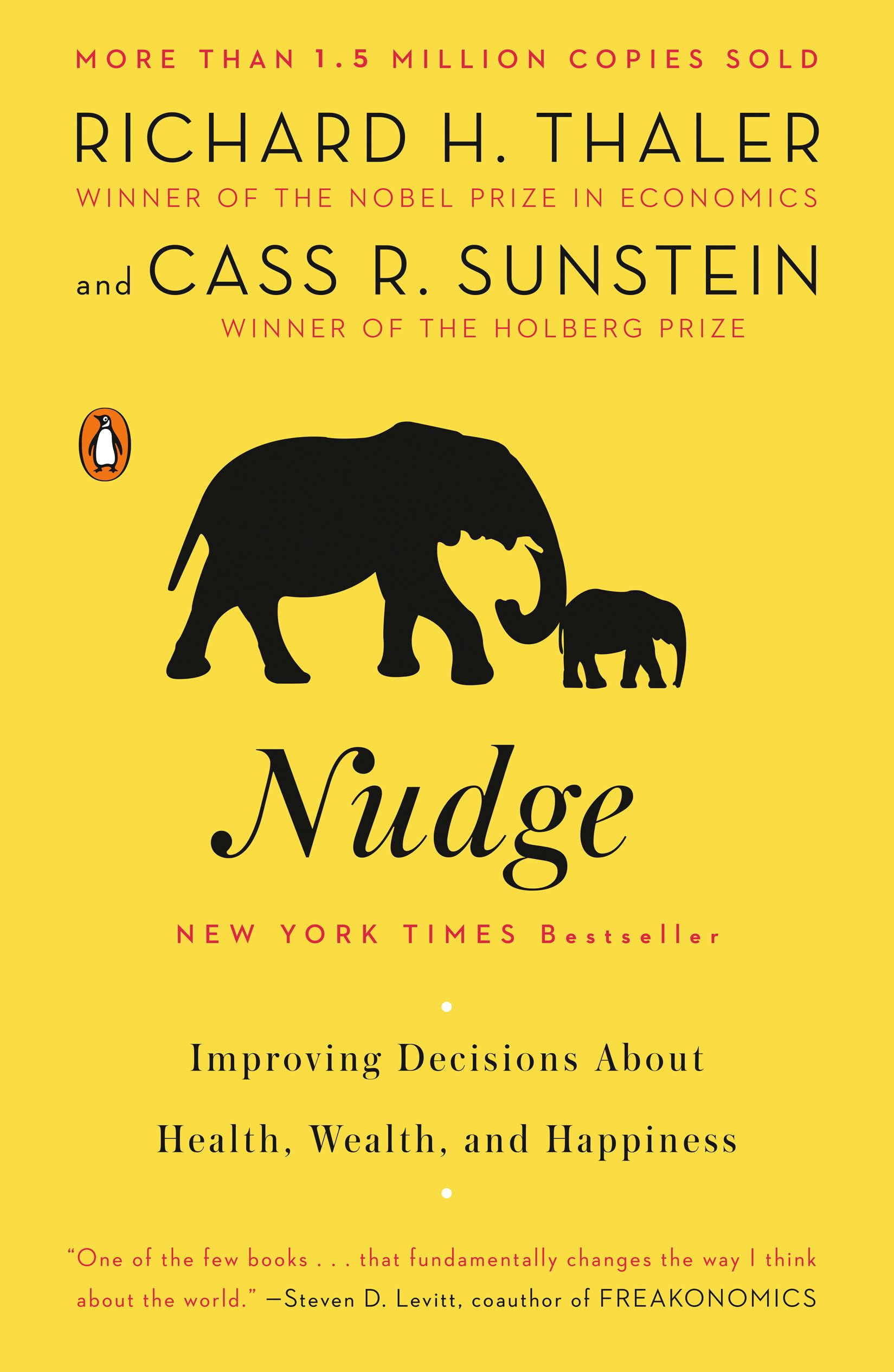
Richard Thaler, another Nobel Prize winner, introduces the concept of “choice architecture.” The book demonstrates how subtle changes in our environment can drastically improve the choices we make regarding savings, investments, and health.
-
Core Philosophy: Human beings are easily influenced by default options. By setting up our default choices correctly, we can make good financial habits effortless.
-
Key Takeaway: Opt-in systems, automatic savings escalations, and clear feedback loops are incredibly powerful tools for building long-term wealth without relying on sheer willpower.
-
Best For: Readers interested in how behavioral economics can be applied practically to daily financial life.
A Customized 12-Month Reading Plan to Build Your Financial Intelligence
To prevent feeling overwhelmed, it is highly recommended to approach these books systematically. Instead of trying to read everything at once, commit to reading one book every two months. This structured pace allows you to fully absorb the material and, more importantly, apply the lessons to your real-life finances before moving on to the next topic.
| Month | Book Title | Focus Area | Key Action Item |
| Months 1–2 | The Psychology of Money | Mindset & Psychology | Write down your personal money history and identify your biggest financial fears. |
| Months 3–4 | The Total Money Makeover | Debt Elimination & Budgeting | Create a comprehensive list of all outstanding debts and establish a starter emergency fund. |
| Months 5–6 | I Will Teach You to Be Rich | Financial Automation | Set up automatic transfers so your bills, savings, and investments are paid first every month. |
| Months 7–8 | The Simple Path to Wealth | Passive Investing | Open a low-cost brokerage account and set up your first automatic index fund purchase. |
| Months 9–10 | The Bogleheads’ Guide to Investing | Wealth Preservation | Review your asset allocation, retirement accounts, and minimize the fees you pay to financial institutions. |
| Months 11–12 | Thinking, Fast and Slow | Behavioral Defense | Analyze your past spending mistakes to identify which cognitive biases triggered them. |
Key Takeaways: Common Habits of Highly Financially Literate Individuals
As you read through these diverse financial perspectives, you will notice that several core patterns begin to emerge. Regardless of the author’s specific background, nearly all financial experts agree on a few fundamental behaviors that separate the wealthy from those who constantly struggle.
-
They Pay Themselves First: Rather than saving whatever money is left over at the end of the month, financially successful people allocate a set percentage of their income to savings and investments the moment they are paid.
-
They Understand Opportunity Cost: Every dollar spent on a depreciating liability today is a dollar that cannot be compounded into a valuable asset for tomorrow. They do not view purchases merely in terms of retail price, but in terms of future wealth-building potential.
-
They Keep Things Simple: Complex financial strategies are often fragile and expensive. The most resilient wealth-building systems rely on simple, automated habits that require minimal maintenance.
-
They Invest in Continuous Education: The most valuable asset you will ever own is your own mind. By continuously reading, learning, and adapting, you increase your earning potential and protect yourself from costly financial scams.
Building financial literacy is a lifelong process, but the first step is simply opening a book. By starting with the titles listed in this guide, you will gain the knowledge, confidence, and tools necessary to take complete control of your financial destiny and build a secure, prosperous future.