How Credit Card Payments Are Processed
See why some credit card transactions are approved instantly while others may be delayed or declined
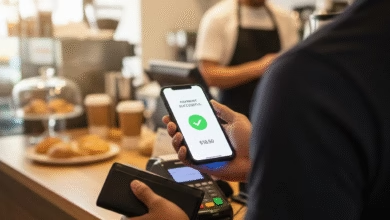
Every day, millions of transactions happen in the blink of an eye. You tap your phone at a coffee shop or click “buy” on an e-commerce site, and within seconds, your purchase is confirmed. While this experience feels instantaneous, behind the scenes lies a sophisticated, multi-step digital journey. Understanding the lifecycle of a credit card transaction provides insight into the complex financial infrastructure that powers modern commerce.
The Key Players in a Credit Card Transaction
To grasp how payments are processed, it is essential to first identify the entities involved. Each plays a distinct role in ensuring money moves securely from the consumer to the merchant.
-
The Cardholder: The individual who owns the credit card and initiates the transaction to purchase goods or services.
-
The Merchant: The business—whether a physical retail store or an online shop—that accepts the credit card payment.
-
The Point-of-Sale (POS) System: The hardware and software interface used by the merchant to capture payment data, including card terminals, card readers, or virtual checkout pages.
-
The Payment Gateway: A digital bridge that secures and transmits transaction data from the merchant’s POS to the payment processor.
-
The Payment Processor: A service provider that facilitates the movement of information between the merchant, the card network, and the banks.
-
The Card Network: Major organizations like Visa, Mastercard, American Express, and Discover that set the rules, standards, and communication protocols for transactions.
-
The Issuing Bank: The financial institution that issued the card to the consumer. This bank holds the funds and approves or declines the transaction.
-
The Acquiring Bank: The financial institution that holds the merchant’s account and deposits the funds once a transaction is finalized.
Phase 1: Authorization – The Digital Handshake
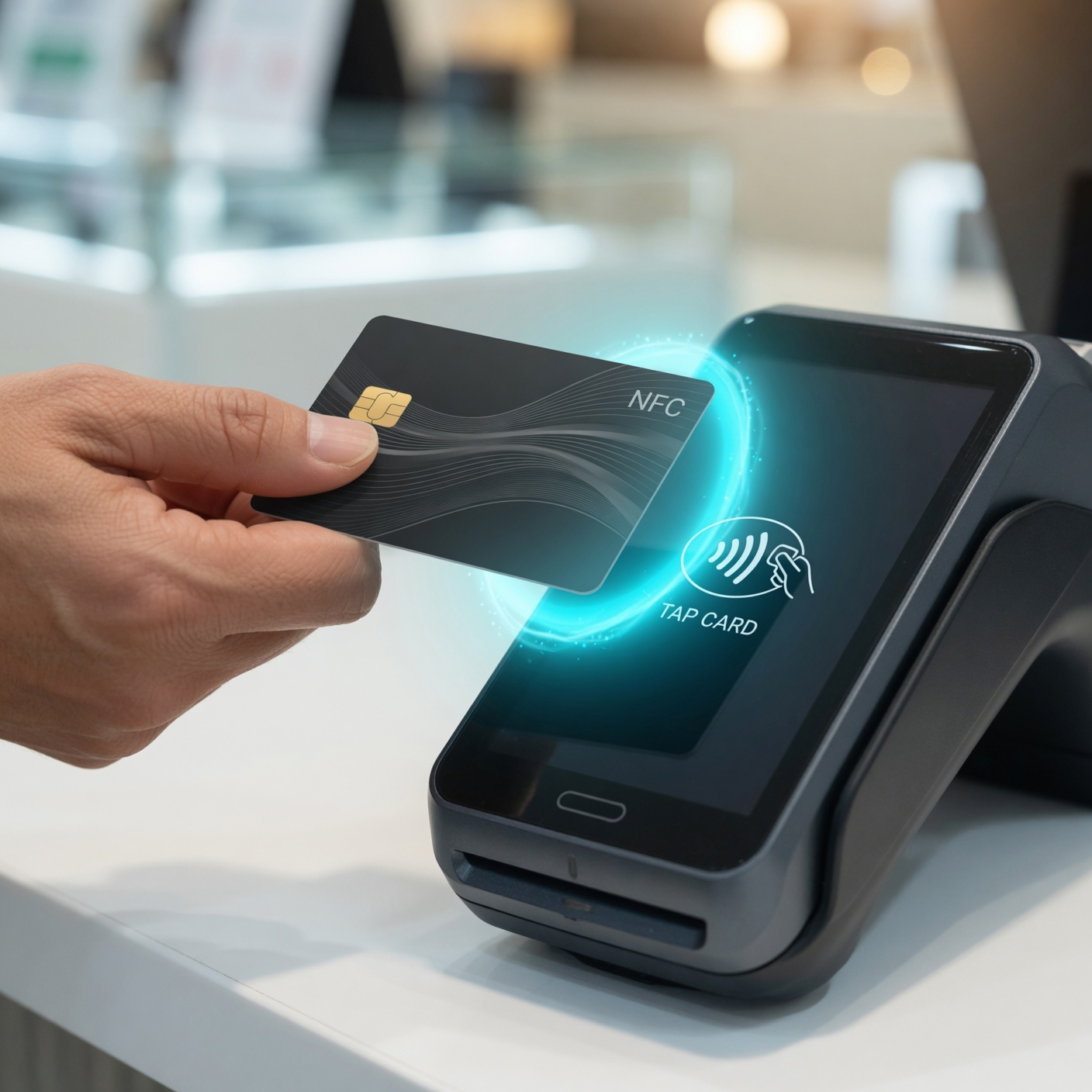
The journey of a payment begins with the authorization phase. When a cardholder presents their payment method, the process must confirm that the account is valid and has sufficient funds.
-
Payment Initiation: The customer initiates the transaction by swiping, inserting, or tapping their physical card, or by entering their details into an online checkout form.
-
Data Transmission: The POS system captures this encrypted data and sends it through the payment gateway to the payment processor.
-
Routing: The processor forwards the information to the appropriate card network, which acts as a routing intermediary to locate the specific issuing bank.
-
Verification: The issuing bank performs a series of checks. It verifies if the account is active, if the card has been reported stolen, and if there are sufficient funds or available credit to cover the requested amount.
-
Response: The bank sends a decision (approval or decline) back through the network to the processor, which then relays this signal to the merchant’s terminal. This entire process typically takes only a few seconds.
Phase 2: Clearing and Settlement – Moving the Funds
While authorization confirms the transaction, it does not actually move the money. That happens during the clearing and settlement phase, which usually occurs at the end of the business day.
During the clearing process, the merchant sends a batch of approved transactions to their acquiring bank. The acquiring bank then forwards this batch to the respective card networks. The card networks sort these transactions and send them to the individual issuing banks.
Once the details are verified and the amounts are confirmed, the settlement phase begins. The issuing bank transfers the funds (minus the interchange fees) to the acquiring bank, which then deposits the final amount into the merchant’s business account. This cycle ensures that all parties are compensated for their roles in the transaction chain.
Understanding Transaction Security
Security is the backbone of the payment industry. Because sensitive financial information is being transmitted globally, multiple layers of defense are employed to prevent fraud.
EMV Chip Technology
The transition from magnetic stripes to EMV (Europay, Mastercard, and Visa) chips has significantly reduced counterfeit fraud. When a card is inserted into a terminal, the chip generates a unique, one-time transaction code that is virtually impossible to replicate. This ensures that even if a criminal intercepts the data, it cannot be used for future unauthorized purchases.
Encryption and Tokenization
Modern payments rely heavily on two protective measures:
-
Encryption: This process scrambles data from the moment it is swiped or entered until it reaches the processor, keeping it unreadable to anyone who might try to intercept it in transit.
-
Tokenization: This replaces sensitive card numbers (the Primary Account Number or PAN) with a random, meaningless string of numbers called a “token.” Because tokens have no value outside of the specific merchant’s environment, they render stolen data useless to hackers.
The Anatomy of Processing Fees
For merchants, accepting credit cards comes with costs. These fees are generally categorized into three buckets:
-
Interchange Fees: These are non-negotiable fees set by the card networks but paid to the issuing bank. They cover the costs of risk management and the administrative burden of issuing the cards. They vary based on the type of card (e.g., rewards cards vs. standard cards) and the industry.
-
Assessment Fees: These are small, fixed-percentage fees charged by the card networks themselves to cover the operational costs of maintaining the network infrastructure.
-
Payment Processor Fees: These are the service charges paid to the payment processor for providing the hardware, software, and support necessary to facilitate the transaction.
Together, these components form the “discount rate,” which is the total cost of accepting a payment. Businesses often choose between different pricing models—such as flat-rate or interchange-plus—to manage these overheads effectively.
Evolution of Payments: Where Is the Industry Heading?
The financial landscape is in a constant state of transformation. As we look at the current trajectory of payment technology, several trends are reshaping how we interact with money.
The Rise of Contactless and Mobile Wallets
Contactless payments, powered by Near Field Communication (NFC) technology, have moved from a convenience to an expectation. Mobile wallets like Apple Pay and Google Pay allow users to store their card information securely on their smartphones. These tools often add an extra layer of security, as they require biometric authentication—such as a fingerprint or facial scan—before a payment can be authorized.
Buy Now, Pay Later (BNPL)
BNPL solutions have introduced a new layer to the point-of-sale experience. By offering customers the ability to split purchases into smaller, interest-free installments, merchants have found ways to increase conversion rates. While these services integrate seamlessly into existing processing networks, they represent a significant shift in how credit is extended at the moment of purchase, moving away from traditional revolving credit lines toward point-of-sale financing.
The Future of Speed and Accessibility
As fintech continues to innovate, the goal remains the same: reducing friction. We are seeing a move toward invisible payments, where the technology fades into the background, allowing the consumer to focus on the experience rather than the payment method. Whether through wearable devices, biometric payments, or real-time settlement rails, the underlying architecture described in this guide will continue to evolve to meet the growing demands for speed, security, and global accessibility.
By understanding the intricacies of the payment lifecycle—from the moment a card is tapped to the final settlement of funds—one gains a deeper appreciation for the complex systems that make modern life run smoothly. This ecosystem, built on trust and rigorous security standards, ensures that commerce can occur anywhere, at any time, with confidence.