How Indexes Measure Market Performance
Learn how market indexes track the performance of financial markets
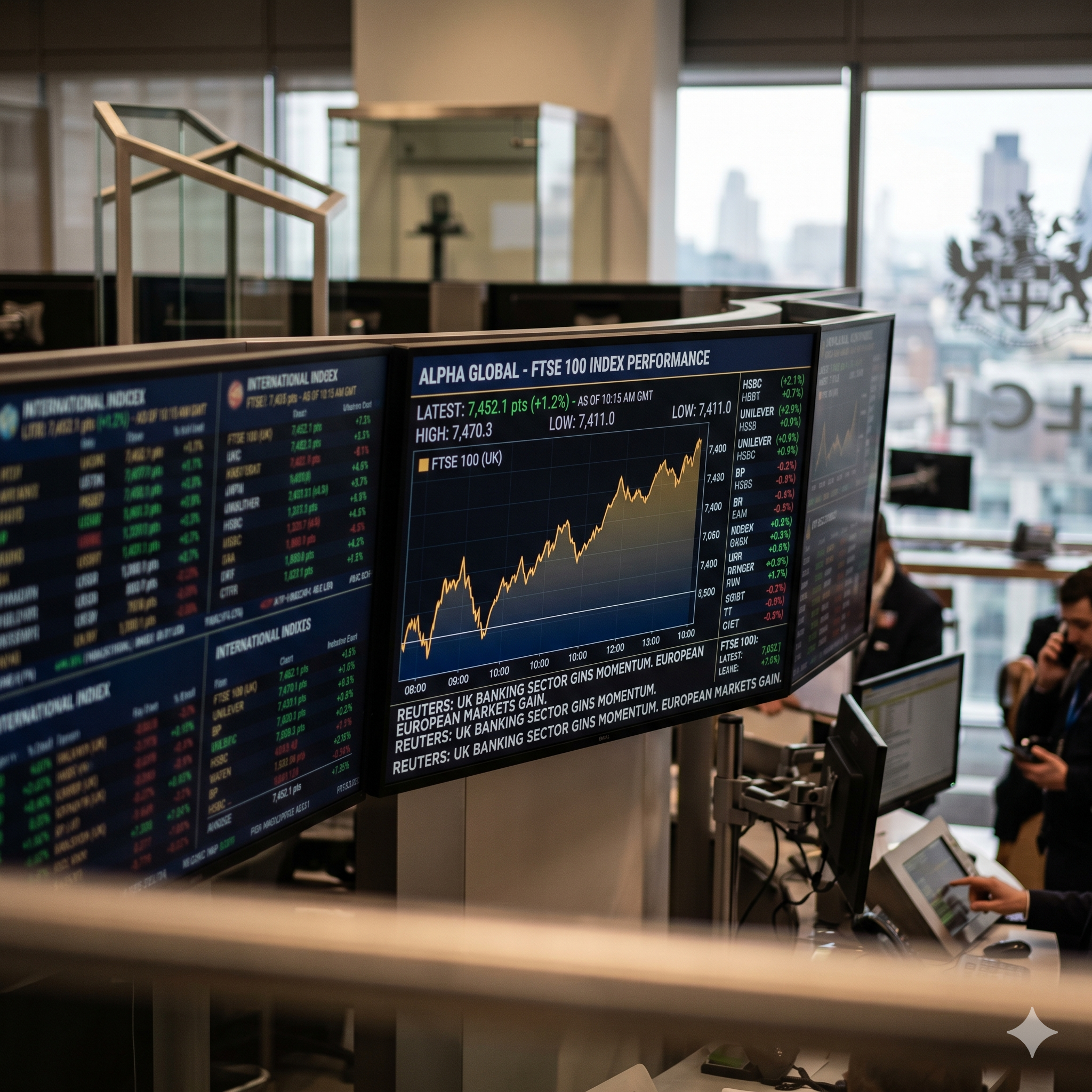
When people talk about the “market” being up or down, they aren’t usually referring to every single one of the thousands of publicly traded companies in existence. Instead, they are looking at a Stock Market Index.
An index is essentially a statistical measure of change in a representative group of individual securities. Think of it as a thermometer for the economy: it doesn’t tell you the temperature of every single molecule of air, but it gives you a very accurate reading of the general environment.
For the modern investor, understanding how these indexes (or indices) function is critical. They are the yardsticks used to measure the success of investment portfolios, the foundation of passive investing, and the primary indicators of global economic health. In this comprehensive guide, we will dive deep into the mechanics, methodologies, and implications of how indexes measure market performance.
What Exactly is a Stock Market Index?

At its core, a stock market index is a hypothetical portfolio of investment holdings which represents a particular segment of the financial market. Since you cannot “buy” an index directly (you buy funds that track them), it serves as a mathematical construct to track performance.
The Purpose of an Index
The primary role of an index is to provide a benchmark. If you tell a friend your portfolio grew by 8% this year, that sounds great. However, if the S&P 500 grew by 20% in that same period, your 8% return actually indicates that your strategy significantly underperformed the broader market.
Indexes allow us to:
-
Gauge Sentiment: See how investors feel about the future.
-
Compare Performance: Evaluate mutual funds or individual stock picks.
-
Enable Passive Investing: Index funds and ETFs use these benchmarks to build automated portfolios.
The Core Weighting Methodologies: How the “Math” Happens
Not all indexes are created equal. The way an index is calculated—specifically how much “power” each stock has within the group—completely changes how it measures performance. There are three primary weighting methods used today.
1. Market-Capitalization Weighting (The Industry Standard)
Most modern indexes, including the S&P 500 and the Nasdaq Composite, use market-cap weighting. In this system, companies with a higher total market value (Share Price x Number of Shares) have a larger impact on the index’s movement.
Formula Context: If Apple has a market cap of $3 trillion and a smaller company has a market cap of $30 billion, Apple’s price movements will be 100 times more influential on the index than the smaller company’s movements.
-
Pros: It accurately reflects the actual economic footprint of companies.
-
Cons: It can become “top-heavy,” where a few massive tech giants dictate the direction of the entire market.
2. Price-Weighting (The Historical Legacy)
In a price-weighted index, the only thing that matters is the price of a single share. The Dow Jones Industrial Average (DJIA) is the most famous example of this.
In the Dow, a stock trading at $200 has more influence than a stock trading at $50, even if the $50 company is actually much larger in terms of total market value. This is often criticized by modern economists as being arbitrary, but it remains a staple of financial news due to its long history.
3. Equal-Weighting (The Diversification Play)
An equal-weighted index gives every company the same “vote,” regardless of its size or share price. If there are 500 companies in the index, each one represents exactly 0.2% of the performance.
| Method | Influenced By | Key Example |
| Market-Cap Weighted | Company Size | S&P 500 |
| Price-Weighted | Share Price | Dow Jones |
| Equal-Weighted | Number of Companies | S&P 500 Equal Weight (RSP) |
Understanding the “Index Divisor”
One of the biggest mysteries for laypeople is why the S&P 500 is at, say, 5,000 points, while the Dow is at 38,000. These numbers aren’t dollar amounts; they are Index Points.
To keep the index consistent when companies undergo stock splits, mergers, or pay special dividends, index providers use a mathematical constant called the Divisor.

The divisor is adjusted whenever a non-market event occurs. This ensures that if a company splits its stock 2-for-1 (halving the price but doubling the shares), the index doesn’t suddenly “crash” by 50% due to the price change. The math is smoothed out to maintain a continuous historical record.
The Major Global Benchmarks and What They Tell Us
To understand market performance, you need to know which “thermometer” you are looking at. Each major index measures a different “body part” of the global economy.
The S&P 500 (The Standard for US Large-Caps)
Widely considered the best single gauge of large-cap US equities, the S&P 500 includes 500 of the largest profitable companies in the United States. It covers approximately 80% of the available market capitalization in the US.
The Dow Jones Industrial Average (The “Blue-Chip” Indicator)
Consisting of only 30 “blue-chip” companies, the Dow is meant to reflect the health of the industrial and consumer-facing giants of the American economy. While less diversified than the S&P, it is still the most-quoted index in mainstream media.
The Nasdaq 100 (The Tech & Innovation Pulse)
The Nasdaq 100 includes 100 of the largest non-financial companies listed on the Nasdaq exchange. Because it is heavily weighted toward technology, software, and biotechnology, it is the primary measure of how “Growth” and “Innovation” sectors are performing.
The Russell 2000 (The Small-Business Health Check)
If you want to know how the “average” American business is doing, you look at the Russell 2000. It tracks small-cap companies, which are often more sensitive to domestic economic conditions and interest rate changes than global giants.
How Indexes Handle “Rebalancing” and “Reconstitution”

A stock market index is not a “set it and forget it” list. It is a living, breathing entity. To ensure the index remains an accurate measure of the market, it undergoes two critical processes.
1. Reconstitution
This is the process of adding or removing companies. For example, if a company in the S&P 500 falls into bankruptcy or its market cap shrinks significantly, a committee (like the S&P Index Committee) will remove it and replace it with a rising star.
2. Rebalancing
This occurs when the index provider adjusts the weights of the existing companies. In a market-cap index, this happens almost automatically as prices change, but for equal-weighted or specialized indexes, the provider must manually “sell the winners and buy the losers” to bring the weights back to their target levels.
The “Index Effect”: How Performance Measuring Changes Reality
A fascinating paradox in modern finance is that by measuring the market, indexes actually change the market. This is known as the “Index Effect.”
Because trillions of dollars are invested in index funds (like VOO or SPY), when an index provider announces that a new company is being added to the S&P 500, those funds are forced to buy millions of shares of that company. This sudden demand often causes the stock price to spike, creating a self-fulfilling prophecy of performance.
Specialized Indexes: Measuring Beyond the Broad Market
As the financial world has become more complex, index providers have created specialized “yardsticks” to measure very specific niches.
Sector Indexes
These track specific industries, such as:
-
XLK: Technology Sector
-
XLF: Financial Sector
-
XLV: Healthcare Sector
Comparing a sector index to the S&P 500 allows investors to see which parts of the economy are leading the charge and which are lagging behind.
ESG and Socially Responsible Indexes
In recent years, indexes that measure companies based on Environmental, Social, and Governance (ESG) criteria have surged. These allow investors to track the performance of companies that meet specific ethical or sustainability standards.
Smart Beta and Factor Indexes
These are “hybrid” indexes. They don’t just use market cap; they might weight companies based on Volatility, Value, or Quality. This is an attempt to create a “better” thermometer that filters out the noise of the market.
Common Misconceptions About Market Performance
To use indexes effectively, you must understand what they don’t tell you.
“The Index is the Economy”
False. The stock market index measures the profits and expectations of public corporations. It does not measure the health of private small businesses, the quality of infrastructure, or the standard of living for the average citizen.
“If the Index is Up, Every Stock is Up”
Because of market-cap weighting, the S&P 500 can be “up” while 300 of its 500 companies are actually “down.” This happens if the top 10 giants (like Nvidia, Apple, and Microsoft) have a great day, effectively masking the weakness of the rest of the market. This is known as Market Breadth.
The Future of Indexing: Crypto and Real-Time Data

As we move further into 2026 and beyond, the way we measure market performance is evolving.
-
Crypto Indexes: Tracking the performance of a basket of digital assets like Bitcoin, Ethereum, and Solana.
-
Real-Time Sentiment: Using AI to create indexes based on social media sentiment and real-time consumer spending data.
-
Global Integration: Better tools to measure “Frontier Markets” in developing nations, giving a truer picture of global wealth.
How to Use This Knowledge to Your Advantage
Understanding how indexes measure market performance moves you from a passive observer to an informed participant. Here is how to apply this:
-
Select the Right Benchmark: If you own mostly tech stocks, don’t compare your performance to the Dow; compare it to the Nasdaq 100.
-
Watch the Concentration: If the top 5 companies in the S&P 500 make up 30% of the index, recognize that you aren’t as diversified as you think.
-
Think Long-Term: Indexes are designed to track the long-term progress of human innovation and productivity. Don’t get bogged down in the daily “ticks” of the index points.
The stock market index is one of the greatest inventions in financial history. It has democratized wealth building by allowing anyone to own a slice of the global economy for a very low cost. By understanding the “math under the hood,” you can better navigate the highs and lows of your financial journey.
Summary Checklist for Investors:
-
Identify the Weighting: Know if your fund is market-cap, price, or equal-weighted.
-
Check the Expense Ratio: Index funds should be cheap (often below 0.05%).
-
Monitor Breadth: Look beyond the headline index number to see if most stocks are actually participating in the rally.
-
Automate: Use the index’s self-correcting nature to your advantage through automated monthly contributions.
Disclaimer: This article is for informational and educational purposes only and does not constitute financial, legal, or tax advice. Every investment involves risk. Always perform your own research or consult with a certified financial professional before making significant financial decisions.
Which index do you follow most closely to gauge the health of your portfolio? Is it the S&P 500, or do you prefer the tech-heavy Nasdaq? Let us know in the comments!