Discover the hidden costs of a loan
Learn about fees, interest, and hidden charges before you borrow

When you’re looking for a loan, the first number you likely focus on is the interest rate. It’s the most visible “price tag” of a financial product. However, many borrowers fall into the trap of assuming that the interest rate is the only cost associated with borrowing money. In reality, the financial landscape is filled with “hidden” costs—fees, charges, and structural nuances—that can significantly inflate the total amount you end up paying back.
Understanding these hidden costs is essential for any savvy consumer. Without this knowledge, a loan that looks like a “great deal” on paper might actually be more expensive than a competitor’s offer with a slightly higher interest rate but fewer fees. This comprehensive guide will pull back the curtain on the lending industry, helping you identify every dollar you’ll spend from the moment you sign the contract to the day you make your final payment.
Why the Annual Percentage Rate (APR) is More Important Than Your Interest Rate
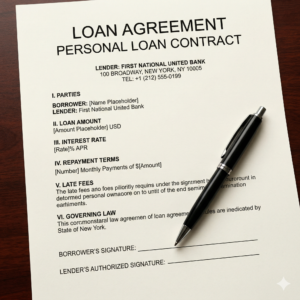
If you take away only one piece of advice from this article, let it be this: Focus on the APR, not just the interest rate. Many people use these terms interchangeably, but they represent very different things. The interest rate is the percentage of the principal you pay to the lender for the privilege of borrowing. The Annual Percentage Rate (APR), however, is a much more comprehensive figure. It includes the interest rate plus any mandatory fees charged by the lender to process the loan.
The Math Behind the APR
Imagine two lenders offering a $10,000 loan:
-
Lender A: Offers a 7% interest rate with $500 in upfront fees.
-
Lender B: Offers an 8% interest rate with $0 in fees.
At first glance, Lender A looks cheaper. However, when you calculate the APR, Lender A’s total cost might actually be higher because you are essentially “pre-paying” a large chunk of interest through those fees. Federal law requires lenders to disclose the APR prominently precisely because it allows you to compare “apples to apples” when shopping for credit.
Common Upfront Costs: Origination and Processing Fees
The moment your loan is approved, you might already be losing money. Many lenders, especially online personal loan providers, charge what is known as an origination fee.
What is an Origination Fee?
This is a one-time upfront fee that the lender deducts from your loan balance to cover administrative costs, such as processing your application, verifying your identity, and performing credit checks.
How It Hits Your Wallet
Origination fees typically range from 1% to 8% of the total loan amount. The “hidden” part of this cost is how it is deducted. If you borrow $10,000 with a 5% origination fee, the lender will take $500 off the top. This means you only receive $9,500 in your bank account, but you are still responsible for paying back the full $10,000 plus interest.
If you specifically needed exactly $10,000 for a purchase, you would actually need to request a higher loan amount to account for the fee, which in turn increases your interest payments.
The Penalty for Being Proactive: Prepayment Penalties
It sounds counterintuitive, doesn’t it? You would think a lender would be happy if you paid them back early. In reality, lenders make their profit from the interest you pay over the life of the loan. If you pay off a five-year loan in two years, the lender loses three years’ worth of expected profit.
To protect their bottom line, some lenders include a prepayment penalty clause in the contract. This fee is triggered if you pay off the loan balance before the term ends.
Types of Prepayment Penalties:
-
Percentage of the Balance: You might be charged a flat percentage (e.g., 2%) of the remaining principal.
-
Interest Formula: Some lenders charge a fee equal to a certain number of months of interest.
Always look for “No Prepayment Penalty” when shopping for a loan. This gives you the flexibility to refinance or pay off debt early if you come into extra cash without being punished for your financial responsibility.
Late Fees and “Returned Payment” Charges
Life happens. Sometimes a bill slips through the cracks, or your bank account doesn’t have quite enough funds on the day the auto-draft hits. While these seem like minor mistakes, they can trigger a cascade of hidden costs.
-
Late Fees: These are usually flat fees (e.g., $15 to $40) or a percentage of your monthly payment. Beyond the immediate cost, a late payment can stay on your credit report for seven years, potentially raising the interest rates on every future loan you take.
-
NSF (Non-Sufficient Funds) Fees: If your payment “bounces,” your lender will charge you a fee for the failed transaction. Simultaneously, your bank will likely charge you an NSF fee as well. A single failed $200 payment could easily cost you an extra $70 in combined fees.
The Subtle Trap of Credit Insurance and “Add-Ons”

When you are in the final stages of signing for a loan, a loan officer or an automated prompt might suggest adding Credit Life Insurance or Credit Disability Insurance.
The pitch sounds responsible: “If you lose your job or become ill, this insurance will cover your loan payments.” However, these products are often overpriced and highly profitable for the lender. In many cases, your existing term life insurance or workplace disability coverage already provides this protection for a fraction of the cost.
Adding these to your loan increases the total principal, meaning you are now paying interest on the insurance premium itself.
How Loan Terms Impact the Total Interest Paid
One of the most significant “hidden” costs isn’t a fee at all—it’s the length of the loan.
Lenders often market loans based on the “low monthly payment.” While a $200 monthly payment sounds more manageable than a $400 payment, the lower payment usually comes with a longer term (e.g., 72 months instead of 36 months).
The Long-Term Cost Breakdown
Let’s look at a $15,000 loan at 10% interest:
-
3-Year Term: Monthly payment is ~$484. Total interest paid: $2,424.
-
6-Year Term: Monthly payment is ~$278. Total interest paid: $5,016.
By choosing the “lower” monthly payment, you end up paying over double the interest. Always calculate the “Total Cost of Loan” (Principal + Total Interest) before signing.
Variable vs. Fixed Rates: The Cost of Uncertainty
If you opt for a Variable Interest Rate loan, your initial cost might be lower than a fixed-rate loan. This is the “hook.” However, variable rates are tied to an index (like the Prime Rate). If the economy changes and interest rates rise, your monthly payment and your total interest costs will increase automatically.
The hidden cost here is the risk. A budget that is comfortable today could become unsustainable in two years if the interest rate climbs by 3% or 4%.
Application and Membership Fees
While less common than they used to be, some traditional banks and credit unions still charge application fees. This is a fee you pay just to have the lender look at your paperwork, regardless of whether you are approved.
Similarly, some credit unions require you to become a member first, which may involve a small one-time fee or a requirement to keep a minimum balance in a savings account. While these are usually small (under $50), they are still part of the total cost of acquiring that capital.
Tax Implications: The “Hidden” Opportunity Cost

In most cases, the interest you pay on a personal loan is not tax-deductible. This is a hidden cost compared to other forms of borrowing, like a mortgage or some student loans, where the interest can often be deducted from your taxable income.
When you use a personal loan instead of a tax-advantaged borrowing method, you are effectively paying with “after-tax” dollars, making the effective cost of the loan higher than it might appear relative to other financial options.
Checklist: How to Uncover Every Hidden Cost
Before you sign any loan agreement, ask the lender these five direct questions:
-
What is the final APR, inclusive of all fees?
-
Is there an origination fee, and is it deducted from the balance or added to it?
-
Is there a penalty if I pay this loan off early?
-
Are there any “required” insurance products or add-ons included in this monthly payment?
-
What is the total dollar amount I will have paid back by the end of the term?
Final Thoughts
The goal of a lender is to make money; your goal as a borrower is to minimize the cost of capital. By looking past the flashy interest rate and scrutinizing the fine print for origination fees, prepayment penalties, and the true impact of the loan term, you can protect your bank account from unnecessary drain.
Knowledge is your best defense. A loan is a tool, and like any tool, it works best when you understand exactly how much it costs to operate.