Comprehensive insurance or third-party coverage: which one to choose?
Discover what each type covers, what its limitations are, and for whom it is best suited
What Is Third-Party Liability Insurance and What Does It Actually Cover?

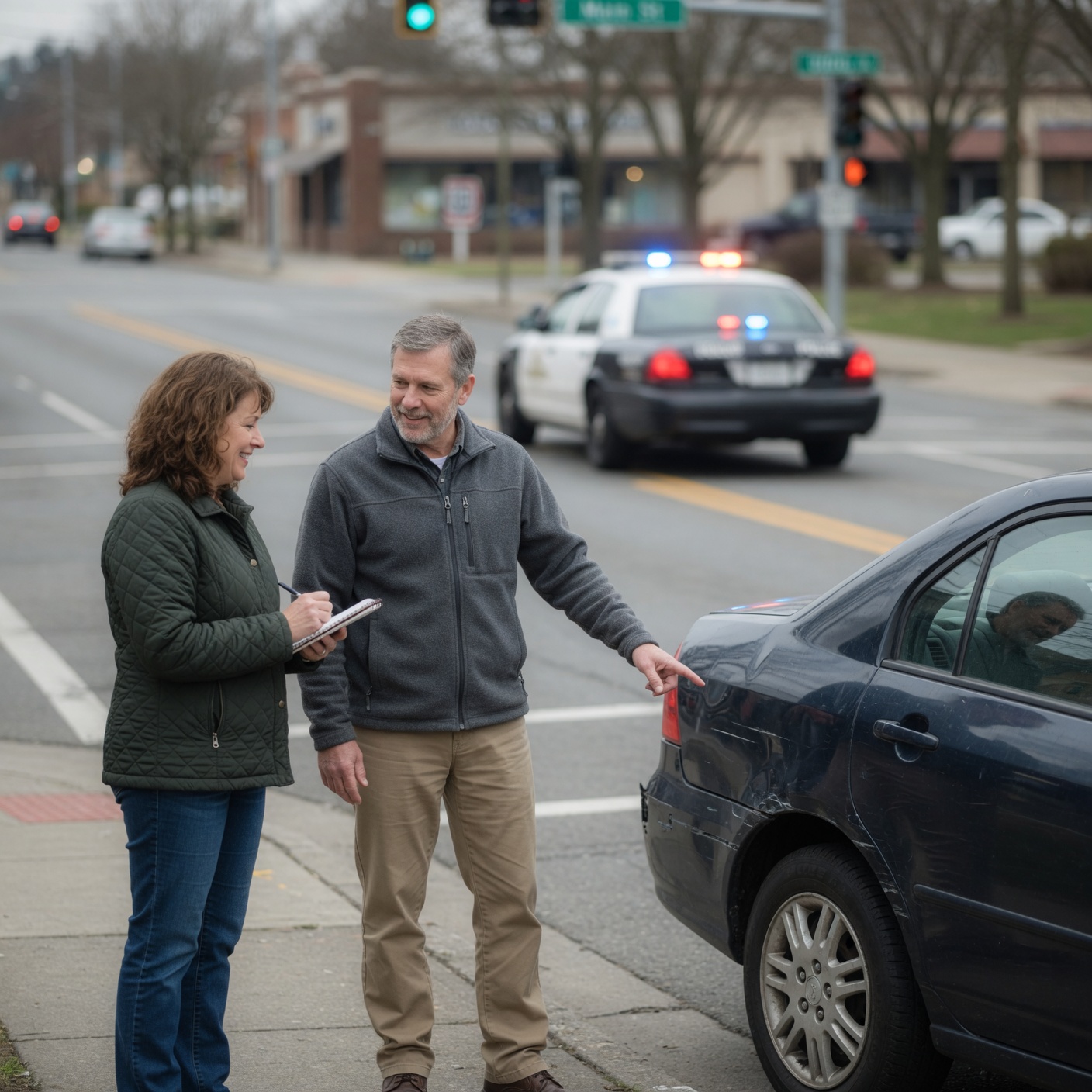
Third-party liability insurance, frequently referred to simply as “liability coverage” or “liability-only insurance” in the United States, is the absolute foundation of the automotive insurance system. By definition, this type of policy does not protect you, your finances, or your own property directly. Instead, it protects other people (the third parties) from the financial damage you might cause while operating your motor vehicle.
When you purchase a standard third-party liability policy, it is typically divided into two core components:
- Bodily Injury Liability: This component covers medical bills, rehabilitation costs, lost wages, and legal fees associated with injuries or fatalities suffered by pedestrians, passengers, or drivers of other vehicles when you are found at fault for an accident.
- Property Damage Liability: This covers the repair or replacement costs for another person’s property. While this most commonly applies to the other driver’s automobile, it also extends to public and private property, such as lamp posts, guardrails, mailboxes, storefronts, or homes.
It is crucial to emphasize that third-party liability insurance is entirely outward-facing. If you cause a multi-car collision on a rainy afternoon, your liability policy will pay to fix the other drivers’ vehicles and cover their emergency room visits up to your policy limits. However, it will contribute exactly zero dollars toward repairing your own car or covering your personal medical bills.
Because liability insurance serves to protect the public from the negligence of individual drivers, it is mandated by law in forty-nine out of fifty states, though the minimum required coverage limits vary drastically depending on local state legislation.
The Limitations and Financial Risks of Choosing a Liability-Only Policy
While opting for a third-party liability-only policy is undeniably the cheapest way to legally operate a vehicle, it introduces a substantial level of financial exposure. The primary risk stems from the complete lack of first-party property protection.
Consider the everyday scenarios that a liability policy completely ignores:
- Single-Vehicle Accidents: If you lose control on a patch of black ice and collide with a concrete barrier, your liability insurance will cover the cost to repair the barrier, but your damaged car is entirely your financial responsibility.
- Vandalism and Theft: If a thief smashes your window, strips your car for parts, or steals the entire vehicle overnight, a third-party policy offers no financial recourse whatsoever. You will be forced to replace the vehicle utilizing your personal savings.
- Environmental and Weather Damage: Hail storms, falling tree branches, flash floods, and wildfires can completely destroy a vehicle in seconds. Liability insurance provides no coverage for acts of nature.
Relying solely on third-party insurance means you are effectively “self-insuring” your own vehicle. If you drive a car worth $25,000 and it is totaled in a hit-and-run accident where the other driver cannot be identified, you lose the entire value of that asset instantly. For drivers who do not have the liquid savings to immediately purchase a replacement vehicle, this risk can be financially devastating.
What Is Comprehensive Insurance and How Does It Protect Your Asset?
To bridge the massive gaps left by basic liability coverage, insurance providers offer first-party physical damage protections. Among these, comprehensive insurance stands out as a broad safety net designed to protect your vehicle from risks that are completely unrelated to standard multi-car traffic accidents.
In the insurance industry, comprehensive coverage is often described as “other-than-collision” coverage. It safeguards your vehicle against unexpected events that are generally outside of your direct control as a driver.
A standard comprehensive policy protects against a wide array of perils, including:
- Theft and Total Loss: If your vehicle is stolen and not recovered, the policy pays out the actual cash value (ACV) of the car, minus your chosen deductible.
- Vandalism and Civil Unrest: Covers damages resulting from riots, malicious mischief, keyed paint, broken glass, or slashed tires.
- Extreme Weather and Natural Disasters: Provides financial protection against damage caused by hurricanes, tornadoes, earthquakes, floods, hail, and severe lightning strikes.
- Animal Collisions: If a deer, moose, or stray animal darts across a dark highway and strikes your vehicle, the resulting body damage is covered under the comprehensive portion of your policy, rather than collision insurance.
- Falling Objects: Covers damage from falling rocks, tree limbs, ice, or debris dropped from construction sites or passing aircraft.
- Glass and Windshield Damage: Many comprehensive policies include specific provisions for windshield repair or replacement, sometimes even offering a zero-deductible option for minor glass chips to prevent them from spiderwebbing into larger cracks.
It is important to note that comprehensive insurance is rarely sold as a standalone policy. Instead, it is bundled alongside liability coverage and collision coverage to form what the industry commonly terms “full coverage.”
Understanding Deductibles and Actual Cash Value in Comprehensive Policies
To fully grasp how comprehensive insurance operates, you must understand two foundational concepts: the insurance deductible and Actual Cash Value (ACV). Unlike third-party liability insurance, which rarely requires you to pay a deductible before a payout is made to an injured party, comprehensive coverage is inherently tied to a deductible framework.
A deductible is the pre-determined, out-of-pocket amount you agree to pay before your insurance company covers the remainder of a claim. Common deductible amounts range from $250 to $1,000. For instance, if a severe hail storm causes $4,000 worth of dent damage to your vehicle’s roof and hood, and you have a $500 comprehensive deductible, you will pay $500 directly to the repair facility, and your insurer will pay the remaining $3,500.
Furthermore, comprehensive insurance policies cap their maximum payout at the vehicle’s Actual Cash Value at the moment the damage occurred. ACV is calculated by taking the original purchase price of the vehicle and subtracting depreciation based on age, mileage, wear and tear, and local market conditions.
If your vehicle is older and has depreciated to a market value of $3,000, and a thief steals it, the maximum your insurance provider will pay you is $3,000 minus your deductible. If your deductible is $1,000, your net payout from the insurance company will only be $2,000, regardless of how much you originally paid for the car or how much it costs to buy a brand-new equivalent model.
Comprehensive vs. Collision Insurance: Clarifying the Crucial Distinctions
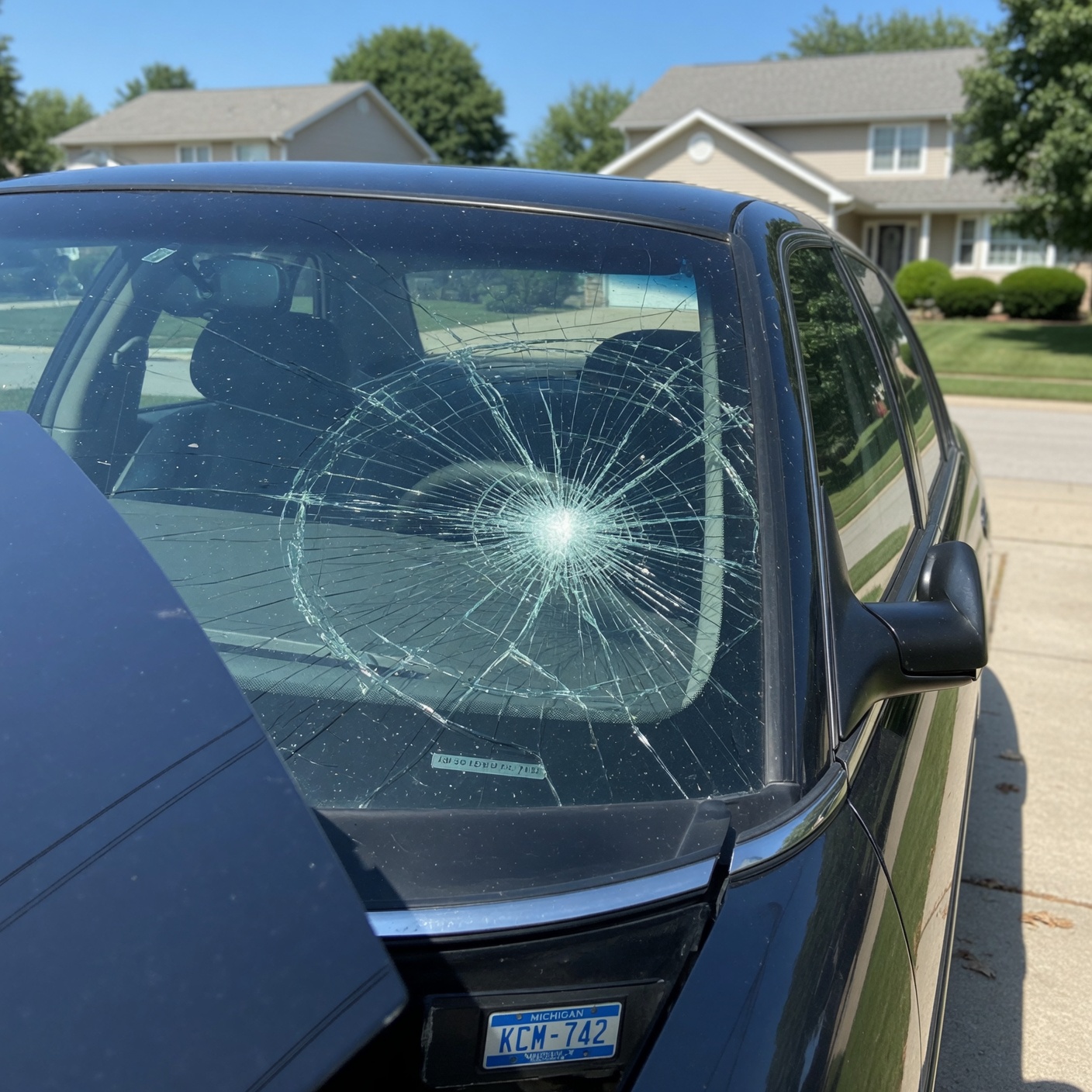
A frequent point of confusion for vehicle owners is the difference between comprehensive coverage and collision coverage. Because both are components of a “full coverage” insurance package designed to protect your own car, people often mistake them for the same thing or assume one covers the other. However, they address entirely different risk profiles.
The easiest way to differentiate the two is to analyze the nature of the incident:
| Insurance Feature | Comprehensive Coverage | Collision Coverage |
|---|---|---|
| Primary Trigger | Non-collision events, acts of nature, and crime | Physical contact with another vehicle or object |
| Scenarios Covered | Theft, vandalism, animal strikes, hail, fire, flood | Hitting another car, hitting a tree, rolling over |
| Driver Status | The vehicle is typically stationary or hit by an external force | The vehicle is actively in motion or involved in an impact |
| Mandated by Law | No, completely optional state-wide | No, completely optional state-wide |
If you crash into a telephone pole, swerve into a ditch, or hit another driver’s bumper, your collision insurance handles your repairs. If a tree branch snaps during a windstorm and crushes your parked car, or if you strike a deer at night, your comprehensive insurance handles the repairs.
For maximum peace of mind, combining both coverages guarantees that you are protected against nearly every physical threat your vehicle could face, whether you are actively driving or the car is parked safely in your driveway.
The True Financial Comparison: Premiums vs. Out-of-Pocket Expenses
When evaluating whether to buy comprehensive insurance or stick to basic third-party liability, the primary deciding factor for most consumers is the cost of monthly or annual premiums.
Because third-party liability coverage carries a much narrower scope of responsibility for the insurer, its premiums are substantially lower. It represents a predictable, low-cost line item in your monthly budget. In contrast, adding comprehensive and collision coverage can easily double your annual premium expenses, depending on your driving record, age, and geographical location.
However, focusing entirely on the premium cost is a short-sighted financial strategy. The true financial comparison requires balancing the guaranteed cost of the premium against the potential out-of-pocket expenses of a catastrophic event.
Consider the following two financial scenarios over a five-year period:
Scenario A: The Liability-Only Strategy
- Annual Premium: $600
- Total Premiums Paid over 5 Years: $3,000
- Incident: In year three, the vehicle is stolen. The market value of the vehicle at the time of theft is $12,000.
- Insurance Payout: $0
- Total Out-of-Pocket Cost to Replace the Asset: $12,000
- Total Financial Impact: $15,000 ($3,000 premiums + $12,000 replacement cost)
Scenario B: The Full Protection Strategy (Comprehensive Added)
- Annual Premium: $1,400
- Total Premiums Paid over 5 Years: $7,000
- Incident: In year three, the vehicle is stolen. The market value is $12,000. The comprehensive deductible is $500.
- Insurance Payout: $11,500 ($12,000 market value minus the $500 deductible)
- Total Out-of-Pocket Cost to Replace the Asset: $500
- Total Financial Impact: $7,500 ($7,000 premiums + $500 deductible)
As this mathematical breakdown demonstrates, while Scenario B required higher ongoing premium costs, the occurrence of a single major negative event saved the policyholder thousands of dollars in the long run. When choosing between these policies, you are essentially deciding whether you prefer the certainty of a higher, predictable premium or the gamble of a lower premium paired with the risk of an unpredictable, massive out-of-pocket expense.
When Is Third-Party Liability Coverage the Smarter Decision?
Despite the obvious protections offered by comprehensive insurance, there are specific situations where selecting a third-party liability-only policy is the logically and financially sound choice. It is not always wise to spend money on premium enhancements that do not yield a justifiable return on investment.
You Drive an Older Vehicle with Low Market Value
As a vehicle ages, its market value depreciates significantly. Because comprehensive coverage caps its payouts at the actual cash value of the car minus your deductible, insuring a low-value vehicle can become mathematically redundant. For example, if you own an old commuter car with an estimated market value of $2,000, and your comprehensive deductible is set at $1,000, the maximum potential payout you could ever receive from a claim is $1,000. If adding comprehensive coverage to your policy costs an extra $300 a year, you would effectively pay more in premiums over a few years than the maximum benefit the policy could ever provide.
You Have Ample Liquid Savings to Self-Insure
If you are financially secure and possess a robust emergency fund that would allow you to comfortably purchase a replacement vehicle without disruption to your lifestyle, you are an excellent candidate for self-insurance. By opting for a liability-only policy, you save money on monthly premiums and accept the risk of damage or theft yourself, knowing you can easily absorb the financial blow if your vehicle is lost.
The Vehicle Is Marginally Used or Stored Securely
If you own a vehicle that spends ninety-five percent of its time locked inside a secure, climate-controlled garage, is rarely driven in heavy traffic, and is located in an area completely free from extreme weather threats or high crime rates, the likelihood of experiencing a comprehensive loss drops drastically. Under these controlled circumstances, the cost of full coverage may outweigh the actual statistical risks involved.
When Is Comprehensive Insurance Absolutely Mandatory or Essential?
Conversely, there are many scenarios where purchasing comprehensive insurance shifts from being an optional recommendation to an absolute necessity—and in some instances, a strict legal or contractual obligation.
Your Vehicle Is Financed or Leased
If you do not own your car outright and are currently making monthly payments to a dealership, bank, or credit union, you almost certainly do not have a choice in this matter. Lenders view the vehicle as their collateral until the loan balance is paid in full. To protect their financial interest, nearly all auto financing and leasing contracts contain a mandatory clause requiring the borrower to maintain continuous full coverage insurance, including both comprehensive and collision protections with strict maximum deductible limits (usually not exceeding $1,000). Dropping to a third-party policy while a loan is active constitutes a breach of contract, allowing the lender to forcibly purchase high-cost forced-place insurance at your expense or even repossess the vehicle.
You Own a High-Value or Brand-New Automobile
If you purchase a brand-new vehicle or drive a luxury car, sports car, or heavy-duty truck, the asset represents a massive portion of your net worth. New cars depreciate rapidly the moment they leave the dealership lot, but their repair costs remain astronomically high due to advanced onboard technology, specialized body sensors, and expensive components. Facing a theft or a severe weather event without comprehensive coverage on a $40,000 asset can instantly derail your long-term financial stability.
You Live in a High-Risk Environment
Geography plays a major role in determining your exposure to risk. If your primary residence is located in an urban area with elevated vehicle theft and vandalism statistics, or if you live in an area prone to severe weather phenomena—such as the hail storms of the Great Plains, the hurricanes of the Gulf Coast, or the flash floods of mountainous terrains—skipping comprehensive coverage is an incredibly high gamble. Similarly, if your daily commute involves driving through rural areas populated by large wildlife, an animal strike is a constant threat that only comprehensive coverage can mitigate.
How to Calculate the “Ten Percent Rule” for Auto Insurance Optimization

To remove the guesswork and emotion from this decision, insurance experts and financial planners frequently utilize a practical guideline known as the Ten Percent Rule. This mathematical framework helps you calculate exactly when it makes financial sense to drop comprehensive and collision coverage from an aging asset and transition to a third-party liability policy.
The rule states that if the annual cost of your comprehensive and collision premiums exceeds ten percent of your vehicle’s total book value (minus your deductible), the coverage is no longer cost-effective.
To apply this rule to your own auto policy, follow this step-by-step formula:
- Determine Your Vehicle’s Current Value: Use reputable automotive valuation platforms to establish the current local market value (Actual Cash Value) of your specific car, accounting for its exact mileage and physical condition.
- Subtract Your Deductible: Take the vehicle’s value and subtract the comprehensive deductible listed on your policy documents. This number represents your maximum potential insurance payout.
- Calculate Ten Percent: Multiply that maximum payout figure by 0.10.
- Compare Against Premium Costs: Review your annual insurance statement to find the exact dollar amount you are paying purely for the comprehensive and collision portions of your policy.
If the annual premium cost is greater than the ten percent figure you calculated, it is time to seriously consider dropping to a third-party liability-only policy. The money saved on those premium payments can be redirected into a dedicated high-yield savings account to fund your next vehicle purchase.
Strategic Ways to Lower Your Comprehensive Insurance Costs Without Dropping Coverage
If you have concluded that you genuinely need the robust protection of comprehensive insurance but are struggling to accommodate the high monthly premium rates within your household budget, you do not have to abandon the policy entirely. There are several strategic adjustments you can make to lower your costs while keeping your vehicle fully protected.
Adjust Your Deductible Threshold
One of the fastest and most effective ways to lower your comprehensive premium is to increase your deductible amount. Transitioning from a $250 deductible to a $1,000 deductible shifts a greater portion of the initial financial risk from the insurer to you. In exchange for this risk reduction, insurance companies will reward you with a substantial decrease in your ongoing premium rates. Just ensure that you keep the chosen deductible amount readily accessible in a savings account in case you ever need to file an unexpected claim.
Install Anti-Theft and Safety Devices
Comprehensive insurance heavily factors in the likelihood of your car being stolen or broken into. By equipping your vehicle with approved anti-theft devices, such as GPS tracking systems, audible alarms, steering wheel locks, or remote kill switches, you materially lower the insurer’s risk profile. Many top-tier insurance carriers offer specific discounts ranging from five to fifteen percent on the comprehensive portion of your bill for vehicles equipped with these security enhancements.
Bundle Multiple Insurance Policies
Insurance companies value customer loyalty and high account volumes. If you purchase your auto insurance from the same provider that handles your homeowners insurance, renters insurance, life insurance, or umbrella policies, you will almost always qualify for a significant multi-policy bundle discount. This discount applies across all your active accounts, reducing the effective cost of your comprehensive auto coverage.
Maintain a High Credit-Based Insurance Score
In the vast majority of U.S. states, insurance providers utilize data from your credit history to generate a credit-based insurance score. Actuarial data indicates that individuals who maintain excellent credit profiles statistically file fewer insurance claims. By paying down debts on time, keeping credit utilization low, and correcting errors on your credit report, you can dramatically improve your insurance score, unlocking access to the lowest tier of comprehensive premium rates available in the marketplace.
A Step-by-Step Selection Framework
Ultimately, deciding between comprehensive auto insurance and third-party liability-only coverage requires a careful assessment of contract obligations, financial strength, and risk tolerance. There is no one-size-fits-all answer, but you can confidently navigate the decision by executing this final selection path:
- Is your vehicle currently financed or leased?
- YES: You must choose full coverage (Comprehensive + Collision + Liability).
- NO: Assess the market value of your vehicle.
- What is the vehicle’s market value?
- Under $3,000: Consider a third-party liability-only policy to save on premium costs.
- Over $5,000: Evaluate your personal financial safety net.
- Do you have enough liquid savings to instantly buy a replacement car?
- NO: Choose comprehensive coverage to protect your mobility.
- YES: Apply the Ten Percent Rule to determine if the premium is worth the protection.
By systematically running your vehicle through these practical, real-world parameters, you eliminate guesswork. You can choose a policy that protects your mobility, respects your monthly household cash flow, and ensures that you are never left facing an unmanageable financial disaster due to an unexpected event on or off the road.