What We Can Learn About Warren Buffett Through Books
See which of Warren Buffett's teachings remain relevant for both beginner and experienced investors
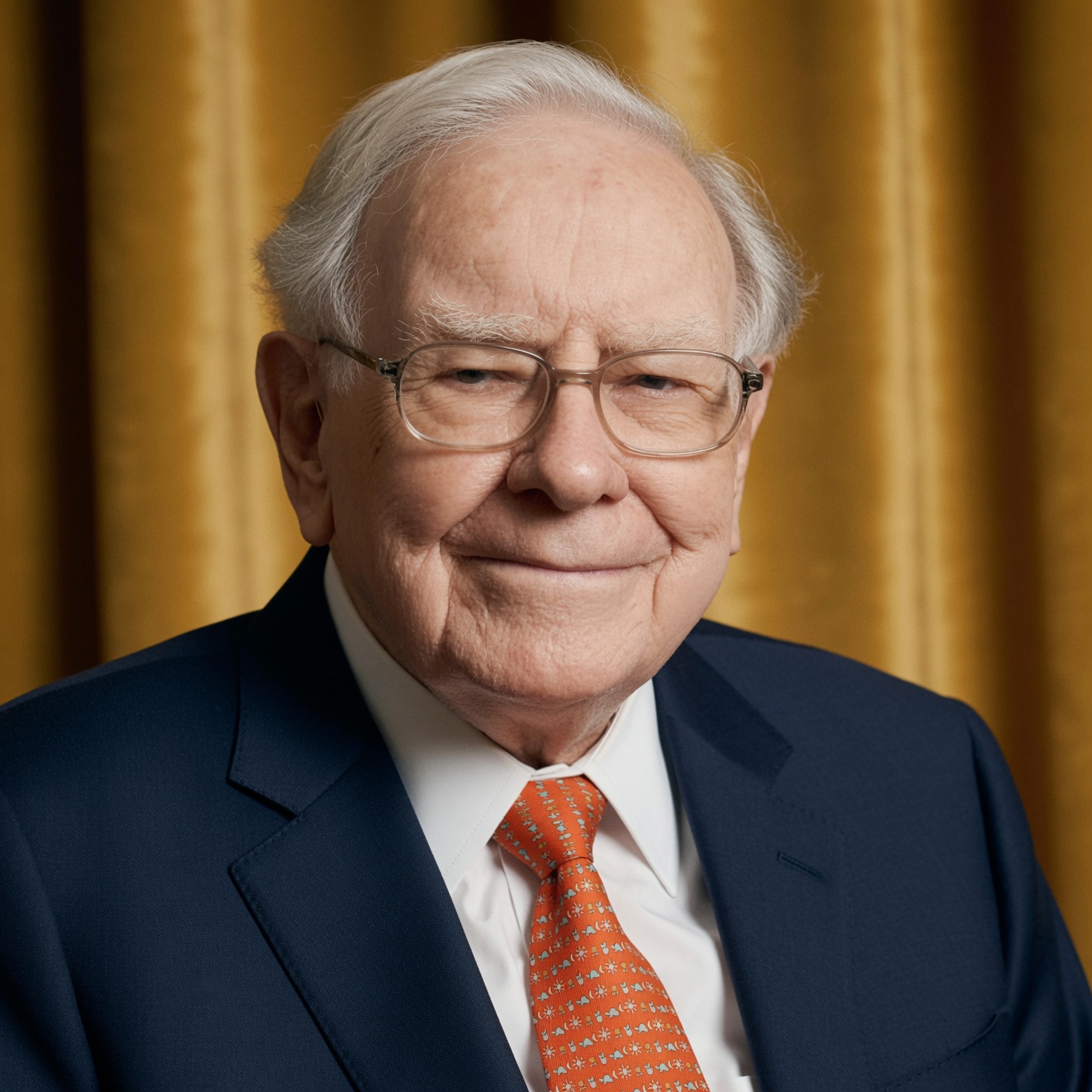
Warren Buffett, the legendary “Oracle of Omaha,” is widely regarded as one of the most successful investors of all time. Rather than keeping his strategies a closely guarded secret, Buffett has spent decades sharing his wisdom through annual shareholder letters, interviews, and public appearances. Yet, some of the deepest and most actionable insights into his investment philosophy, personal discipline, and business acumen are preserved within the pages of literature.
By analyzing both the books that shaped Buffett’s mind and the definitive volumes written about his life, we can reconstruct a world-class financial education. Whether you are a novice saver or a seasoned portfolio manager, exploring Warren Buffett through books offers a masterclass in long-term wealth creation.
Why Reading Is Warren Buffett’s Ultimate Competitive Advantage
To understand Warren Buffett’s success, one must first understand his relationship with books. Buffett reportedly spends up to 80% of his day reading. When asked about his key to success, he once held up a stack of paper and said, “Read 500 pages like this every day. That’s how knowledge works. It builds up, like compound interest.”
In a fast-paced digital economy where market participants react to headlines in milliseconds, Buffett’s commitment to deep reading represents a deliberate decision to favor slow, structured, and compounding knowledge over fleeting information. Books provide the historical context, analytical frameworks, and psychological grounding necessary to ignore short-term market noise. By studying the literature that built Berkshire Hathaway, investors can train themselves to think with the same clarity, rationality, and patience.
The Intelligent Investor: Understanding the Foundation of Value Investing
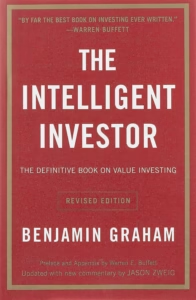
No discussion of Warren Buffett’s literary influences can begin without Benjamin Graham’s masterpiece, The Intelligent Investor. Buffett picked up this book when he was 19 years old, an event he has frequently described as one of the luckiest moments of his life.
From Graham, his mentor and professor at Columbia Business School, Buffett adopted three core principles that form the bedrock of his financial philosophy:
1. The Concept of “Mr. Market”
Graham introduced a famous allegory of an emotional, business partner named Mr. Market. Every day, Mr. Market offers to buy your share of a business or sell you his at a price dictated by his moods—ranging from wild optimism to deep depression. Buffett learned that the market’s primary function is to serve you with opportunities, not to guide you with wisdom. Instead of fearing market volatility, a value investor welcomes it as a chance to buy underpriced assets from panicked sellers.
2. The Margin of Safety
The margin of safety is the practice of purchasing an asset at a price significantly below its intrinsic value. If you estimate a stock is worth $100, you do not buy it at $95; you look to purchase it at $70 or $60. This cushion protects the investor against inevitable analytical errors, unexpected economic downturns, and market volatility.
3. Stocks as Fractional Ownership of Real Businesses
Before Graham, many viewed the stock market as a high-stakes casino. The Intelligent Investor revolutionized Buffett’s perspective by teaching him that a stock certificate is not a speculative betting slip; it represents fractional ownership in a real enterprise with physical assets, employees, products, and cash flows.
Common Stocks and Uncommon Profits: Blending Quantitative Analysis with Qualitative Value
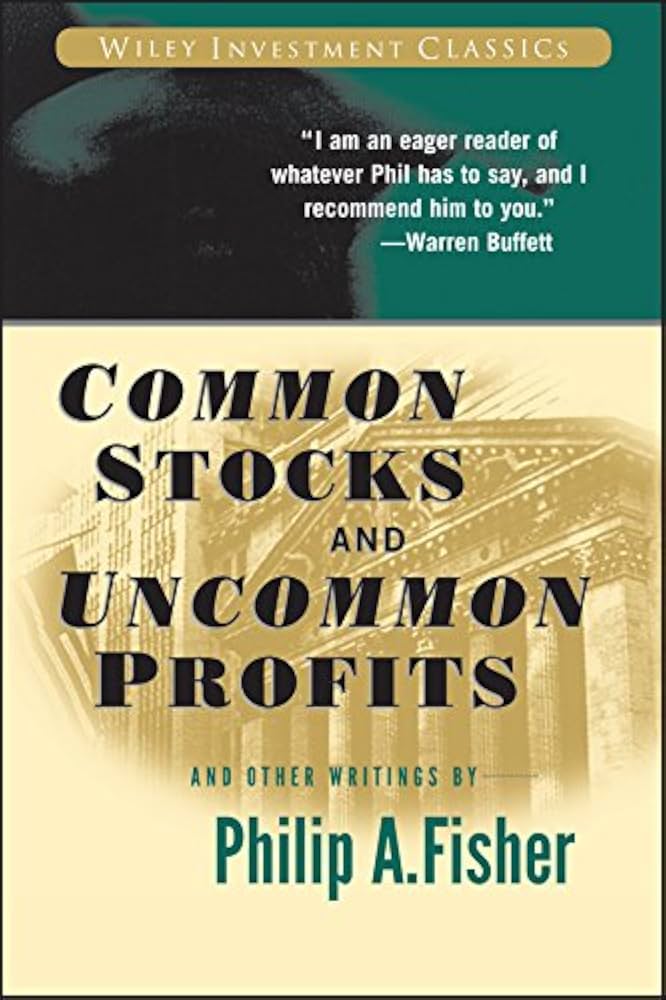
While Benjamin Graham taught Buffett how to buy cheap, asset-heavy companies at a discount (a strategy known as “cigar butt” investing), it was Philip Fisher’s Common Stocks and Uncommon Profits that elevated his strategy. Buffett famously described himself as being “85% Benjamin Graham and 15% Phil Fisher.”
Fisher focused on qualitative characteristics rather than purely quantitative cheapness. He sought out outstanding businesses with exceptional growth potential, strong management teams, and significant competitive advantages.
Through Fisher’s teachings, Buffett learned to ask qualitative questions:
-
Does the company have a unique product or service that cannot be easily replicated?
-
Does the management team demonstrate integrity, transparency, and long-term vision?
-
Is the company investing effectively in research and development to maintain its industry leadership?
By synthesizing Graham’s margin of safety with Fisher’s appreciation for high-quality businesses, Buffett—guided by his partner Charlie Munger—shifted his focus toward buying “wonderful businesses at fair prices” rather than “fair businesses at wonderful prices.”
The Snowball: Analyzing the Human Element of Wealth and Discipline
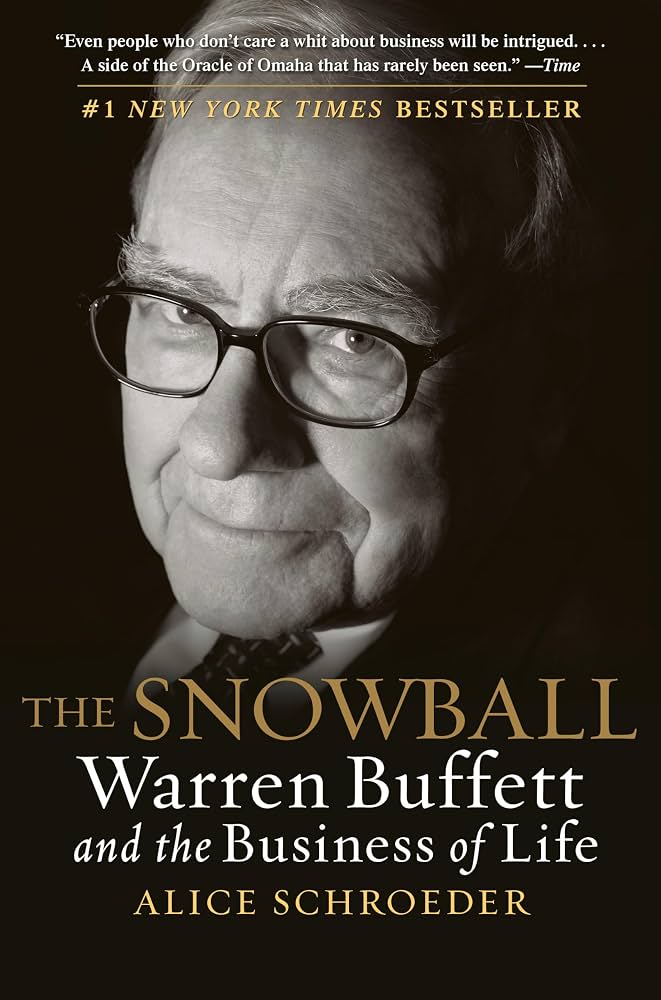
To truly understand Warren Buffett, we must look beyond numbers and analyze the psychological drive behind his empire. Alice Schroeder’s monumental biography, The Snowball: Warren Buffett and the Business of Life, offers an unprecedented, intimate look at his personal development, work ethic, and relationship with money.
The title itself serves as a brilliant metaphor for wealth accumulation. To build a massive snowball, you need two basic elements: wet snow and a very long hill. In financial terms, the “wet snow” represents high-rate-of-return investments, and the “long hill” represents time.
Developing an Inner Scorecard
One of the most profound psychological lessons from The Snowball is Buffett’s concept of the “Inner Scorecard” vs. the “Outer Scorecard.”
-
An Outer Scorecard judges success based on how others perceive you—your status, public opinion, and material possessions.
-
An Inner Scorecard evaluates your actions based on your own uncompromising standards, values, and principles.
Buffett’s adherence to an Inner Scorecard allowed him to resist massive peer pressure. During the dot-com bubble of the late 1990s, he was widely ridiculed by Wall Street for refusing to buy overvalued technology stocks. Because he stayed true to his inner metrics of value, he avoided the catastrophic crash that followed, proving that emotional independence is just as critical to financial survival as mathematical intellect.
The Essays of Warren Buffett: Deciphering the Letters to Berkshire Hathaway Shareholders
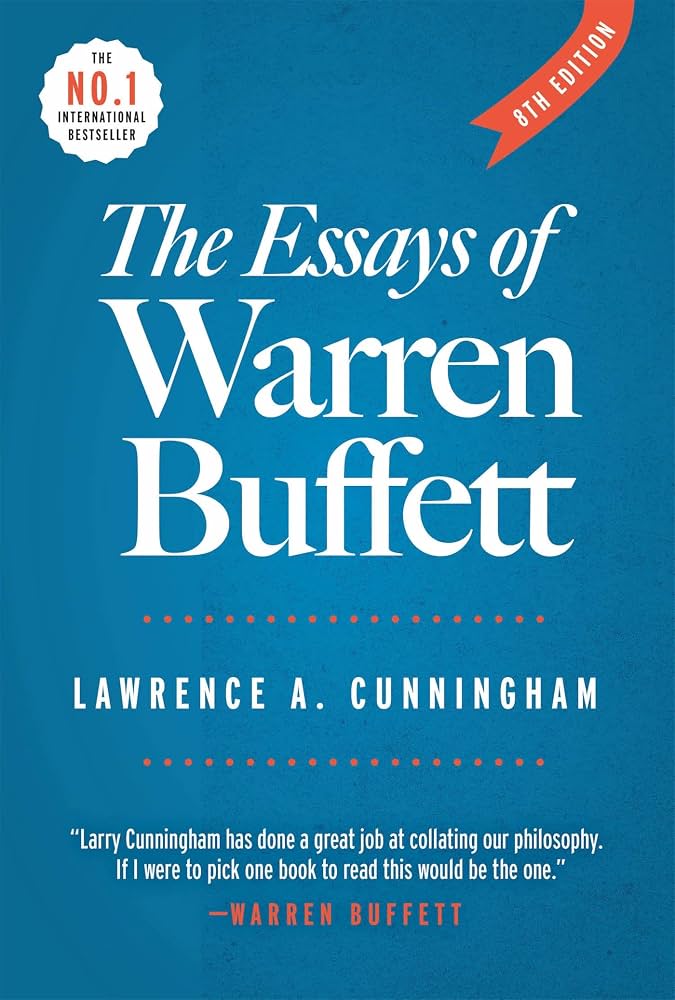
For those looking to learn directly from the source, The Essays of Warren Buffett: Lessons for Corporate America (edited by Lawrence Cunningham) compiles decades of Buffett’s annual shareholder letters into a structured, thematic guide. These essays serve as an accessible textbook on corporate governance, capital allocation, and valuation.
Masterclass in Capital Allocation
Buffett argues that a CEO’s primary responsibility is not operations, marketing, or public relations, but capital allocation. When a business generates a profit, management has a few choices:
-
Reinvest the capital back into the core business.
-
Acquire other profitable businesses.
-
Pay down debt.
-
Distribute dividends to shareholders.
-
Repurchase the company’s own stock.
Through his essays, Buffett explains that a company can have fantastic products but still destroy shareholder value if its management allocates capital poorly. Conversely, highly skilled capital allocators can turn moderate business profits into exponential shareholder returns.
Demystifying “Economic Moats”
Buffett popularized the term “economic moat” to describe a business’s sustainable competitive advantage. Just as a physical moat protects a medieval castle from invaders, an economic moat protects a company’s high profit margins from competitors.
Books examining Buffett’s philosophy highlight several types of moats:
-
Brand Power: Companies like Coca-Cola or Apple can charge premium prices because of consumer loyalty.
-
High Switching Costs: Businesses that integrate deeply into their customers’ workflows, making it incredibly expensive or disruptive to switch to a competitor.
-
Network Effects: Platforms that become more valuable as more people use them (e.g., American Express).
-
Cost Advantages: Firms that can produce goods or services at a lower cost than anyone else (e.g., GEICO or Costco).
Practical Application: How to Build Your Investment Strategy Using Buffett’s Principles
Learning from Warren Buffett through books is only valuable if you translate these theories into practical actions. Here is a step-by-step framework to apply these lessons to your personal financial journey:
| Principle | Strategic Action |
| Understand Your Circle of Competence | Only invest in industries and business models you thoroughly comprehend. If you cannot explain how a company makes money in three simple sentences, do not invest in it. |
| Patience and Long Horizon | View your portfolio as a collection of real businesses. Aim for holding periods measured in years and decades, allowing compounding to do the heavy lifting. |
| Maintain Liquidity and Low Debt | Avoid heavy leverage. Buffett’s long hill of compounding requires staying in the game; high debt creates vulnerability during unexpected market corrections. |
| Focus on High Return on Equity (ROE) | Look for businesses that efficiently generate strong profits relative to the shareholder equity invested, indicating structural efficiency and pricing power. |
The Enduring Power of Compound Knowledge
The central lesson we learn from studying Warren Buffett through books is that financial success is not the result of secret algorithms, insider trading, or manic day-trading. It is the product of continuous education, emotional discipline, and a deep-seated respect for the laws of compound interest.
By reading the books that shaped Buffett, we gain more than just investment tips; we acquire a structural framework for decision-making under uncertainty. In a world increasingly obsessed with overnight success and volatile financial trends, the patient, book-driven wisdom of Warren Buffett remains a reliable compass for building lasting wealth.